Author: info

Call for papers Resilient Urban Communities

The Resilient Urban Communities (RUC) PhD Seminar aims to improve the research work of current PhD students and broaden their perspectives by giving them the opportunity to discuss their research ideas and results in a supportive environment, where they receive constructive feedback from an audience consisting of peers as well as senior researchers in the field, reflect upon publication and career strategies, provide a forum for the interaction among the PhD students and an opportunity to network with the international Resilient Urban Communities community. 

The PhD Seminar Call 2022 is open to all enrolled doctoral students doing research in non-profit studies, urban studies, development economics, or related fields at all stages of their doctoral studies. Those PhD students doing research on social entrepreneurship, NPOs and Philanthropy including the social economy are particularly encouraged.

For conference and seminar updates visit www.strathmore.edu/research-at-strathmore/resilient-urban-communities/

Themes

The key themes for PhD Seminar include supportive ecosystems, participatory urban governance, management structures of SEs and NPOs, and their resilience and sustainability. Some of the  seminar topics (but not limited to) are building resilience during PhD work, incorporating diverse points of view in your research, types of research approaches and designs, managing the relationships with supervisors /receiving feedback and publication of high-quality academic articles. The central attractions to this PhD Seminar are the small group sessions: each student is allotted time to discuss her/his work and obtain feedback from peers and faculty. The PhD Seminar also includes opening and closing plenary sessions and at least one professional development session with presentations by leading scholars in the field. Additionally, the PhD Seminar shall feature the 3-minute Thesis Competition (voluntary). 

The winner will be awarded a monetary prize and their presentation will be featured on the Resilient Urban Communities website. The seminar is envisaged to take place on a face-to-face basis, but in case of restrictions due to COVID, we are prepared to switch to a virtual session. Resilient Urban Communities shall provide limited scholarships to attend the seminar expected to take 1 and ½  days. Each application for the PhD seminar should include: 

  • A research paper not exceeding one and a half pages that refers to the stage of your thesis (e.g., proposal, literature review/ theoretical development, methods, incipient results (a proposal template will be provided). 
  • A personal motivation statement of about ¾ page length and what you hope to get from Seminar. 
  • An official document confirming your status as a doctoral student at your University. 

PhD Seminar Eligibility for applicants are: 

  • Be doctoral students, particularly at early stages of their research work. If you expect to defend your dissertation before December 2022, you do not apply as you will not likely benefit from the Seminar. 
  • Be conducting research connected to non-profit-organizations and social enterprises in deprived communities and in policy fields such as housing, education, social services with a special focus on governance arrangements and business models.  
  • Be able to participate in the entire PhD Seminar to be held in Nairobi, Kenya. 
  • Be prepared to present and discuss their doctoral work with peers and faculty, and to participate in an active and constructive way in group discussions. 

Early Research Career (ECR) Seminar Call and Purpose: 

ECRs generally face far greater difficulty at research work and even publications with often inadequate understanding of the publishing models including open access journals. The ECR Seminar shall allow you to build ideas about your research teams, establish the collaborations and networks necessary for your professional growth, establishment as independent researchers how to lead unique and innovative programmes of research within your domains. For this seminar, the ECRs are expected to have some initial but limited postdoctoral experience and not yet ready for independence or to lead their own groups but expected to have started to make important contributions to research. They will be in the initial stages of driving their own research (usually evidenced by publications) but they still require more time to consolidate their existing skills and explore new scientific realms, under the guidance of an experienced researchers or sponsors.  

The seminar targets ECRs who are able to articulate and drive their own research ideas and form collaborations but are not yet ready to lead their own independent research groups. The ECR Seminar Call is open to researchers within 5 years after their PhD qualification doing research in non-profit studies, urban studies, development economics, or related fields. The costs of research career mismanagement are high and include stagnation in growth, reduced ability to generate research funding and impact of research project completion among others. Some of the seminar topics (but not limited to) are leading research teams: the challenges, exploring the transition to research leadership, managing performance and underperformance, collaboration and fostering interdisciplinary research and publications of high-quality journal articles. The seminar is envisaged to take place on a face-to-face basis, but in case of restrictions due to COVID, we are prepared to switch to a virtual session. Resilient Urban Communities shall provide limited scholarships to attend the seminar expected to take 1 and ½  days. Each participant application should include: 

  • A research profile that includes the qualifications, your recent publications and your research summary in the area of focus  
  • A personal motivation statement of about ¾ page length and what you hope to gain from the Seminar 
  • An official document confirming your status as a Researcher or Faculty at your University 

ECR Seminar Eligibility for applicants are: 

  • Be researchers with at most 5 years PhD qualification and trying to set their research career on track. 
  • Be conducting research connected to non-profit-organizations and social enterprises in deprived communities and in policy fields such as housing, education, social services with a special focus on governance arrangements and business models.
  • Be able to participate in the entire ECR Seminar and Conference to held in Nairobi, Kenya. 
  • Be prepared to share their current research with peers for networking and identification of collaborators in an active and constructive way in group discussions. 

Resilient Urban Communities (RUC) Conference 

The culmination of the three days shall be one-day Conference designed to showcase the research results currently undertaken as collaborative African-German project. The programme focuses on social enterprises (SEs) and non-profit organizations (NPOs) as subsidiary social service providers and vehicles for participation and integration in African mega cities that contribute to the resilience of urban communities. Organizations of the civil society or development space, such as social enterprises (SEs) and non-profit organizations (NPOs) are important players in the labour market of African economies. The presentations for the Conference shall majorly be from the research being undertaken though the organizers will allow exceptional research contributions closely related to the research domain, including invited speakers. The PhDs and ECRs with close related researches shall be invited to make presentations after reviewing their extended individual abstracts. The full research papers of the accepted presentations by the PhDs and ECRs, that meet individual journal requirements shall be forwarded for publication in different journals that Resilient Urban Communities Consortium team subscribe within the research domain. 

Proposed Programme for the Conference and Seminars: 

  • Monday, 5th December 2022 (Resilient Urban Communities Consortium Meeting and Visit to Social Enterprises) 
  • Tuesday, 6th December 2022: (Whole Day) PhD and ECR Seminars 
  • Wednesday, 7th December 2022: (Morning) PhD and ECR Seminars 
  • Wednesday, 7th December 2022: (Afternoon) Peer Mentor Sessions and Visit to National Park 
  • Thursday, 8th December 2022: (Whole Day) Resilient Urban Cities Conference  

Conference Deadlines: 

  • Call for Papers: 2nd May 2022 
  • Submission of Abstracts Deadline: Deadline: 23rd September 2022 
  • Acceptance of the Abstracts Deadline: Deadline: 3rd October 2022 
  • Acceptance of Presentation Videos Deadline: Deadline: 17th October 2022 
  • Resilient Urban Communities Conference and Seminars: 5th to 8th December 2022  

PhD / ECR Seminar Co-ordinators: 

Prof. Ismail Ateya, Strathmore University (SU), Nairobi 

Prof. Bhekinkosi Moyo, University of the Witwatersrand (Wits), Johannesburg 

Prof. Dr. Annette Zimmer, Westfälische Wilhelms-Universität Münster (WWU), Münster 

PhD / ECR Seminar Partners: 

Dr. Nicole Baron, Bauhaus Universität Weimar 

Prof. Dr. Nicola Göler von Ravensburg, Frankfurt University of Applied Science (UAS) 

Dr. Alex Bignotti, University of Pretoria 

Dr. Ali Awni, The American University in Cairo (AUC) 

East Africa Philanthropy Network (EAPN), Kenya 

International Society for Third Sector Research (ISTR)

Contacts: 

For enquiries related to submissions, email ruc-conference@strathmore.edu   

For conference and seminar updates visit www.strathmore.edu/research-at-strathmore/resilient-urban-communities/

Kisima Giving and Youth in Philanthropy Dialogue

In South Africa, June is celebrated as Youth Month which is a period of remembering past struggles and reflecting on youth development going forward. In commemoration of the youth, the next instalment of the Kisima Quarterly Dialogue will be hosted under the theme: “Growing Youth Involvement in Philanthropy for a Transformed Society”. We invite you to register to join us as we engage at this commemorative dialogue.

Event details

Date: Wednesday, 29 June 2022

Time: 14h00 South Africa time

Venue: In-person at Wits Club, Johannesburg and online via Zoom

The Centre of African Philanthropy and Social Investment hosted the first Kisima Quarterly Dialogue on the 28th of April, 2022 with a keynote address by Chancellor of Wits University, Dr Judy Dlamini. The aim of these Dialogues is to demonstrate the numerous ways of giving in different parts of the continent and look at the different expressions of philanthropic forms, types, and practices across Africa.

The Role of Philanthropy in Food Security in Africa

Society Talks is a public dialogue series hosted by the Southern Africa Trust, bringing together stakeholders within the development, business and civil society communities to inform, engage and share experiences with the broader society.  

On November 4 2020 instalment was hosted by CAPSI Director Prof. Bhekinknosi Moyo. The discussion was centred around using philanthropy as an enabling sector, as well as understanding the recommended key policy interventions required for SADC to address the imminent changes. The panellists for this discussion were Evans Okinyi of the East Africa Philanthropy Network (EAPN), Mosun Layode of African Philanthropy Forum (APF), Caesar Ngule of Kenya Community Development Foundation (KCDF), Gima H. Forje of the TY Danjuma Foundation. 

Evans Okonyi spoke of the work of EAPN, how they focus on the development and management of knowledge, building alliances and the enabling environment for successful philanthropy in East Africa. They are committed to providing a platform where members and the philanthropy sector can meet, share, plan, and network – something that proved very useful during the COVID-19 pandemic.  

Working closely with the members, EAPN has been trying to convert those conversations into meaningful partnerships, connecting government with philanthropists to address issues of food security. Also looking at alternative ways of financing the gaps that exist in food security, blending finance from private sector with that of government and philanthropy.  

Mosun Layode began by recapping the previous ten months, specifically how the African continent has not experienced the drastic health impact from pandemic, as predicted by the rest of the world. Unfortunately, the economic repercussions have exposed the fragility of the health and social safety systems. Still relying heavily on imports to supply staples like rice, Africa is unlikely to be able to feed more than 25% of its population by 2025. One of the key points that came out of APF’s recent conference, is that in absolute terms, food production has increased, but the impact is not really felt across the continent. Looking at the impact of climate change on food security, Mosun spoke of a need to get relevant institutions involved, bringing philanthropy in as well. Creating awareness on these issues is a way that philanthropists could make a difference, particularly garnering support for the smallholder farmers.  

Another interesting outtake from the conference was the need to promote agricultural practices in Africa, beyond food production – looking at technology, tools, and training to harness the arable land and produce enough food to feed the world, giving African an economic advantage. Attracting young, unemployed people to opportunities in agriculture is a necessary action, aiding the issues of unemployment. 

Looking at food security as it pertains to malnutrition, Mosun highlighted the need to focus on children, getting them the support they need for the first 1 000 days of life. She also emphasised how important it is to prepare for the next global epidemic or eventuality, so as not to be caught off guard again.       

Caesar Ngule looked back at how the immediate response to food security in Kenya during the pandemic involved the handout of food parcels – was this a sustainable solution? KCDF put a lot of effort into support of smallholder and subsistence farmers, as well as addressing policy bottlenecks, like land rights.  

Gima H Forje outlined the TY Danjuma Foundation’s initial response to the pandemic, which echoed Caesar’s – handing out of food parcels, while the longer-term view was supplying them with the tools and knowledge to become sustainable themselves. He also mentioned the waste of food during the lockdown, due to restrictions in movement – food that could have fed many people. He spoke of the many ways to support the smallholder farmers, as well as the school feeding programme. 

Mosun spoke of infrastructure, and how the relationship between governments and philanthropy varies from country to country. For philanthropy to work in Africa, organisations, governments, and initiatives must work together to get a result. Using an example within APF, she spoke of how they showcased various organisations in Africa working within the field of food security, at their conference. They shortlisted them, voted and came up with one organisation, FarmGro Africa (from Kenya), who now is the beneficiary of all of APF’s registration fees. An unexpected outcome has been continued calls and interests from big corporations and organisations wanting to get involved in Food Security; to be connected to organisations through a trusted middleman, like APF.  

Evans listed three critical points to converting philanthropic donations into long term strategies: 

  • More support is needed for small scale food producers, in these areas: famine, food, knowledge and financial services – connecting these with the market so as to take advantage of opportunities arising from the value chain. 
  • Working more holistically, no longer in silos.
  • Improve collection, storage, analyses of quality and accessible agricultural data. 

Moving from response to preparedness, there should be a focus on education and health. Philanthropists could help to digitise schools, improve infrastructure in healthcare, especially in attracting and keeping qualified people. 

The key takeaways from the discussion were: 

  • To get action on climate change in Africa, it has to be relevant, so bringing food security, a more immediate problem, to the fore and emphasising its relationship with climate change, is the way to connect it. 
  • The data collected during the pandemic, specifically of who received what, from where, is a trend that needs to be leveraged – more data on philanthropy is needed in Africa. 
  • There is great opportunity in philanthropy for the development of technology, moving towards the goal of 60% of Africans being connected on a mobile network, by 2025. 
  • There is a lot of opportunity for food security advocacy outside of philanthropy – community support and grassroots mechanisms can be leveraged to lobby and manage agricultural programmes.  

“Philanthropy is the glue that binds our societies together and it expresses itself in different forms.” 

This article was published on the Southern Africa rust website.

student in class

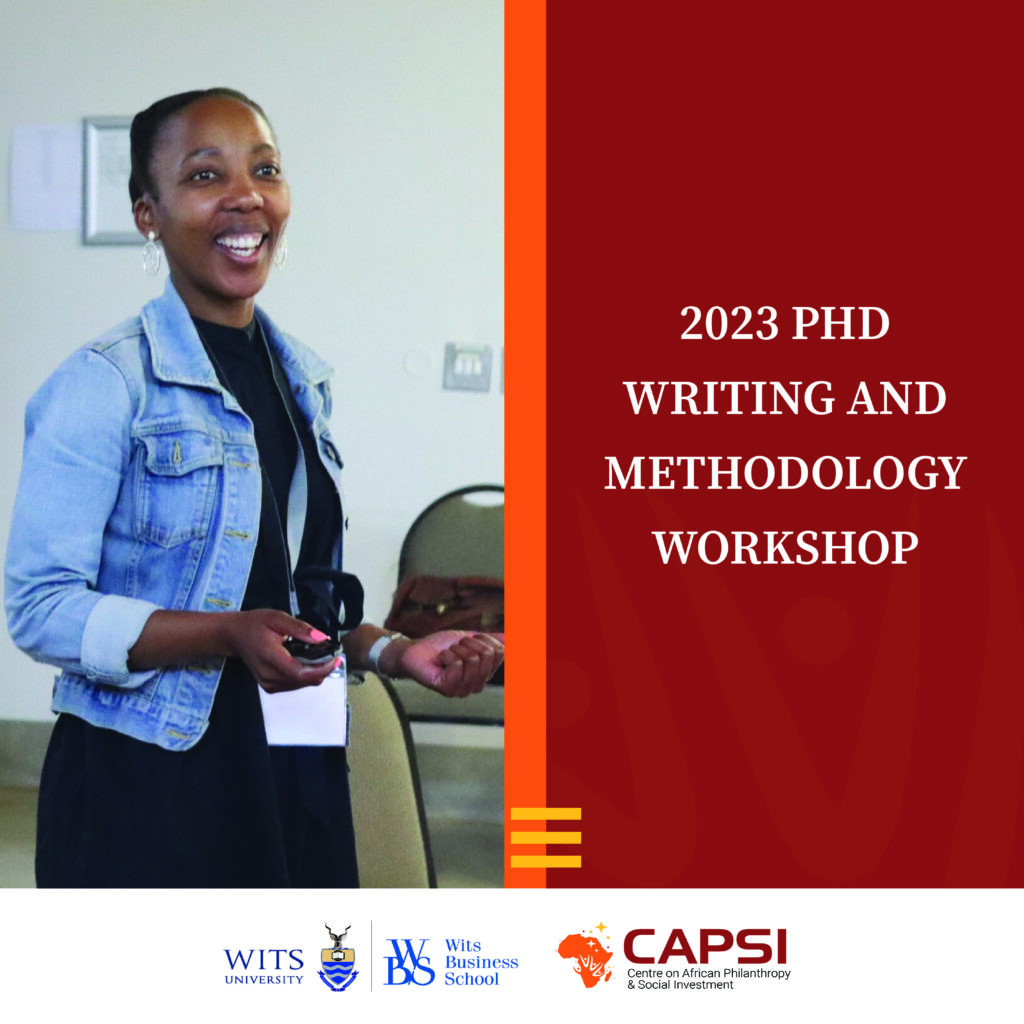
PhD Writing and Methodology Workshop

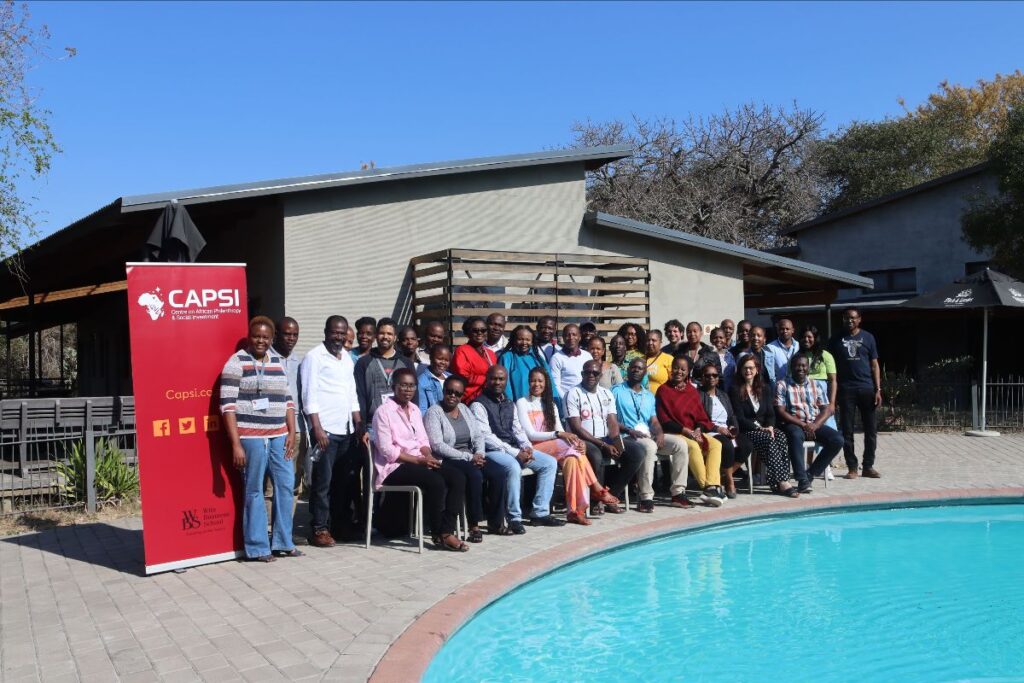
The Centre on African Philanthropy and Social Investment will host a PhD Methodology and Writing Workshop which will take place from Monday, 29 August  – Friday, 02 September 2022 in Mpumalanga, South Africa.

This workshop is open to PhD students registered at any African university who are looking for coaching to support their academic research and writing development. Students will have the opportunity to be coached by academics from Wits Business School, which is one of the leading business schools in Africa.

By attending this workshop, students will gain the following knowledge and value:  

  • Improving academic writing skills  
  • Planning and developing a chapter 
  • Developing research questions and conceptual frameworks  
  • Writing the problem statement  
  • Conducting the literature review  
  • Developing the research methodology – quantitative and qualitative  
  • Individual coaching on own research study
  • Ethical considerations and preparing for ethical clearance  
  • Writing for academic journals  
  • Project management 

How to apply

You are required to submit the following documents: 

  1. A motivation letter indicating how this workshop will be beneficial to you
  2. Proof of registration from your University
  3. Letter of support from your supervisor
  4. Your current research proposal or draft thesis 

All application documents must be submitted by email to Mmabatho Leeuw no later than 08 July 2022 at 14h00 South Africa time. 
Successful applicants should prepare to be on location for the full duration of the workshop.

Limited scholarships are available to cover expenses. Successful candidates will need to apply for funding from the organisers.  

Logistical details

  • Workshop Dates: Monday, 29 August  – Friday, 02 September 2022
  • Venue: Wits Rural Facility, Acornhoek, Mpumalanga
  • What is covered: Transport from Wits Business School, all meals, accommodation and uncapped Wi-Fi 
  • What is not covered: Transport to Wits Business School from your location

Should you have an enquiry about the workshop, please email Mmabatho Leeuw and Thandi Makhubele.
Terms & conditions

  • You will need to arrange your own transport to the Wits Business School in Johannesburg to access transportation that will take you to the Wits Rural Facility in Mpumalanga.   
  • Registered PhD students in the following disciplines will be considered: Humanities (history, languages, literature, and philosophy), Social Sciences (Anthropology, education, geography, law, political science, psychology, sociology, development and international relations), and Business (Accounting, economics, finance, management, and marketing).  
  • Philanthropic Studies including social investment 
  • A hybrid approach where those based outside South Africa can join online will be considered. 

Kisima Dialogue

Kisima Quarterly Dialogue Reflection

It has been a year of successful sourcing and publishing stories of giving and change from across African. The Kisima African Giving Platform continues diligently towards its mandate of documenting authentic stories and creating a space philanthropy conversation.  

Kisima means ‘a well’ in Kiswahili, a perfect explanation of what the platform aims to achieve, that being a well inspiring. The initiative aims to highlight stories that focus on African’s making a difference in their communities across the continent and through various means of capturing the information.  

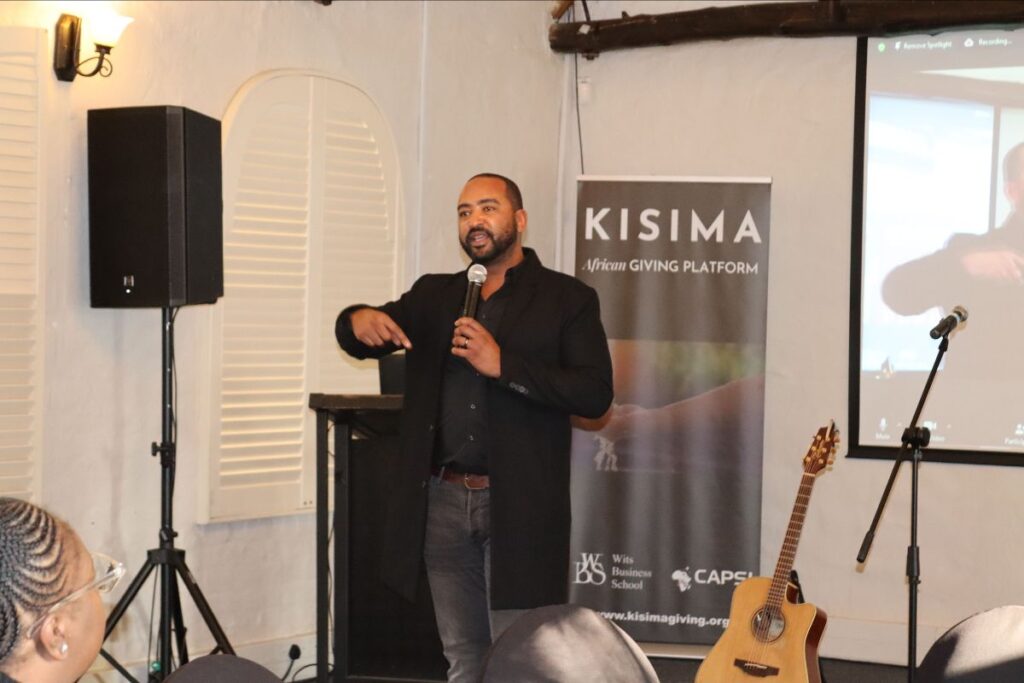
On the 28th of April 2022, the Kisima Platform hosted its first instalment of its Kisima Quarterly Dialogues. The convening was held under the theme “Impactful Giving, the Do’s and Don’ts”. The dialogue was a hybrid convening that provided a platform for stakeholders and interested parties in the philanthropy space to interact.  

Facilitated by portfolio lead Mapaseka Mokwele, this instalment of the Dialogues saw the launch of the Kisima Giving mobile app as well as provided a platform to change makers to share their stories in greater depth. Headlining the Dialogue as a keynote speaker was Chancellor of the University of the Witwatersrand and philanthropist, Dr Judy Dlamini. The speakers also included the Director of CAPSI, Dr Bhekinkosi Moyo, Programme Director at TrustAfrica and Kisima Partner and Sponsor, Briggs Bomba and CAPSI Programme Manager, Thandi Makhubele 

The Dialogue showcased some of the stories that have been featured on the Kisima website. These were Imbokodo Launch Pad led by Jazzman Simelane (also the winners of the Aspire Higher Competition), Kitso Lesedi Development Community led by Maki Tselapedi and Courageous Kids Foundation led by Courageous Musasa. The leaders of these organisations told the stories of what their organisations were about, but more importantly, the ‘why’ behind it all. After all, Kisima is a growing repository of African stories. 

There were a few highlights of the day that were presented by Bhekinkosi Moyo, the first being the launch of the Story Nominations page on the platform. This is a function that allows anyone in the continent to select a cause, person, or organisation of their choice that they feel needs to be funded by Kisima African Giving Platform. 

The Kisima African Giving Platform aims to make giving easier. Another key takeaway is how the platform has created various channels for one to Donate, including the new and innovative blockchain transfer options. The Platform also offers language translations from English to 13 widely spoken languages in the continent to make it accessible. Kisima truly is the well that keeps giving.  

CAPSI and the University of Cambridge’s Centre for Strategic Philanthropy

The Centre for Strategic Philanthropy (CSP) at the University of Cambridge and CAPSI recently announced a landmark collaborative partnership to further understand the impact of philanthropy across African communities, private sector organisations, foundations, and key individuals. The objective of this partnership is to increase the development of joint projects between the two Centres in a deliberate effort to grow theoretical and applied research on philanthropy that meets the standards of academic excellence.

This collaboration will better disseminate research and activities that develop models and tools appropriate to African realities and capitalise on these opportunities to firm the role and impact of various giving mechanisms and institutions.

You are invited to join the upcoming webinar titled “System Change in Philanthropy for Development: A Research Framework for Global Growth Markets”, which is one of the many contact points that will form part of this partnership.

Advisory board member - Mohamadou Sy

Advisory Board Member, Mohamadou Sy

Philanthropy, in its simplest form, is the act of using one’s resources for the benefit of others. And while we may now have a more expanded definition of the term which is more institutional in implementation, it is humbling to encounter a reminder of the simple definition through the stories of others.

Advisory board member - Mohamadou Sy

Mohamadou Sy is an author, contributor to the 2014 publication titled “Giving to Help, Helping to Give” and the Founder of Institut Supérieur de Développement Local (ISDL), which is a private education institution based in Senegal that provides higher education programmes in the fields of community development, project management and environmental development to students in French West Africa. Since 2005, ISDL has been building the knowledge and skills of community workers and young people who seek to carve a career path alternative to commerce-related fields.
The seeds for ISDL were sown many years before its inception, in rural North Senegal where Mohamadou grew up in a small but nurturing community. Having a real life understanding of the needs of his community and how education can greatly improve the lives of young people who come from there, he set out towards his ambition of becoming a teacher and returning to the community that influenced his way of life, by building a learning institution that would benefit them. This entrepreneurial ambition became a reality, and like many such ventures, was met with challenges related to growth and sustainability, that have been overcome through the years. Today, ISDL is a respected voice that has increased the appeal of non-commercial studies such as Community Development and Environmental Management among prospective learners.

There are similarities between the stories of ISDL and the Centre on African Philanthropy and Social Investment (CAPSI). When considering CAPSI’s vision and mission, Mohamadou is excited to be part of a pan African institution that brings students, researchers and lecturers together beyond the limitations of language and location. He says, “Being part of the advisory board is a great opportunity for me to make a difference in how CAPSI grows to be truly and inclusively African by reaching Anglophone, Francophone and Lusophone regions.”

In looking to the future, Mohamadou uses the massive strides that CAPSI has made since its inception, as hope for what is possible. “I see CAPSI becoming a leading African platform that facilitates research and dialogue on issues related to resource mobilisation, social development and philanthropy all in a manner which is inclusive of language and location”, he says. In closing, Mohamadou reflects by remarking, “As the saying goes, Rome was not built in one day, and so we must build CAPSI step by step. I’m grateful to everyone who has walked the journey with CAPSI to date for what they are doing as pioneers. I think that in paving the way for the new generations of scholars, we can continue to write our own history and story about philanthropy.”

Advisory board member - Bongiwe Mlangeni

Interview with Advisory Board Member, Bongiwe Mlangeni

Advisory board member - Bongiwe Mlangeni

Transitioning through your career to align with personal values holds very true for Advisory Board member, Bongiwe Mlangeni, who started her career as a journalist covering socio-economic and women’s rights issues. Her journey has seen her play a proactive role in promoting philanthropy in support of human rights and social justice projects across southern Africa. Bongiwe is the current Vice President for Global Health Strategies and immediate outgoing CEO of the Social Justice Initiative, of which she was the founding director.

With a primary interest in social justice in Africa, Bongiwe has always held issues of inequality close to her heart, especially those with damaging outcomes on health, economy, and social wellbeing. Using philanthropy, and collaborating with high-net-worth individuals, she has successfully mobilised funding for many social justice advocacy organisations. “My interest in philanthropy, from the beginning, was about how we can get wealthy Africans more involved in supporting social justice work.” She continues, “We also should explore how can we address the issues of inequality and improve wellbeing so that we build a society that is equitable.”

In relation to her position on the Advisory Board, Bongiwe would like to see a focus on getting affluent South Africans more involved in the pursuit of social justice as a mission that they can participate in and support, as well as growing philanthropy in South Africa in a way that benefits social justice issues, rather than focusing on charity. Looking at the achievements of CAPSI so far, Bongiwe is excited to be part of the Centre as it gathers the evidence of philanthropy within the African continent, shaping the thinking around it. She says, “There is still a lot more to be done in terms of documenting the story of giving, and the story of giving as a form of solidarity and transformation.”

Creating a body of knowledge of African philanthropy will challenge old ways of thinking as society continues to build itself. As a lecturer on CAPSI’s programme, Bongiwe proactively adds her voice to this work and has been an influence on students who have attended her courses. One of the notable nuggets that she regularly challenges students with is the notion that philanthropy is exclusively for the wealthy. She says, “There is more to philanthropy than status and being a billionaire – there are many ways in which it is expressed.” Students are challenged to consider their understanding of philanthropy and also to reflect on how this has manifested itself in their lives. This reflection of the personal association with philanthropy supports part of the work of CAPSI – which is to enable and take ownership of documenting the process of philanthropy and the experiences around it.

Speaking of the journey of CAPSI so far, Bongiwe is proud to be part of the dynamic intellectual space that has created and grown the field of understanding philanthropy within the African context. Looking to the future, she can see that the organisation will produce academics who can provide new knowledge and approaches to philanthropy.

The three fundamentals of CAPSI; namely, to be a dynamic space for engagement, a platform for idea sharing, and a space for influence, are paving the way for a high production of intellectual information from across the continent. People from all fields – students, practitioners, business people, academics, decision- and policymakers – are able to engage, though there is still a need for influencers in the organisation. Her greatest fear for the organisation is unusable or inaccessible research – mothballed information that stays in the dark – it is all about the sharing and engagement.

Auburn University visit to CAPSI

Auburn University visit to CAPSI

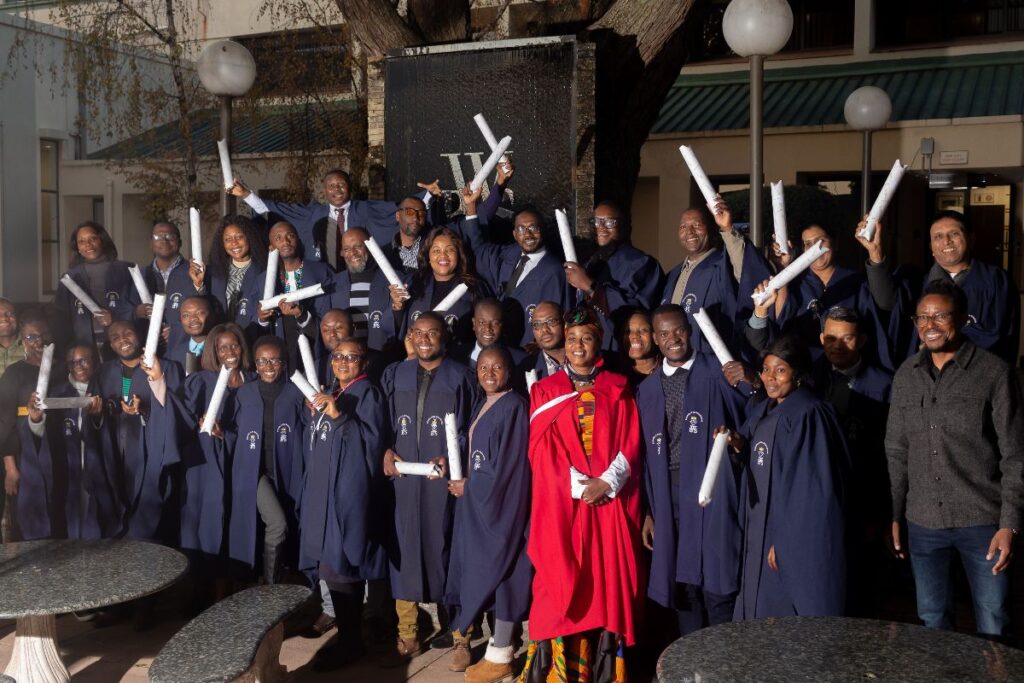
On the 8th of April, CAPSI hosted 14 students and 2 faculty members from Auburn University on a visit to our facilities at Wits Business School in Johannesburg.

Students from Auburn University’s Public Policy and Public Administration unit are required to complete an international site visit for a period of 2 weeks as part of their studies to see non-profits in action. This year, they visited Johannesburg. In previous years they have visited Ghana and Liberia, each of these conducted to expose students to non-profits and public policy in action in Africa.

CAPSI has been engaging with the University for other projects thus they seized the opportunity to facilitate a visit for their students to visit the Centre and gain a deeper understanding of our research, academic offerings and special project offerings.

AspireHigher winner announcement

The winner of the Aspire Higher Project; Imbokodo Launchpad

Following two years of implementing solutions, the winner of the Aspire Higher Project was announced at a final judging event hosted on 19th of April. Imbokodo Launchpad was awarded £80 000 (approximately R1 500 000), which will go towards scaling the implementation of the project to provide education on sexual and reproductive wellness to young girls in Tsakane township in Johannesburg, South Africa.

What started as a co-created idea, has become an example of how partnerships with a purpose can provide a gateway to shift the trajectory of a community’s future. The Aspire Higher Project aims to fulfil a vision of girls and young women in sub-Saharan Africa having access to engaging sexual health education through innovation and ideation that delivers a combination of HIV prevention, and sexual and reproductive health services. 

Hosted in a hybrid format by Centre on African Philanthropy and Social Investment (CAPSI), Gilead Sciences, Reckitt, UNAids, Durex and Wits Business School, the final judging event provided the four finalist teams – Aganang Skills Academy, the Gratitude Project, Imbokodo Launchpad and GirlLead SA – with the platform to share the successes and lessons that they gained during the challenging period of implementing their ideas. In opening the session, Bhekinkosi Moyo from CAPSI commended the finalists on their resilience to continue with their projects by pivoting to the changing times and making use of the resources available to them.

In his presentation, Dr Moyo provided the background of the Aspire Higher Project, which was conceptualised in 2019 as a platform to tackle issues experienced by the spread of HIV/AIDS, with women and young girls being the most vulnerable. “The commitment that we made was to leverage our partnership in order to enable greater access to health and economic empowerment education for young women and girls, that is both engaging and respective of their cultural and religious contexts while challenging the risks that they face as a result of the spread HIV/AIDS.”

Peter Edwards of Reckitt acknowledged the efforts of the finalists who he believed fully embodied the vision of the Aspire Higher Project. With regards to the funding of the finalist’s projects, Peter said, “Reckitt is proud to have provided the first phase of social impact investment towards Aspire Higher. We are delighted that Gilead Sciences has come on board to provide the second phase of funding, which will support the winning idea and ensure its expansion.”

Dr Michael Reid of Gilead Sciences noted that this initiative in collaboration with the WITS Business School and other partners, is particularly important to Gilead. “Not only does it address sexual health education among young girls, a particularly vulnerable group, but also enables social and economic empowerment through entrepreneurship,” he said. As the chair of the judging panel, Dr Reid outlined the 3-point framework used by the judging panel to ascertain the final winner: creativity and innovation, plans for scale and sustainability, and finally the impact of their project outcomes in their selected communities.

Representatives from each of the teams presented their journey outcomes to all in attendance, profiling how they tactically implemented activities and managed their projects with the support provided to them by sponsors. Each of the teams also showed how they were able to leverage on innovative problem solving which enhanced the experience of their identified communities. In his keynote address, entrepreneur and author, DJ Sbu, celebrated the work of each of the teams and encouraged them to use the wins and losses of their experiences to build what will benefit the masses by tacking the social ills that the spread of HIV/AIDS presents. He remarked, “By giving back to communities in the way that they have through this project, each of the finalists have built an ecosystem that makes a bright future possible for thousands of young girls across South African township communities.”

In his first address as the winner of the Aspire Higher Project, Jazzman Simelane from Imbokodo Launchpad, extended a hand of strategic partnership which he expressed as being one of the key success factors of the last two years. He said, “With social development, there is no competition as we are on the same team. Our model shows that we believe in partnerships as what our sponsors have shown us.” Jazzman continued, “With this funding, we want to take Imbokodo Launchpad into other townships in South Africa and across Africa. Together we can win the war against HIV/AIDS and other social ills that affect our communities.”

Looking ahead, Dr Moyo confirmed that the Aspire Higher Project will use the lessons gained during this pilot iteration to extend the project into other African countries. He said, “As partners of this project, we will convene to map a way forward for Aspire Higher. With the support of partners such as DJ Sbu and WITS Business School’s Head of School Prof Maurice Radebe amongst others, we will continue to support each of the finalists on issues such as governance, sustainability, and visibility of the projects.”

The Aspire Higher Project is a collaborative initiative which promises to grow through its body of knowledge, research, education, and social investment across Africa.

Communications and Digital Platforms Highlights

Communications and Digital Platforms Highlights

2021 has been the year that pushed many of us to learn new ways to communicate with our audiences. This did not, however, hinder the efforts of the Centre on African Philanthropy and Social Investment (CAPSI). As the Centre, we adapted to the ever-changing environment. We were able to accomplish a lot and further grow the understanding of philanthropy and social investment in Africa.

Part of navigating our new normal meant that we had to relook how to host events and share our messaging.  We steered towards the virtual world. Some of the events we successfully hosted and took part in were led under our Academic and Programme units; you can access recordings of these on our YouTube channel.

We had our various projects and launches covered by media outlets, below is some of the exposure we received:

Highlights on Publications

Highlights on Publications

By Xolani Dlamini  (Digital Publisher)

As we reflect on the year 2021, indeed, there have been many great challenges but equally, we have had some opportunities and monumental breakthroughs, particularly in science. This is reflected in many of our initiatives and research works that we embarked on as CAPSI. In line with the Centre’s mandate, a number of research studies were commissioned by the Centre across the African continent focusing on various research themes These studies have produced a number of research outputs in various publication formats.

We would also like to acknowledge and express our gratitude to all our Research Associates who have actively carried forward the Centre’s mission to bridge the gap in the study, research and practice of philanthropy and social investment in Africa. As part of several studies commissioned by the Centre, we started a section called the Research Article Series which includes articles published independently by CAPSI as part of the efforts to increase our scholarly research outputs. One of the recently published articles was written by our Associate Researcher Dr Asabea Shirley Ahwireng-Obeng and Wits Business School’s Professor Emeritus- Frederick Ahwireng-Obeng.  This paper examines the simultaneous impact of private philanthropic cross-border funding from international foundations on the economic, social, and environmental dimensions of sustainable development in Africa.

The inaugural issue of the International Review of Philanthropy and Social Investment journal received positive feedback from scholars and practitioners in the field. To deepen the learning from the articles in the journal, we hosted a series of webinars where authors delved deeper into their findings and recommendations. The journal is working on two special issues exploring High Net-Worth Individuals and Philanthropic foundations. These will be published in the first quarter of 2022. It is important to note that we have adopted a continuous publishing model – this means that as soon as an article is prepared it is released online, creating a rapid flow of topical, quality articles.

In response to perceived challenges faced by researchers looking to publish their research in academic journals, we started an initiative to assist and facilitate young researchers through a developmental approach to understand various requirements for academic publication. We hosted the first virtual workshop in June 2021 that was well received by our international community.  In 2022, we will host three workshops giving expert advice on a broad range of publishing topics.

We would like to extend an invitation to all players in the sector to join us in partnership in the pursuit of our mission to bridge the gap in the study, research and practice of philanthropy and social investment in Africa.

Looking ahead…

Looking back and forward as a member of the international editorial board and reviewer during the Journal’s first year, is both challenging and encouraging. Challenges have been putting together the systems needed to ensure professional standards are the norm as well as respecting authors’ expectations of timely and fair treatment.  Encouraging is progress in establishing the Journal as a resource to advance philanthropy and social investment which emanates from a less than usual home for academic publications in this field.  Also encouraging is the way in which the Journal is positively interfacing with the research and teaching programmes of the Centre for African Philanthropy and Social Investment, particularly for the new generation of scholars as well as practitioners.  For the latter, Field Notes are an opportunity to share experiences, which add practical knowledge to the more empirical academic work.  While we can say ‘so far so good’, there is a long road ahead to become the Journal of choice for those dedicated to philanthropy and social investment anywhere in the world.

Professor Alan Fowler

We would like to express our appreciation to our funders, researchers, reviewers and last but not least our audience and partners for their continued support.