Author: info

Meet the Associate Researcher: Chengete Chakamera

Chengete Chakamera currently works at the Graduate School for Business Administration (Wits Business School), University of the Witwatersrand.  Chengete holds a PhD in Economics from the University of the Witwatersrand, a Masters degree (with distinction) and Honours in Economics from Rhodes University, South Africa.  He received a bachelor’s degree in Business Management and Economics (first class) from the University of Fort Hare, South Africa.


Chengete also holds a postgraduate certificate from Vrije University (VU) Amsterdam in Netherlands, focusing specifically on two major areas: Quantitative Financial Risk Management and Real Estate Management. He is a seasoned researcher, educator and consultant.  He has a passion for research and consultancy in the areas of Economic Growth, Infrastructure, Spatial Economics, International Trade, Volatility in Stock Markets, Monetary Policy and Investments.


Q: What are you researching and what inspired you to take this path? 

I am conducting research projects concerning the scope and size of philanthropy in Africa. My initial research focused on Corporate Social Responsibility (CSR) that is undertaken by multinational corporations in Africa. From this research, a journal article titled, “Analysis of Corporate Social Responsibility of the African ‘Internationalisers’ versus Non-African founded MNCs” was published in the International Review of Philanthropy and Social Investment journal.


The current research seeks to map philanthropic organisations in Malawi, DRC and Namibia. Among the objectives, we want to understand their sizes and philanthropic activities. I was inspired by CAPSI’s goal to bridge the gap in the study, research and practice of philanthropy and social investment in Africa. Lack of knowledge and an official database regarding indigenous philanthropic organisations and what they do are major concerns. I want to be part of the team that produces this knowledge and give a better context of philanthropy from an African perspective.


Q: What have you learnt or seen that has been vital to your career?

I have learnt the importance of transdisciplinary research. While economics is my primary discipline, I have seen through CAPSI projects that my economics and econometric knowledge could be integrated into the area of philanthropy and social investment.


Q: What is the potential impact of your research in the social investment space? 

By revealing the scope and sizes of indigenous philanthropy in African countries, my research will potentially attract more funding towards the social investment space. On the side of beneficiaries, at the moment, many potential beneficiaries seek funding but they do not know appropriate philanthropic organisations to approach. This research will make more information available to them and other various stakeholders.


Q: What has stood out most for you in your career?

What has stood out from my current research is that it is very difficult to obtain information from several indigenous philanthropic organisations in Africa. Most of them are not willing to share their information and for some, it is even difficult to identify them as they do not have official websites or are officially registered. As a result, their work on the ground remains unknown.

prince Mudau

Prince Mudau

Prince Mudau is a master’s student who holds an LLB from the University of Venda and a Master’s in Corporate Law from the University of Johannesburg. His master’s research at the University of Witswatersrand is on the regulation of philanthropy.

Prince has interests in non-profit governance, research, grant-making and responsible business ethics and corporate social responsibility.

Q: Tell us about your field of study and what inspired you to take this path ? 

When I was a law student, I was introduced to the term “juridical person” which means a non-human legal entity, endowed by law with legal rights and obligations similar to those of a natural person. This meant that businesses are part of the communities that they operate in and should contribute positively to building these communities as much as it is expected from any other member of the community. This sparked my interest in social justice. After completing my undergraduate degree, I had an opportunity to be an intern at a grant-making organisation that capacitates civil society organisations. At this organisation, I realised the importance of civil society organisations and the change they make. I decided to combine my knowledge of the law and my passion for the realisation of social justice through well-equipped civil society and philanthropic organisations. Hence my research focuses on how regulation can increase the efficiency of philanthropy and make more impact.

Q: What have you learnt or seen that has been vital for your career or that has stood out most for you? 

The regulation of philanthropy in South Africa is one of the research areas that is in its infancy, most probably due to South Africa’s enabling environment for philanthropic organisations. Therefore, there is a lot of potential for ground-breaking research that may result in a consolidated regulatory environment that will make philanthropy in South Africa efficient and effective.

Q: How do you think your research will make an impact in the social investment space? 

South Africa’s regulatory environment of philanthropy is enabling. However, the question is whether it is achieving its potential maximum. Therefore, the research looks at various regulatory instruments and how they affect philanthropy. This knowledge may assist in informing policymakers, regulators, practitioners and other stakeholders in the philanthropy sector on how regulation shapes philanthropic activities.

Nomathemba Memela

Meet the Graduate: Dr. Nomathemba Memela

Dr Nomathemba Memela is the first PhD graduate of the Centre. Prior to starting her doctorate journey, she holds a Masters in Development Finance along with a number of sought leadership programmes to her name. With over 25 years of professional experience in Information Technology, Nomathemba identified the opportunity to deeper understand and integrate sustainability as a development tool for corporate businesses.

Q: Your field of study and what inspired you to take this path 

A: I developed an interest in Sustainable Development during my Masters studies in Development Finance.  Upon pursuing my PhD, I wanted to investigate further the contribution of the corporate sector (of which I had been part) towards this global mission of sustainable development, from a perspective other than that of the companies involved.  

 My research undertook this through an interrogation of the practice of sustainability reporting as a proxy for sustainability performance, through the lens of the lived-in experiences of external stakeholders of the companies involved.  It focused on the South African mining sector, by bringing forth the voice of community stakeholders, who are located in the mining villages concerned, and are immediately impacted by mine operations. 

Q: How do you think your research will make an impact in the social investment space? 

A: Sustainable development requires that as we develop, human life and society are positively impacted in a real and meaningful way, and not just as a compliance or tick-box exercise.   Social investments are an important means through which this is achieved, whether implemented by the public, private or third sector.  To ensure that such practices make the sustainable difference intended, they need to be interrogated deeply and holistically, in their various contexts, to evolve the knowledge, understanding, and thereby effectiveness – for all parties involved.   

Q: What have you learnt or seen that has been vital for your career or that has stood out most for you? 

A: Firstly, you can achieve anything that you set out to do, regardless of your background and personal circumstances.  Secondly, that challenge alone may be insufficient – meaning and purpose are what brings more lasting fulfilment to a vocation, and life in general.  

THE ROLE OF PHILANTHROPY IN TACKLING FOOD SECURITY

The role of Philanthropy in tackling Food Security

Society Talks is a public dialogue hosted by the Southern Africa Trust, Mandela Institute for Development Studies, GraçaMachel Trust and CAPSI to bring together stakeholders within the development and business community, civil society and the public to inform, engage and share experiences with the broader society.  The collaborative series unpacks Food Security issues affecting marginalised communities from a policy perspective.

One ofthe most recentdiscussions centred onthe field of philanthropy as an enabler in tackling food security in Africa, as well as understanding the recommended key policy interventions required for SADC to address the imminent changes.The panellists for this dialogue were EvansOkinyi of the East Africa Philanthropy Network (EAPN), Mosun Layode of African Philanthropy Forum (APF), Caesar Ngule of Kenya Community Development Foundation (KCDF), Gima H. Forje of the TY Danjuma Foundation, with the discussion moderated by DrBhekinknosi Moyo.

In his opening remarks, Evans spoke of the work of EAPN and how the organisation is focussed on the development and management of knowledge, building alliances as well as the enabling environment for successful philanthropy in East Africa. They are committed to providing a platform where members and the philanthropy sector can meet, share, plan, and network – something that proved very useful during the COVID-19 pandemic. Working closely with the members, EAPN has been trying to convert those conversations into meaningful partnerships, connecting government with philanthropists to address issues of food security. Also looking at alternative ways of financing the gaps that exist in food security, blending finance from the private sector with that of government and philanthropy.

Mosun began by recapping the previous ten months, specifically how the African continent has not experienced the drastic health impact from the pandemic, as predicted by the rest of the world. Unfortunately, the economic repercussions have exposed the fragility of the health and social safety systems. Still relying heavily on imports to supply staples like rice, Africa is unlikely to be able to feed more than 25% of its population by 2025. One of the key points that came out of APF’s recent conference, is that in absolute terms, food production has increased, but the impact is not really felt across the continent. Looking at the impact of climate change on food security, Mosun spoke of a need to get relevant institutions involved, bringing philanthropy in as well. Creating awareness on these issues is a way that philanthropists could make a difference, particularly garnering support for the smallholder farmers. 

Another interesting outtake from the conference was the need to promote agricultural practices in Africa, beyond food production – looking at technology, tools, and training to harness the arable land and produce enough food to feed the world, giving African an economic advantage. Attracting young, unemployed people to opportunities in agriculture is a necessary action, aiding the issues of unemployment.Looking at food security as it pertains to malnutrition, Mosun highlighted the need to focus on children, getting them the support they need for the first 1000 days of life. She also emphasised how important it is to prepare for the next global epidemic or eventuality, so as not to be caught off guard again. 

In his remarks, Caesar reflected on the immediate response to food security in Kenya during the pandemic involved the handout of food parcels and if these were sustainable solutions.The KCDF responded to immediate needs by investing its efforts into supporting of smallholder and subsistence farmers, as well as addressing policy bottlenecks, such as land rights. Similarly in his opening remarks, Gima outlined the TY Danjuma Foundation’s initial response to the pandemic, which echoed Caesar’s – handing out of food parcels, while the longer-term view was supplying them with the tools and knowledge to become sustainable themselves. He also raised the organisations concern on the waste of food during the lockdown which was a result of the restrictions in movement – food that could have fed many people. He spoke of the many ways to support the smallholder farmers, as well as the school feeding programme.

Mosun spoke of infrastructure, and how the relationship between governments and philanthropy varies from country to country. For philanthropy to work in Africa, organisations, governments, and initiatives must work together to get a result. Using an example within APF, she spoke of how they showcased various organisations in Africa working within the field of food security, at their conference. They shortlisted them, voted and came up with one organisation, FarmGro Africa (from Kenya), who now is the beneficiary of all of APF’s registration fees. An unexpected outcome has been continued calls and interests from big corporations and organisations wanting to get involved in Food Security; to be connected to organisations through a trusted middleman, like APF. 

Evans listed three critical points to converting philanthropic donations into long term strategies:

  • More support is needed for small scale food producers, in these areas: famine, food, knowledge and financial services – connecting these with the market so as to take advantage of opportunities arising from the value chain.
  • Working more holistically, no longer in silos.
  • Improve collection, storage, analyses of quality and accessible agricultural data.

Moving from response to preparedness, there should be a focus on education and health. Philanthropists could help to digitise schools, improve infrastructure in healthcare, especially in attracting and keeping qualified people.

Key take aways from the discussion are:

  • To get action on climate change in Africa, it has to be relevant, so bringing food security, a more immediate problem, to the fore and emphasising its relationship with climate change, is the way to connect it.
  • The data collected during the pandemic, specifically of who received what, from where, is a trend that needs to be leveraged – more data on philanthropy is needed in Africa.
  • There is a great opportunity in philanthropy for the development of technology, moving towards the goal of 60% of Africans being connected on a mobile network, by 2025.
  • There is a lot of opportunity for food security outside of philanthropy – community support and grassroots mechanisms can be leveraged to lobby and manage agricultural programmes.

“Philanthropy is the glue that binds our societies together and it expresses itself in different forms.”

Webinar series cover

Reflecting on the launch of the International Review of Philanthropy and Social Investment Journal

Webinar series cover

The Centre of African Philanthropy and Social Investment launched the International Review of Philanthropy and Social Investment Journal on the 1 September 2020. This is a first-of-its-kind publication which is aimed at academic and research communities, exploring the emergent and developing field of philanthropy and social investment in Africa and beyond. While the journal is based in Africa and written primarily by Africans, it offers a global remit responding to the growing demand for both academic and practice-related articles on the varieties and scales of philanthropy and social investment. The editorial team and advisory board of the journal consist of a world-class academics from institutions in Africa, Asia, Europe, Australasia and North America, who poured their decades of knowledge into pioneering this body of work.

To commemorate the launch, CAPSI hosted an engaging conversation with academics and practitioners in the field of philanthropy, including a keynote address by Tsitsi Masiyiwa and addresses by Imhotep Aladigede, Jacob Mati, Gill Bates and Masego Madzwamuse. Since the launch, we received numerous requests for discussions into the articles and field notes which allowed for deep-dive style discussions between authors and a wider audience.  Thus, the International Review of Philanthropy and Social Investment Journal Webinar Series came to life, facilitated with a registered audience while being streamed lived to our Facebook page. The webinar series launched on the 26 October 2020 and is set to continue into the new year.

Series editions

The first edition of the series hosted 3 of the journal authors with Carol Paton, discussing her field note titled “Corona, the butterfly that flapped its wings”, Wycliffe Ouma on unpacking the journal article titled “Corporate philanthropy and firm value in Africa” and Chengete Chakamera sharing his findings from his article “Analysis of corporate social responsibility of the African ‘internationalises’ versus non-African founded MNCs”.

Click the following link to watch the full session – https://youtu.be/fLeTSnDG70w

The second edition of the series took place on 9 November with an in-depth look at Jacob Mati’s article titled “Gifting and philanthropy environment in contemporary Kenya”. Also hosted on the edition was OSISA Executive Director Siphosami Malunga who discussed his field note titled “Defending open societies in the context of COVID-19”.

Click the following link to watch the full session – https://youtu.be/EKM79T5mGQQ

The final edition for 2020 took place on 23 November hosting two co-authored articles. Marlene Ogawa and Jamie Webb discussed their field note titled “Synergos: philanthropy’s bridging role in the Covid-19 pandemic in Africa“; while  Muazu Ibrahim unpacked the findings of his research article co-authored with Imphotep Alagidede, titled  “NGOs activities and local government spending in Upper West region of Ghana“.

Click the following link to watch the full sessionhttps://youtu.be/RmJxzVDOCns

Reception

Since the launch of the journal, we have been overwhelmed by the positive responses received. To date, the journal has been viewed and downloaded over 3 500 times with both research articles and field notes being accessed since September. As the first publication with a niche global population demand, this is a very positive encouragement that shows that there can only be greater research and insights to come with the pursuit of future editions.

Click the following link to read all articles in the Journal – https://journals.co.za/content/journal/irpsi_v1_n1

Meet our new team members

Meet our new team members

Meet our new team members


The Centre on African Philanthropy and Social Investment thrives for excellence in all the content and publications we produce; the Centre has the support of various members to assist in doing so seamlessly. CAPSI is delighted to welcome the following new individuals to our team.


Roland Mwesigwa Banya | CAPSI Associate ResearcherRoland Mwesigwa Banya – Associate Researcher

Roland M. Banya is a Development Finance specialist with 10 years’ experience on the African continent. After obtaining his Bachelor’s Degree in Economics from the University of Cape Town, an MSc Degree in International Finance and Economic Development from the University of Kent, he has since obtained many more qualifications. Roland has strong skills in research and analysis. He has immense experience in the financial and investment sector.


Melody MandevereMelody Mandevere – Associate Researcher

Melody is a passionate researcher whose interests are about the African continent, specifically where to look within Africa to solve African problems –   Africans using their resources for their betterment as well as those around them. Amongst her various accolades, she currently holds a Master of Commerce in Strategic Management and Corporate Governance, a Bachelors Degree in Business Management and many more.


DabesakiDabesaki Mac-Ikemenjima – Associate Researcher

Dabesaki’s role is currently Programme Officer at the West Africa office of a global philanthropic foundation. He manages intersectional initiatives that cut across gender, generational analysis and disability, and includes themes such as natural resources management in the region. Prior to joining Ford, he worked as an international consultant on several other projects.


XolaniXolani Dlamini – Digital Publisher

Xolani Dlamini is an experienced Digital Publisher, specializing in academic/scholarly publishing, particularly Open Access journals. He has been involved in managing and publishing various academic journals in different fields of study and has assisted with his impactful perspective on the “new normal” we have found ourselves in as a result of the pandemic.


Noxolo Kahlana | CAPSI Associate ResearcherNoxolo Kahlana – Associate Researcher

Currently the Executive Manager of CCBSA Mintirho Foundation, Noxolo’s journey began as the former founder and MD of Energy House ZA, a renewable energy projects development and investment company. She is also the founder of Phakama Sizwe, running healing conversations for the nation. Noxolo is very passionate about sustainable community development, youth development and inspiring young entrepreneurs.


Asabea Shirley Ahwireng-ObengAsabea Shirley Ahwireng-Obeng – Associate Researcher

Asabea is an academic and consultant with a keen research interest in capital markets, financial economics, institutions, investments as well as entrepreneurship and philanthropy in emerging economies, particularly Africa. She obtained a BA Degree in International Relations and Industrial Psychology from the University of Witwatersrand, amongst many others.


We look forward to seeing what our new members have in store for CAPSI. Click here to meet our full team.

Keratiloe Mogotsi

Dr Keratiloe Mogotsi is a Pan-Africanist, pracademic, researcher, Lean Innovation Coach, project management professional and African Philanthropy academic. She is currently an Assistant Professor, coach, advisor and mentor at Chatham University in Pittsburgh, USA. She has extensive experience across the corporate, government and non-profit sectors. She is a certified Project Management Professional (PMP) with the Project Management Institute (PMI) and a Lean Six Sigma Coach. She is also a registered member of ARNOVA (Association for Research on Nonprofit Organizations and Voluntary Action), ISTR (International Society for Third-Sector Research) and IPASA (Independent Philanthropy Association of South Africa). Dr Mogotsi has led philanthropic projects, including as President of the Women in Nielsen’s CSI Initiative, African Heritage Programme Lead for MINDS (Mandela Institute for Development Studies), and Nielsen Cares Programme Lead in Africa. She teaches and provides advisory services to non-profit organisations.

Her research interests include sustainable development, disaster philanthropy in Africa, venture philanthropy, African philanthropy, Lean and Agile management in non-profits, and philanthro-capitalism in Africa. She is passionate about education and “kindling” greatness in people. As a passionate educator and coach, she is committed to excellence in everything she does. Her current and professional affiliations include Associate Dean & Assistant Professor at Chatham University, African Philanthropy Lecturer at Wits University, Founder of the Ofentse Mogotsi Trust NPO, Managing Director of South Serene Guest House, and Managing Partner at Neo Afrique Investments.

Melody Mandevere

Melody Mandevere

Melody Mandevere is a PhD student with over 15 years of experience in administration and project management. She is also a researcher who is passionate about the continent where we look within Africa to solve African problems.

Q: Your field of study and what inspired you to take this path 

A: I am currently studying Corporate Social Responsibility in the mining sector.  believe that Southern Africa has vast mineral resources and despite this, the mining communities seem not to benefit much from it. They are wallowing in poverty, yet they have minerals all around them, which is disappointing and shows a clear error in the system.  As Africanswe need to understand what we can do to benefit from our natural resources so that we can break the poverty cycle through receiving and utilising the minerals, as well as educating ourselves on the matter

Q: What have you learnt or seen that have been vital for your career or that has stood out most for you? 

A: Throughout my studies, I have grown to understand how CSR is viewed by different stakeholders. The corporates have their own understanding which is not entirely in line with the communities’ expectations. This is how the disconnect is created and why the poverty cycle continues – what affects the communities even more is the lack of or inadequate regulations, which have not made things any easier.  Even though large amounts are reported to be channelled to CSR, there is little to show for it on the ground and this is unfortunate.  Minerals are finite – there will come a time where mineral mining will be historybut the communities won’t have anything to show for it. Minerals being mined now should benefit this generation and something should be invested for the next generations. The time to act is now.


Q: How do you think your research will make an impact in the social investment space?
A: My research is a comparative study between Zimbabwe and South Africa. By comparing the two countries, it will help them as well as other African countries to learn from each other’s experiences. It also brings out the importance of formulating CSR policies that will have a positive impact on sustainability in the mining communities. This research will help corporates understand the expectations of the CSR beneficiaries. 

from the desk of the director

From the desk of the Director – December 2020

From the desk of the Director – December 2020


from the desk of the director

As we end what proved to be a year filled with much uncertainty, not all is doom and gloom. There are rays of hope in the medical field. Verified news reports confirm that there are more than 100 vaccine candidates that are currently undergoing development for COVID 19 across the world, twelve of which are at the large scale phase 111 clinical trials to assess their efficacy and safety. Furthermore, three of these developed by BioNtech/Pfizer, Moderna and Oxford university have been reported to be highly effective. Help is on the way.


What we know however is that a ‘new normal’ has been developed and new ways of living our lives have taken root. Certainly going forward, we have no choice but to build hybrids between the old and the new. This is certainly how we see things and the future at CAPSI. While we have learnt that the new tools of work create new levels of efficiency, we have seen that these don’t necessarily legitimize the outcomes. With this as a lesson learnt, we will strive to blend new tools around our research, academic and outreach programmes but still strive to enable the human touch on issues that require validation, inclusion and participation.


As the year ends, we feel propelled to do more in 2021. But to prepare for this, we need to ask ourselves a few critical questions. What have we achieved this year? What challenges did we face? How did we manage them?


Academic matters

After 3 years of hard work by our staff and partners, I’m excited to share that our Masters in African Philanthropy Degree is now an accredited programme by the Council on Higher Education!  We will spend the coming year developing the systems and logistics required to ensure that the programme delivers on its commitments and provides students with a one-of-a-kind experience. Additionally, we will dedicate time and resources towards popularizing the Degree as well as also on student recruitment for 2022 academic year. I want to take this opportunity to thank everyone who was involved from the beginning to the end. We look forward to welcoming some of you in 2022 as you journey towards a new world in philanthropy and social investment.


Staying with academic matters, CAPSI and Wits Business School will be offering a Postgraduate Diploma in Philanthropy and Resource Mobilization in July 2021. This will pave the way for vertical articulation into the Masters programme in 2022 and beyond. We rolled out the first six masterclasses this year and we are excited that the interest was high and that we attracted students from across Africa. For the coming year, you can look forward to a further revised offering that is based on the reflections and experiences of the first cohort of students. This will ensure that the 2021 cohort of masterclass and academic programme students can look forward to an even better experience.


We are excited about the growth potential of our student intake, especially into our doctoral programme. As we end the year, we had fourteen doctoral students and our first PhD graduate, Noathemba Memela, receiving her doctorate at a graduation ceremony held on the 14th December.


We are also ending the year with a video that takes a retrospective look at what the Centre has been able to achieve since its inception. Establishing a Centre of this nature required several consultations, strategic insights, financial support, political support and social capital among others. It also required sequencing of interventions and frontloading some in order to build a footprint. From the video, it is clear that we prioritized systems and processes in the beginning so as to get the foundation right. Then, we developed programmes and frontloaded research and curriculum development and complimented these with dialogues and meetings. As a result, we now have an academic programme, a research programme and convenings as flagships of the Centre. And recently we added the Journal. Next, we will begin focusing on the fourth initiative around the measurement of philanthropy.


Partnerships

As the Centre continues to grow, there are demands and contextual shifts that have an impact on us and on our work. New skills sets are required especially in such areas as data mining, digital technologies, and knowledge management among others. The Centre has been proactive in responding to these requirements so as to remain relevant. One of our responses includes welcoming a Digital Publisher to our team, who is responsible for coordinating all our publications.


I want to thank our donors who include Carnegie Corporation of New York, Ford Foundation, Charles Stewart Mott Foundation, Konrad Adenauer Foundation, Reckitt Benckiser, Gilead and Wits University for putting their faith in a new initiative and with their support, we have been able to achieve our goals. Secondly, our strategic partners have weathered the pandemic storm with us. We held several events jointly with the African Union Development Agency-Nepad, Mandela Institute for Development Studies (MINDS), Southern Africa Trust, Graça Machel Trust, International Society for Third Sector Research (ISTR), Association for Research on Civil Society in Africa (AROCSA), Harvard Centre on African Studies, African Philanthropy Forum, African Philanthropy Network, East Africa Philanthropy Network and Higher Life Foundation, among others. I also want to extend our sincere gratitude to our advisory and editorial boards that have offered us valuable support as we navigated new terrains.


I wish to end the letter by wishing everyone a very safe festive season. The pandemic is still with us. Please exercise caution, adhere to WHO Guidelines. We are looking forward to reconnecting with you next year as we consolidate our work.


Festive season greetings

Bheki

Mamadou-Biteye

Meet the Advisory Board: Mamadou Biteye on Inclusive Social Investment

Meet the Advisory Board: Mamadou Biteye on Inclusive Social Investment


Mamadou-BiteyeMamadou Biteye is Head of Social Impact at Visa for Central Eastern Europe, the Middle East and Africa who started his career as an agricultural economist in Senegal, which, he believes, predestined him to work with lower-income and vulnerable communities, intersecting with corporates, entrepreneurs, and social work.


His first, nearly 30 years ago, was managing and coordinating a financial inclusion programme, aimed at helping people excluded from formal financial services, mainly women, youth, and smallholder farmers. The bank required him to make secure loans while meeting business performance indicators, however, he found he was tasked to help a sector of people who couldn’t fit into this space.

“I saw, very quickly, that the institution I was working at, trying to drive this financial inclusion programme, was not the appropriate vehicle.”

This was when a shift occurred, so he started searching for alternative solutions that could provide more suitable financial services to the unbanked. The process took him back to school, where he earned a Masters’ degree in Rural Finance on a scholarship at Ohio State University, United States.


“This is what has allowed me to be able to make a humble contribution to financial inclusion, by coming up with new programmes, innovative programmes that were more sustainable to the context and needs of populations in West Africa.”


Joining the non-profit sector, Mamadou drove various programmes, like savings-led micro-finance and ROSCA (Rotating Savings and Credit Associations), which helped hundreds of thousands of women access to finance. Formal banks have changed very little in their way of serving low-income individuals, and small and micro-entrepreneurs. While FinTech companies have filled this gap by leveraging technology to provide credit, insurance, and capacity building, they are set up to scale to serve the masses across the globe. The ecosystem has changed, with new players bringing tailored solutions to the communities in need, but their reach and scale are still limited. The role of CAPSI in this field, specifically its research, is especially important.


Today, the private sector and philanthropy sector players have many resources, but the good ideas that can be executed at scale are difficult to find. The theoretical and practical research that CAPSI does provides valuable insights, proof points and experiences that can be shared with the philanthropy community. That also makes necessary the building of a business case for market-based solutions. The corporate world sees that social impact is no longer a ‘nice to have’, not just CSI – it’s about embedding purpose and social impact into their vision, products, solutions, services etc. Much of our space enables philanthropy and social impact from corporates.

“The research generated by CAPSI should also serve governments and policymakers, to make the regulatory reforms and have the right programmes that enable the growth and sustainability of philanthropy, as well as its modernisation.”


Convening seminars, platforms or round tables would do more for advocacy based on the evidence from the research, and also so that the potential consumers of the research results can be engaged. In general, CAPSI focuses on African philanthropy, which is quite different from other more modern or western philanthropy efforts. It’s easy to give money when you have a lot of it, and while this is commendable, there are those that do not have a lot but are always willing to share. The latter characterises a more ‘African’ philanthropy and solidarity.


The way Mamadou sees it, CAPSI has two challenges:

  • How to document stories and research of African philanthropy, so it can educate and inspire the world?
  • How to make the philanthropy and social and investment field more efficient and accessible for wider learning?

Philanthropy does not only come from the rich. “We are not just recipients in Africa, we give and share with the little we have,” says Mamadou. Indeed all forms of small donations, solidarity and support are more sustainable forms of philanthropy and social investment.

Meet the Advisory Board: Ingrid Srinath on the intersectionality of philanthropy

Meet the Advisory Board: Ingrid Srinath on the intersectionality of philanthropy


As the Founding Director of the Centre for Social Impact and Philanthropy (CSIP) at Ashoka University, Ingrid Srinath seeks to build the body of knowledge on Indian philanthropy and civil society. CSIP is an academic centre that aims to be a convenor across societal divides, and a capacity builder for students, alumni of the university, and also for nonprofit leaders and philanthropists in India.


Self-sufficiency and independence were key goals in Ingrid’s childhood, driving her to complete an MBA. After 12 years in the private sector though, boredom forced her to look introspectively for something more fulfilling, which led her to work with Child Rights and You (CRY), a Non-Governmental Organisation (NGO). In her 10-year journey there, she helped move CRY from a charity to a human rights organisation, leading the campaign to make education a constitutional right. Her subsequent time at CIVICUS in South Africa and at CHILDLINE India and Hivos India, gave her the knowledge and experience to move to the next step, founding CSIP at Ashoka University. She saw it as an opportunity to get answers to the questions about philanthropy and civil society in India that she’d been asking for 20 years.


Philanthropy in India dates back to 3500BC, grounded in local culture and ethos, across all religions and ethnicities. It has evolved over time to address the needs of the nation, such as during the Freedom Struggle.

“Gandhi was amongst the best fundraisers… a fantastic mobiliser of resources.”


During the nation-building phase that followed independence from colonial rule, philanthropy funded by big business and wealthy Indians established education institutions, research facilities, and promoted arts and culture. International philanthropy only came to India in the 1960s with the Rockefeller and Ford Foundation’s Green Revolution initiatives, motivated in part by the need to stem the spread of Communism after China’s revolution. . In the 70s development era, NGOs and large people’s movements were supported by secular philanthropy – ordinary, indigenous people.

“There’s been a philanthropy in India to fit the needs of each phase of our development as a country, and telling that story – it’s a very different story from the story of international philanthropy – needs to be told in its own right.”


The absence of norms is one of the critical gaps in philanthropy in India. Sometimes referred to a ‘norm-free zone’, philanthropy is the last sector untouched by regulations, reporting, transparency, and accountability, which, of course, makes it susceptible to use by all sorts of influential groups. Non-profit organisations like CSIP are caught in the crossfire of governments wanting to limit the role of foreign philanthropy, and the business sector that is really keen to expand its influence on philanthropy. Being able to present reliable data on the sources of money, the way it is being spent and to what purpose, would be a useful counter, evolving the norms of transparency and accountability in philanthropy.


In India, there is a law that makes it mandatory for all businesses above a certain size to contribute 2% of their net profits to social causes. There is a very large and structured corporate philanthropy sector, accounting for one third of all philanthropy in the country. The set of reporting norms mandated by government provides especially useful data. So too the intense monitoring of international funding, which ensures access to regular, comprehensive data. There is a need for private and domestic philanthropy in India to adopt some of these norms, but this has been met with resistance. CSIP works within this sector, with those who are willing to be more transparent, in the hope that peer pressure will compel some of the more resistant ones to follow.


Looking at the work being done by CAPSI, specifically with African philanthropy, Ingrid believes there is a need to tell the story – to correct the perception that Africa is merely a receiver of philanthropy, not a protagonist. Taking control of the narrative is profoundly important. With centres like CAPSI in Africa, and others in Asia and Latin America, there are opportunities for networking and sharing stories and experiences.

CAPSI can be the catalyst for more of these types of initiatives across the world to be founded: to build the field of research in philanthropy, academic centres are vital.

“I call it the four Ns – actually a K and three Ns – Knowledge, Networks, Norms and Narratives; I think we need to do all of these at the country level, regional level and continent level, and then across the globe itself.”


Extending the partnerships, like the one between CAPSI and CSPI, to other academic centres in the world would be of enormous benefit to the philanthropy space. “We would all be able to move that much faster if we did this together.”

Jazzman Simelane

Meet the AspireHigher winner: Jazzman Simelane

Meet the AspireHigher winner: Jazzman Simelane

Jazzman Simelane

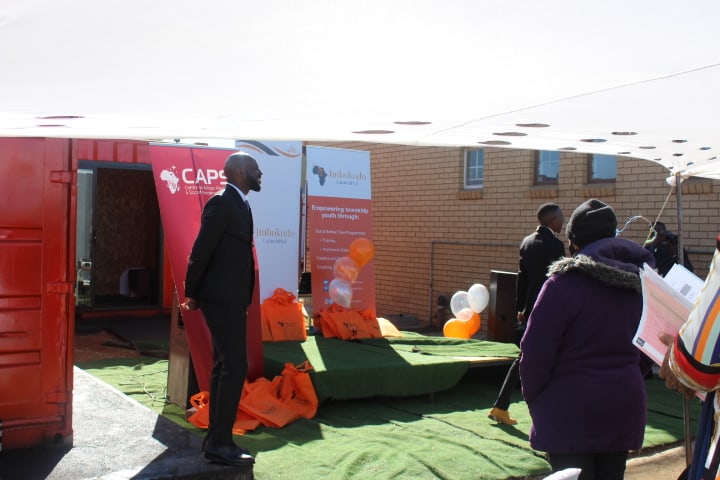
Jazzman Simelane is one of the three Aspire Higher competition winners who developed innovative concepts that have the potential to give girls & young women in sub-Saharan Africa access to sexual health education by the year 2025.  His project named “Imbokodo LaunchPad” received a share of USD $ 145 000 in funding from RB and Gildead which has been granted towards its trial phase. The top-performimg trial will receive a further USD $ 145 000 grant from Gilead Sciences to scale up the project and implement its. Jazzman shares the following update on his project.


In response to a competition announced by CAPSI, RB & Gilead for postgraduate students to submit game-changing ideas to address sexual education and enhance female economic empowerment, I prepared a proposal for Imbokodo LaunchPad. Growing up in Tsakane township in Johannesburg South Africa,  I observed that a number of youth development programmes formulated to deal with HIV/AIDS, teenage pregnancy.  However, these programmes have proven to be ineffective as they employ techniques and quick fixes that address the acute problems but left the underlying chronic problems untouched to fester and resurface time and again. To provide additional context, Tsakane has a high prevalence of HIV/AIDS amongst adolescent girls and young women.  And while piloting in Tsakane, the project has the potential to scale to other townships across South Africa.   


Imbokodo LuanchPad is a community-centred, principle-centred and character-based approach following a four-pronged operating model. The crux of the LaunchPads is that they are embedded in the communities and the use of sport, especially soccer and netball are the crucial element of the proposal. On the proposal, I have indicated a couple of options, i.e. using underutilised land in township schools and underutilised township soccer stadiums that remain underused and have become white elephants. Tholulwazi Secondary School in Tsakane has agreed to give us their underutilized land to house the development hub. 


As part of the competition, RB has allocated a seed capital and there is a potential for further funding from Gilead Sciences to a project that is showing more results and impact. The pilot will run for 12 months – and it needs to be in Tskane township where there is the highest prevalence of HIV/AIDS among adolescent girls and young women.   Due to the limited seed capital, as part of my project I have proposed to use converted containers for the following: 

 Tutoring and homework centre 

  • Coffee shop set up as shared working space 
  • Change rooms and toilets