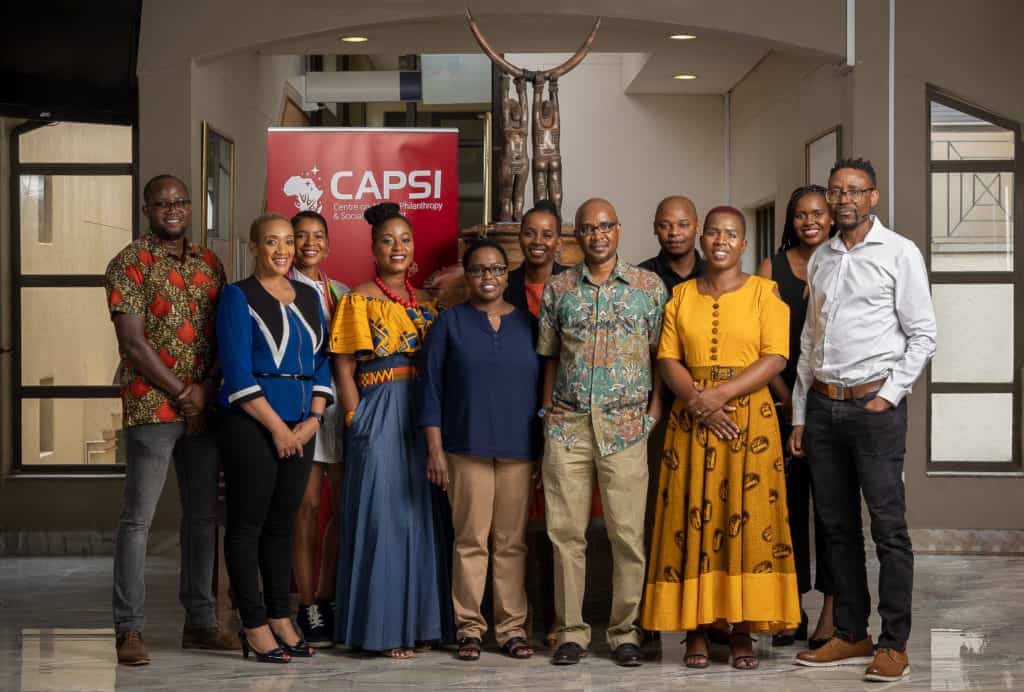
Tell us about yourself and your career background.
I consider myself a pracademic, having worked both in academia and development practice. I had 15 years of practice work with civil society organisations in various developing countries, before I transitioned into academia 12 years ago at the time of completing my PhD studies. I am also a multi-disciplinary individual with formal training in Public Administration, Economics, Political Science, Sociology and Tertiary Teaching. I have also consulted with the United Nations and other global organisations. My primary research focus has been on the intersections between civil society, volunteerism, social movements and philanthropy and their impact on development and governance.
What is your role at CAPSI?
My arrival at CAPSI has been a long time coming, I have been crossing paths with most of the founding minds of the Centre for the past 15 years. When the Centre was then established in 2018, I was initially appointed as a Research Fellow with one of my research articles published in the Centre’s Journal, The International Review for Philanthropy and Social Investment. In my current role as Deputy Director, I lead the academic portfolio of the Centre and also support the Director with some of the Centre’s work, including fundraising and administration.
What are some of your goals in this current role?
My first priority is to ensure that the roll-out of the Masters programme is done efficiently so that the Centre gains greater recognition within the academic community. I also want to ensure that we have adequate resources to support the delivery of these programmes.
What have you learned or enjoyed in this role so far?
This is probably the only other place where I have felt that myself and my intellectual prowess is prioritised. The work we are doing is aligned to what I have been working on in my research career.
Where do you imagine CAPSI in the future?
I wish to see all our academic offerings excelling and ensuring that our publications are of high quality while delivering the desired impact in the ecosystem within which the Centre operates. We also want to continue to produce graduates who can help the continent and hopefully join us in the field and practice of philanthropy.
As much as we understand the world to be our oyster, our roots remain stemmed in Africa where many return to fulfil their life’s purpose. One such individual is Executive Director of TrustAfrica and CAPSI Advisory Board member, Ebrima Sall.
Ebrima’s career journey started when he completed his higher education in France, where he was exposed to different branches of economics and sociology. He counts this experience as being the catalyst for his involvement in youth-led movements, which stirred his curiosity in the potential for Africa’s development. When the time to return to his home country of The Gambia arrived, Ebrima took the opportunity to apply the lessons from his academic learning to community-level programmes in agriculture and microfinance.
This provided him with a means to impart basic education and knowledge management to community leaders whom he interacted with.
Being able to work at an implementation level while still in his younger years, cemented Ebrima’s conviction that young people are key role players in any process of change. He believes that today’s youth have more resources and platforms with which to initiate advocacy in creative ways. He remarks, “I believe the youth is where the energy is and where hope should be; the better we can communicate with the youth and provide them with the support that they need, the better the chances for all of Africa.”
In furthering his career, Ebrima transitioned into research and policymaking spaces and sharpened his expertise as a researcher. His experience as a development practitioner – and influenced by the change that he could enable through this – led him to channel his efforts through organisations and research institutions such as The Council for the Development of Social Science Research in Africa (CODESRIA) – where he is the immediate outgoing Executive Secretary – The Nordic Africa Institute and Gaston Berger University. In reflection, Ebrima says, “Having good local grounding is absolutely necessary for any researcher. Personally, it has allowed me to become connected with community members and appropriately present their voices and solutions when undertaking research and policy work. Ultimately, development is not something you do for people, but it is a self-emancipatory process. People ought to be given platforms to shape the future they want for themselves, and for Africa.”
When speaking about his hopes for CAPSI, Ebrima is excited for what the future holds for researchers; this being the opportunity to engage with an African lens and approach to issues that will present a dimension of work that could transform the landscape and understanding of philanthropy, whose role in the transformation and development of our continent is crucial. “The name of the centre should spark the purpose and philosophy that we must follow while keeping the evolution and diversity in context.” TrustAfrica has become a key partner to CAPSI in research, developing an African Philanthropy Index, launching the Kisima African Giving Platform and co-organising the African Philanthropy Conference.
He continues, “My message to emerging and aspiring researchers is this: be audacious in your thinking; do not be afraid to question the status quo as this will allow you to gain a deep understanding of and preserve the best of what we have as Africans researching philanthropy; and dream big, for that is the only way to help unlock the full potential of African philanthropy. CAPSI has proven that it is ready to facilitate relations with supporters who are interested in furthering your efforts, therefore engage your work in a way that allows us to connect Africans on the continent and in the diaspora to expand the body of knowledge of African Philanthropy.”
The first quarter of the year has gone by very fast. In just two months’ time, we will be halfway through the year, yet a lot still remains to be done. CAPSI started the year with some exuberance, declaring 2022 our publications year. Over the last four years, we have been conducting research across the continent, focusing on different research areas. These are mainly the High-Net-Worth Individuals and their philanthropy; Foundations and Trusts in Africa; infrastructure Support Organisations; COVID-19 and Philanthropy; the Social Investment Landscape in Africa; Barriers to Civil Society and the Fourth Industrial Revolution, among others. We worked with more than twenty research associates spread across Africa. We have finalised the production of the research reports and starting this April, we will be publishing an article or two per month. This means for the whole year, we are guaranteeing you a well-researched article to read. All articles will be available through open access. You can read the first of these articles here.
On our team developments
Our exuberant spirit was also due to our growth over the last few years. Recently, we added new talent to our team, and we have made a few strategic movements. Our colleague, Keratiloe Mogotsi, who recently graduated with her doctoral degree on philanthropic studies, transitioned from being CAPSI’s Programmes Manager to a Lecturer position. We started our postdoctoral programme, and we are happy to announce that two candidates joined CAPSI, Dr Melody Mandevere and Dr Roselyne Cheruiyot, one of whom is a former CAPSI affiliated student and research associate. The good news does not end there – we are most fortunate to have Professor Jacob Mati who joined us at the beginning of the year. Prof Mati is a seasoned academic and researcher with experience working in India, Fiji, and Africa. He is not new to CAPSI – he previously served as an associate researcher for CAPSI. Prof Mati assumed his duties at the beginning of the year as CAPSI’s Deputy Director, responsible for academic programmes.
On Kisima African Giving Platform
COVID-19 had its bad outcomes, but as with several crises, there is always a silver lining. For us, the silver lining was the development of an initiative to showcase African giving. The pandemic demonstrated the various local mechanisms of giving that exist in Africa and the fact that these are not always made visible. We decided to showcase several stories through an initiative called Kisima African Giving (www.kisimagiving.org). Please donate your story in any language of your choice through the site or contact our colleague Mapaseka Mokwele. Mapaseka joined us late last year and has vast experience in broadcasting and communications.
As far as I know, Kisima portal is the only site in the world that uses so many languages. We are looking forward to activating the Fund dimension in Kisima, where we will raise resources from the public for selected beneficiaries. Please visit the site and our social media platforms for new developments and updates. The first of a series of Kisima Quarterly Dialogues was hosted in a hybrid event format; you can watch the recording of this inaugural event and enjoy the keynote address from the Chancellor of the University, Dr Judy Dlamini.
On Academic Programmes
You can imagine our excitement at the news of the approval and accreditation of our Master of Management in African Philanthropy Degree, in early 2021. We have worked hard to put systems in place to offer the programme in 2022. Applications for the MM in African Philanthropy are open until the end of May. We are also offering a Postgraduate Diploma in African Philanthropy and Resource Mobilisation. The first cohort will be completing the programme in June and a second cohort will commence thereafter. These two programmes are very important for CAPSI and its positioning in the continent and beyond. These are the first offerings of this type in Africa, and we are very proud to be behind them. This is a dream come true for us, but we know very well that the real work is only just beginning. We know that this is a very intimate and niche area – we have to nurture it, build it, and sustain it over time through several collaborations and partnerships.
On partnerships
We are excited to have signed working agreements with the Centre on Strategic Philanthropy at Cambridge University, Strathmore University in Kenya, the Africa Philanthropy Forum, Africa Philanthropy Network, TrustAfrica, East Africa Philanthropy Network and several other partners from Africa and beyond. We continue to be members of several networks that include the International Society for Third Sector Research (ISTR), Association for Research on Non-profit Organisations and Voluntary Action (ARNOVA) and Independent Philanthropy Association of South Africa (IPASA), among others.
In addition to our academic offerings, CAPSI has made strides in providing professional training. We are hosting the Innocent Chukwuma NGO Transitional Leadership Fellowship. Innocent was instrumental in establishing the Association for Research on Civil Society in Africa, whose flagship initiative is the Fellowship. This Fellowship used to be hosted by ARNOVA and the Lilly School of Philanthropy in Indianapolis. CAPSI will host the Fellowship for three years. Furthermore, CAPSI and WBS will offer training to SADC Member States’ civil servants on resource mobilisation in May and June 2022. This is a project funded by GiZ under its SADC National Regional Linkages project.
Looking ahead
We are beginning to have concerns about our successes and impact: what are we achieving, how well are we executing our mandate? Towards the end of last year, we initiated an independent evaluation of our work. We anticipate having the final report in the next month, and we look forward to the report and its recommendations. This will be our first evaluation and we will, of course, share its contents with our partners.
As you can tell, I am filled with excitement and could go on and on writing about CAPSI in 2022. The bottom line is that there is a lot to be done this year and we are already approaching midyear. I invite you to enjoy reading this edition of the Newsletter.
Till then, CAPSI it.
Bhekinkosi Moyo
PS: Click here to access the the full May 2022 newsletter


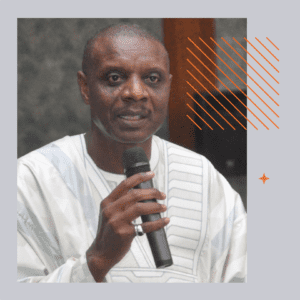 Ebrima’s career journey started when he completed his higher education in France, where he was exposed to different branches of economics and sociology. He counts this experience as being the catalyst for his involvement in youth-led movements, which stirred his curiosity in the potential for Africa’s development. When the time to return to his home country of The Gambia arrived, Ebrima took the opportunity to apply the lessons from his academic learning to community-level programmes in agriculture and microfinance.