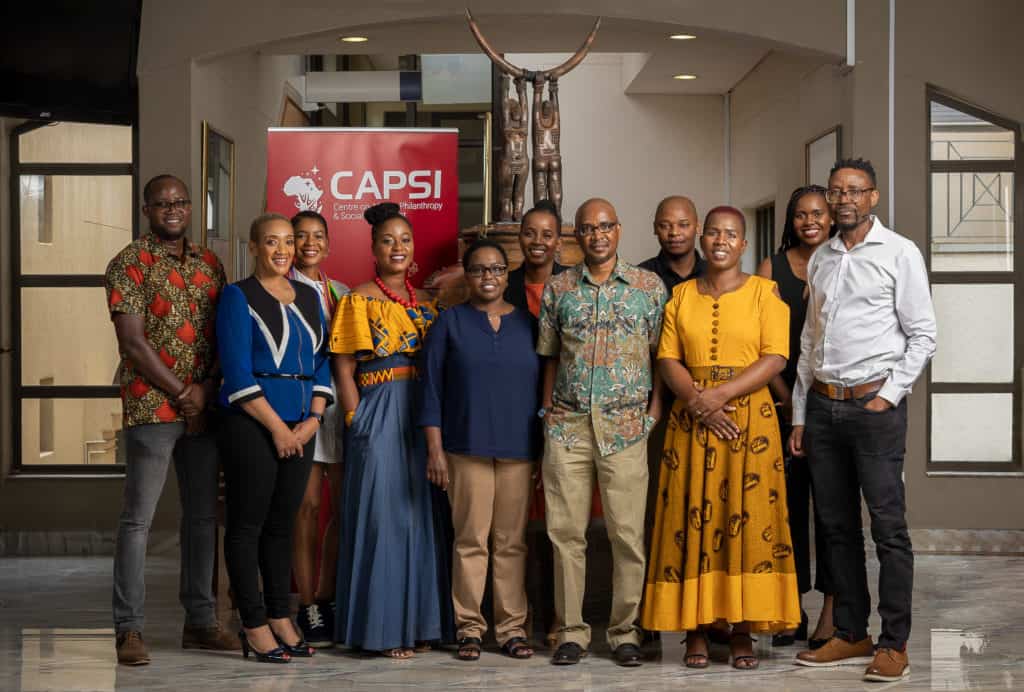
Part of our founding visions is to provide students, academics and practitioners with data and knowledge on the landscape of philanthropy in Africa, that is contextual, structured and of value is one of the objectives of the Centre.
To achieve this, our team began the work of conceptualising a Knowledge Hub that will support development, research and decision making for national, regional and continental stakeholders. The Hub will offer responsive and real-time insights across the fields that are associated to African Philanthropy and Social Investment.
The Knowledge Hub will offer three primary value propositions. These are;
Profiling of different forms of philanthropy so that users can filter by categories or sectors, such as individual giving foundations, etc.
Providing analytics which enable users to generate reports depending on available data,.
Archive diverse forms of data such as tutorials, videos and reports, to name a few.
Our vision for the Knowledge Hub will be a go-to for anyone looking for insightful data on the state of philanthropy and social investment on the continent which can be accessed anywhere and at anytime. We look forward to launching the Hub for wider use.
The Centre for Strategic Philanthropy (CSP) at the University of Cambridge and CAPSI recently announced a landmark collaborative partnership to further understand the impact of philanthropy across African communities, private sector organisations, foundations, and key individuals. The objective of this partnership is to increase the development of joint projects between the two Centres in a deliberate effort to grow theoretical and applied research on philanthropy that meets the standards of academic excellence.
This collaboration will better disseminate research and activities that develop models and tools appropriate to African realities and capitalise on these opportunities to firm the role and impact of various giving mechanisms and institutions.
You are invited to join the upcoming webinar titled “System Change in Philanthropy for Development: A Research Framework for Global Growth Markets”, which is one of the many contact points that will form part of this partnership.
Quote: “Philanthropy can revitalise our communities and our democracy through its transformative potential to address the root causes of problems and have a lasting impact.”
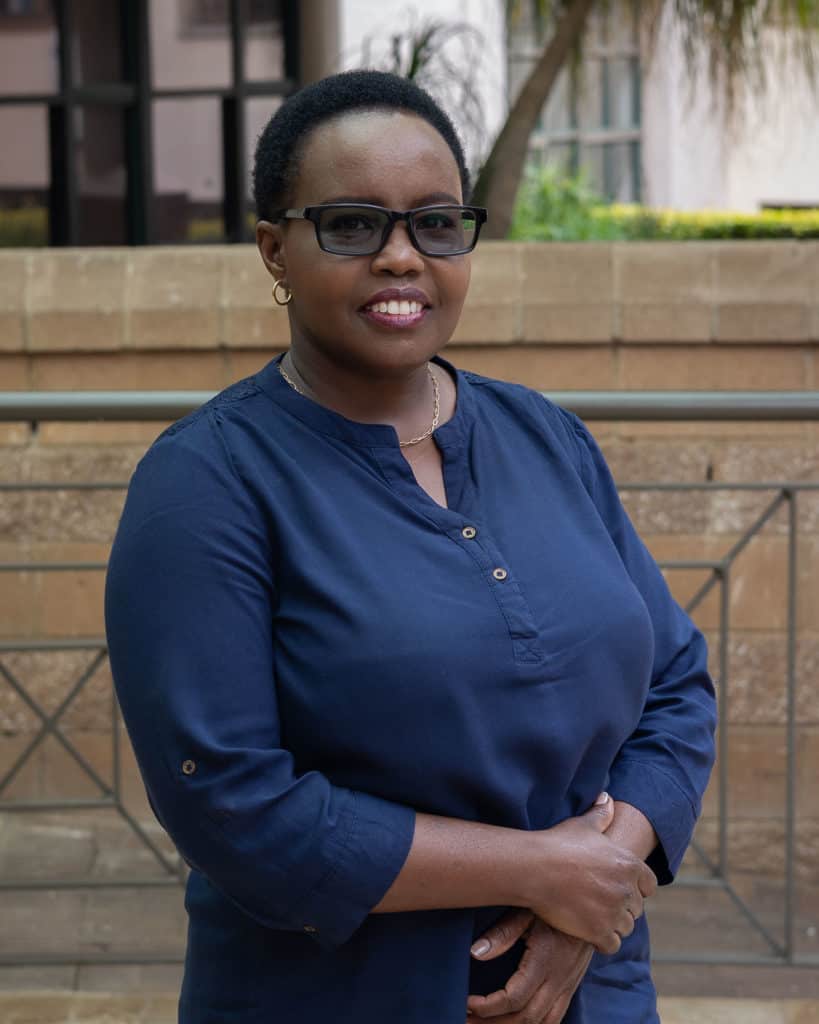
How does your research help develop African philanthropy?
My research focuses on how social enterprises (SEs) and Non-profit organisations (NPOs) can contribute to resilient urban communities through their service delivery. It is undeniable that globally and particularly in the global South, local communities and neighbourhoods are faced with severe problems caused by climate change, migration, and increasing poverty. These challenges have proven to be stubborn and difficult, defying government or business solutions. Most of these SEs and NPOs operate in marginalized segments of society that do not have the means to transform their own social or economic prospects without help. Therefore, it is worthwhile to understand how ecosystem actors like philanthropists are collaborating and supporting these organisations through funding, mentoring, and brokering contacts and networks. More importantly, to seek solutions to the challenges they face as a way of enhancing their growth and sustainability.
What is your vision for African philanthropy in Africa?
African philanthropy has a huge role to play in Africa’s development. To realise its full potential and bring change, my vision for African philanthropy is for it to increase transparency and accountability in dealing with issues of development and sustainability, and more importantly, for African philanthropy to play an active role in informing policy processes at a national level.
What led you to add a philanthropic lens to your research?
Philanthropy can revitalise our communities and our democracy through its transformative potential to address the root causes of problems and have a lasting impact. Currently, the African continent is experiencing an increase in economic growth because of technology and a vibrant growing middle class. Consequently, there has also been a sharp rise in philanthropic giving. Therefore, linking the research on SEs and NPOs’ potential to contribute to resilient urban communities to philanthropy is called for. This is because philanthropists have an incredible opportunity to collaborate with SEs and NPOs and can play a significant role in harnessing their potential to address the core social or environmental challenges facing communities. It can be in terms of funding, non-financial resources, and networking.
Quote: “Yes, the West has done a lot in Africa, but we need to write our Africa stories, heralding our challenges, opportunities and achievements.”
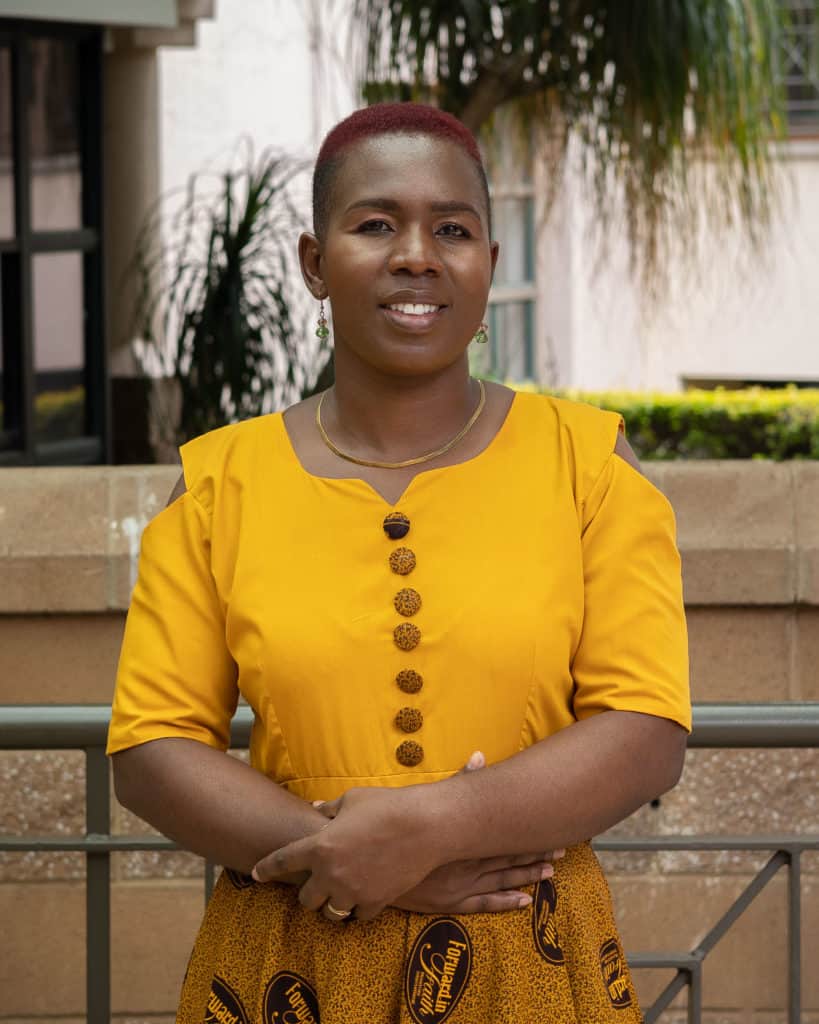
How does your research help develop African philanthropy?
Many people in Africa have a natural motivation to give, however, there are many factors that affect their giving. They are likely to be demotivated in their efforts if there is mistrust between the giver and the beneficiaries. Also, people get more motivated to give by external influences when they see how others doing it are impacting the world around them. Lastly, some people want to give but are not sure of how to reach their intended beneficiaries. My research will help to communicate information on what is happening around African philanthropy with the hopes of reducing the mistrust surrounding philanthropy and encouraging others to get involved.
What led you to add a philanthropic lens to your research?
Growing up I was surrounded by “philanthropists”. A community could contribute for the welfare of a family or individual etc. Literature mainly talks about western or external philanthropy. Yes, the West has done a lot in Africa, but we need to write our Africa stories, heralding our challenges, opportunities, and achievements.
What is your vision for African philanthropy in Africa?
As the African economy is growing, we need to develop a system that will be able to run thriving foundations to help our fellow Africans. A future where states implement policies that support and encourage philanthropy. Over and above this, we will need to have more grant-making organisations that support smaller organisations that are directly focused on the socio-economic needs of communities.
Tell us about yourself and your career background.
I consider myself a pracademic, having worked both in academia and development practice. I had 15 years of practice work with civil society organisations in various developing countries, before I transitioned into academia 12 years ago at the time of completing my PhD studies. I am also a multi-disciplinary individual with formal training in Public Administration, Economics, Political Science, Sociology and Tertiary Teaching. I have also consulted with the United Nations and other global organisations. My primary research focus has been on the intersections between civil society, volunteerism, social movements and philanthropy and their impact on development and governance.
What is your role at CAPSI?
My arrival at CAPSI has been a long time coming, I have been crossing paths with most of the founding minds of the Centre for the past 15 years. When the Centre was then established in 2018, I was initially appointed as a Research Fellow with one of my research articles published in the Centre’s Journal, The International Review for Philanthropy and Social Investment. In my current role as Deputy Director, I lead the academic portfolio of the Centre and also support the Director with some of the Centre’s work, including fundraising and administration.
What are some of your goals in this current role?
My first priority is to ensure that the roll-out of the Masters programme is done efficiently so that the Centre gains greater recognition within the academic community. I also want to ensure that we have adequate resources to support the delivery of these programmes.
What have you learned or enjoyed in this role so far?
This is probably the only other place where I have felt that myself and my intellectual prowess is prioritised. The work we are doing is aligned to what I have been working on in my research career.
Where do you imagine CAPSI in the future?
I wish to see all our academic offerings excelling and ensuring that our publications are of high quality while delivering the desired impact in the ecosystem within which the Centre operates. We also want to continue to produce graduates who can help the continent and hopefully join us in the field and practice of philanthropy.
Philanthropy, in its simplest form, is the act of using one’s resources for the benefit of others. And while we may now have a more expanded definition of the term which is more institutional in implementation, it is humbling to encounter a reminder of the simple definition through the stories of others.
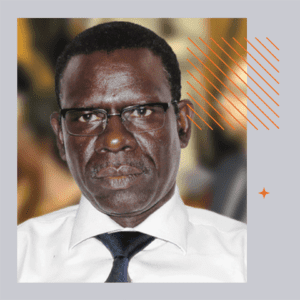
Mohamadou Sy is an author, contributor to the 2014 publication titled “Giving to Help, Helping to Give” and the Founder of Institut Supérieur de Développement Local (ISDL), which is a private education institution based in Senegal that provides higher education programmes in the fields of community development, project management and environmental development to students in French West Africa. Since 2005, ISDL has been building the knowledge and skills of community workers and young people who seek to carve a career path alternative to commerce-related fields.
The seeds for ISDL were sown many years before its inception, in rural North Senegal where Mohamadou grew up in a small but nurturing community. Having a real life understanding of the needs of his community and how education can greatly improve the lives of young people who come from there, he set out towards his ambition of becoming a teacher and returning to the community that influenced his way of life, by building a learning institution that would benefit them. This entrepreneurial ambition became a reality, and like many such ventures, was met with challenges related to growth and sustainability, that have been overcome through the years. Today, ISDL is a respected voice that has increased the appeal of non-commercial studies such as Community Development and Environmental Management among prospective learners.
There are similarities between the stories of ISDL and the Centre on African Philanthropy and Social Investment (CAPSI). When considering CAPSI’s vision and mission, Mohamadou is excited to be part of a pan African institution that brings students, researchers and lecturers together beyond the limitations of language and location. He says, “Being part of the advisory board is a great opportunity for me to make a difference in how CAPSI grows to be truly and inclusively African by reaching Anglophone, Francophone and Lusophone regions.”
In looking to the future, Mohamadou uses the massive strides that CAPSI has made since its inception, as hope for what is possible. “I see CAPSI becoming a leading African platform that facilitates research and dialogue on issues related to resource mobilisation, social development and philanthropy all in a manner which is inclusive of language and location”, he says. In closing, Mohamadou reflects by remarking, “As the saying goes, Rome was not built in one day, and so we must build CAPSI step by step. I’m grateful to everyone who has walked the journey with CAPSI to date for what they are doing as pioneers. I think that in paving the way for the new generations of scholars, we can continue to write our own history and story about philanthropy.”
Transitioning through your career to align with personal values holds very true for Advisory Board member, Bongiwe Mlangeni, who started her career as a journalist covering socio-economic and women’s rights issues. Her journey has seen her play a proactive role in promoting philanthropy in support of human rights and social justice projects across southern Africa. Bongiwe is the current Vice President for Global Health Strategies and immediate outgoing CEO of the Social Justice Initiative, of which she was the founding director.
With a primary interest in social justice in Africa, Bongiwe has always held issues of inequality close to her heart, especially those with damaging outcomes on health, economy, and social wellbeing. Using philanthropy, and collaborating with high-net-worth individuals, she has successfully mobilised funding for many social justice advocacy organisations. “My interest in philanthropy, from the beginning, was about how we can get wealthy Africans more involved in supporting social justice work.” She continues, “We also should explore how can we address the issues of inequality and improve wellbeing so that we build a society that is equitable.”
In relation to her position on the Advisory Board, Bongiwe would like to see a focus on getting affluent South Africans more involved in the pursuit of social justice as a mission that they can participate in and support, as well as growing philanthropy in South Africa in a way that benefits social justice issues, rather than focusing on charity. Looking at the achievements of CAPSI so far, Bongiwe is excited to be part of the Centre as it gathers the evidence of philanthropy within the African continent, shaping the thinking around it. She says, “There is still a lot more to be done in terms of documenting the story of giving, and the story of giving as a form of solidarity and transformation.”
Creating a body of knowledge of African philanthropy will challenge old ways of thinking as society continues to build itself. As a lecturer on CAPSI’s programme, Bongiwe proactively adds her voice to this work and has been an influence on students who have attended her courses. One of the notable nuggets that she regularly challenges students with is the notion that philanthropy is exclusively for the wealthy. She says, “There is more to philanthropy than status and being a billionaire – there are many ways in which it is expressed.” Students are challenged to consider their understanding of philanthropy and also to reflect on how this has manifested itself in their lives. This reflection of the personal association with philanthropy supports part of the work of CAPSI – which is to enable and take ownership of documenting the process of philanthropy and the experiences around it.
Speaking of the journey of CAPSI so far, Bongiwe is proud to be part of the dynamic intellectual space that has created and grown the field of understanding philanthropy within the African context. Looking to the future, she can see that the organisation will produce academics who can provide new knowledge and approaches to philanthropy.
The three fundamentals of CAPSI; namely, to be a dynamic space for engagement, a platform for idea sharing, and a space for influence, are paving the way for a high production of intellectual information from across the continent. People from all fields – students, practitioners, business people, academics, decision- and policymakers – are able to engage, though there is still a need for influencers in the organisation. Her greatest fear for the organisation is unusable or inaccessible research – mothballed information that stays in the dark – it is all about the sharing and engagement.
As much as we understand the world to be our oyster, our roots remain stemmed in Africa where many return to fulfil their life’s purpose. One such individual is Executive Director of TrustAfrica and CAPSI Advisory Board member, Ebrima Sall.
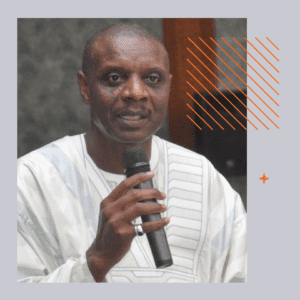
Ebrima’s career journey started when he completed his higher education in France, where he was exposed to different branches of economics and sociology. He counts this experience as being the catalyst for his involvement in youth-led movements, which stirred his curiosity in the potential for Africa’s development. When the time to return to his home country of The Gambia arrived, Ebrima took the opportunity to apply the lessons from his academic learning to community-level programmes in agriculture and microfinance.
This provided him with a means to impart basic education and knowledge management to community leaders whom he interacted with.
Being able to work at an implementation level while still in his younger years, cemented Ebrima’s conviction that young people are key role players in any process of change. He believes that today’s youth have more resources and platforms with which to initiate advocacy in creative ways. He remarks, “I believe the youth is where the energy is and where hope should be; the better we can communicate with the youth and provide them with the support that they need, the better the chances for all of Africa.”
In furthering his career, Ebrima transitioned into research and policymaking spaces and sharpened his expertise as a researcher. His experience as a development practitioner – and influenced by the change that he could enable through this – led him to channel his efforts through organisations and research institutions such as The Council for the Development of Social Science Research in Africa (CODESRIA) – where he is the immediate outgoing Executive Secretary – The Nordic Africa Institute and Gaston Berger University. In reflection, Ebrima says, “Having good local grounding is absolutely necessary for any researcher. Personally, it has allowed me to become connected with community members and appropriately present their voices and solutions when undertaking research and policy work. Ultimately, development is not something you do for people, but it is a self-emancipatory process. People ought to be given platforms to shape the future they want for themselves, and for Africa.”
When speaking about his hopes for CAPSI, Ebrima is excited for what the future holds for researchers; this being the opportunity to engage with an African lens and approach to issues that will present a dimension of work that could transform the landscape and understanding of philanthropy, whose role in the transformation and development of our continent is crucial. “The name of the centre should spark the purpose and philosophy that we must follow while keeping the evolution and diversity in context.” TrustAfrica has become a key partner to CAPSI in research, developing an African Philanthropy Index, launching the Kisima African Giving Platform and co-organising the African Philanthropy Conference.
He continues, “My message to emerging and aspiring researchers is this: be audacious in your thinking; do not be afraid to question the status quo as this will allow you to gain a deep understanding of and preserve the best of what we have as Africans researching philanthropy; and dream big, for that is the only way to help unlock the full potential of African philanthropy. CAPSI has proven that it is ready to facilitate relations with supporters who are interested in furthering your efforts, therefore engage your work in a way that allows us to connect Africans on the continent and in the diaspora to expand the body of knowledge of African Philanthropy.”
The first quarter of the year has gone by very fast. In just two months’ time, we will be halfway through the year, yet a lot still remains to be done. CAPSI started the year with some exuberance, declaring 2022 our publications year. Over the last four years, we have been conducting research across the continent, focusing on different research areas. These are mainly the High-Net-Worth Individuals and their philanthropy; Foundations and Trusts in Africa; infrastructure Support Organisations; COVID-19 and Philanthropy; the Social Investment Landscape in Africa; Barriers to Civil Society and the Fourth Industrial Revolution, among others. We worked with more than twenty research associates spread across Africa. We have finalised the production of the research reports and starting this April, we will be publishing an article or two per month. This means for the whole year, we are guaranteeing you a well-researched article to read. All articles will be available through open access. You can read the first of these articles here.
On our team developments
Our exuberant spirit was also due to our growth over the last few years. Recently, we added new talent to our team, and we have made a few strategic movements. Our colleague, Keratiloe Mogotsi, who recently graduated with her doctoral degree on philanthropic studies, transitioned from being CAPSI’s Programmes Manager to a Lecturer position. We started our postdoctoral programme, and we are happy to announce that two candidates joined CAPSI, Dr Melody Mandevere and Dr Roselyne Cheruiyot, one of whom is a former CAPSI affiliated student and research associate. The good news does not end there – we are most fortunate to have Professor Jacob Mati who joined us at the beginning of the year. Prof Mati is a seasoned academic and researcher with experience working in India, Fiji, and Africa. He is not new to CAPSI – he previously served as an associate researcher for CAPSI. Prof Mati assumed his duties at the beginning of the year as CAPSI’s Deputy Director, responsible for academic programmes.
On Kisima African Giving Platform
COVID-19 had its bad outcomes, but as with several crises, there is always a silver lining. For us, the silver lining was the development of an initiative to showcase African giving. The pandemic demonstrated the various local mechanisms of giving that exist in Africa and the fact that these are not always made visible. We decided to showcase several stories through an initiative called Kisima African Giving (www.kisimagiving.org). Please donate your story in any language of your choice through the site or contact our colleague Mapaseka Mokwele. Mapaseka joined us late last year and has vast experience in broadcasting and communications.
As far as I know, Kisima portal is the only site in the world that uses so many languages. We are looking forward to activating the Fund dimension in Kisima, where we will raise resources from the public for selected beneficiaries. Please visit the site and our social media platforms for new developments and updates. The first of a series of Kisima Quarterly Dialogues was hosted in a hybrid event format; you can watch the recording of this inaugural event and enjoy the keynote address from the Chancellor of the University, Dr Judy Dlamini.
On Academic Programmes
You can imagine our excitement at the news of the approval and accreditation of our Master of Management in African Philanthropy Degree, in early 2021. We have worked hard to put systems in place to offer the programme in 2022. Applications for the MM in African Philanthropy are open until the end of May. We are also offering a Postgraduate Diploma in African Philanthropy and Resource Mobilisation. The first cohort will be completing the programme in June and a second cohort will commence thereafter. These two programmes are very important for CAPSI and its positioning in the continent and beyond. These are the first offerings of this type in Africa, and we are very proud to be behind them. This is a dream come true for us, but we know very well that the real work is only just beginning. We know that this is a very intimate and niche area – we have to nurture it, build it, and sustain it over time through several collaborations and partnerships.
On partnerships
We are excited to have signed working agreements with the Centre on Strategic Philanthropy at Cambridge University, Strathmore University in Kenya, the Africa Philanthropy Forum, Africa Philanthropy Network, TrustAfrica, East Africa Philanthropy Network and several other partners from Africa and beyond. We continue to be members of several networks that include the International Society for Third Sector Research (ISTR), Association for Research on Non-profit Organisations and Voluntary Action (ARNOVA) and Independent Philanthropy Association of South Africa (IPASA), among others.
In addition to our academic offerings, CAPSI has made strides in providing professional training. We are hosting the Innocent Chukwuma NGO Transitional Leadership Fellowship. Innocent was instrumental in establishing the Association for Research on Civil Society in Africa, whose flagship initiative is the Fellowship. This Fellowship used to be hosted by ARNOVA and the Lilly School of Philanthropy in Indianapolis. CAPSI will host the Fellowship for three years. Furthermore, CAPSI and WBS will offer training to SADC Member States’ civil servants on resource mobilisation in May and June 2022. This is a project funded by GiZ under its SADC National Regional Linkages project.
Looking ahead
We are beginning to have concerns about our successes and impact: what are we achieving, how well are we executing our mandate? Towards the end of last year, we initiated an independent evaluation of our work. We anticipate having the final report in the next month, and we look forward to the report and its recommendations. This will be our first evaluation and we will, of course, share its contents with our partners.
As you can tell, I am filled with excitement and could go on and on writing about CAPSI in 2022. The bottom line is that there is a lot to be done this year and we are already approaching midyear. I invite you to enjoy reading this edition of the Newsletter.
Till then, CAPSI it.
Bhekinkosi Moyo
PS: Click here to access the the full May 2022 newsletter







 Ebrima’s career journey started when he completed his higher education in France, where he was exposed to different branches of economics and sociology. He counts this experience as being the catalyst for his involvement in youth-led movements, which stirred his curiosity in the potential for Africa’s development. When the time to return to his home country of The Gambia arrived, Ebrima took the opportunity to apply the lessons from his academic learning to community-level programmes in agriculture and microfinance.