Author: Charles

New Research Illuminates the Role of Africa’s Non-Profit Sector in Creating Dignified Work for Young People

The Centre on African Philanthropy and Social Investment (CAPSI) at Wits Business School has released a landmark report exploring how Africa’s non-profit sector contributes to the creation of dignified and fulfilling work opportunities for young people across the continent.

This pioneering research initiative, funded by the Mastercard Foundation, is the first of its kind to focus comprehensively on this significant theme across Africa. Titled Contributions of the Non-Profit Sector to the Creation of Dignified and Fulfilling Work for Young People in Africa: A Synthesis Literature Review, the report consolidates evidence and perspectives from 17 African countries.

Conducted in collaboration with several autonomous African-led networks of researchers and institutions, the review highlights emerging trends, identifies gaps in existing research, and proposes policy recommendations to accelerate youth employment. Importantly, it also amplifies the voices of young people themselves and promotes their agency in shaping their futures.

Key findings include:

  • The non-profit sector’s unique capacity to foster skills development and social innovation, bridging gaps left by government and private sector initiatives.
  • Persistent barriers young people face, such as limited access to finance, skills mismatches, and structural exclusion from decision-making.
  • The need for coordinated policies and investment to scale effective non-profit models across the continent.

“The findings are clear: the non-profit sector is not just filling gaps but actively shaping new pathways to dignified work for Africa’s youth,” said Prof Bhekinkosi Moyo, Director of CAPSI. “With the support of the Mastercard Foundation, this research underscores the potential of collaborative approaches to address youth unemployment.”

Next in Focus: Country Literature Reviews and Regional Dialogues

Building on the continental synthesis, CAPSI will launch a series of country-specific literature review reports, beginning with Southern Africa in 2025. These reports will offer more targeted insights to inform national strategies and programmes.

To share these findings and promote action, CAPSI will host a webinar series featuring scholars, representatives from the 17 partner institutions, non-profit organisations, government agencies, businesses, youth organisations, and development partners.

The full synthesis report is available here:

Read the report

US$128,000 Youth Competition Launched at CAPSI to Turn Research into Creative Content

Is academic research moving into the world of digital content – reels, carousels and stories – to stay relevant and connect with today’s youth? CAPSI Africa is taking on that challenge with a bold initiative to transform research into creative content that speaks directly to young people across the continent.


The Centre on African Philanthropy and Social Investment (CAPSI Africa), based at Wits Business School, is a pan-African hub for research, teaching, and convening on philanthropy and social investment. Established within Wits University, CAPSI Africa plays a central role in generating knowledge, engaging stakeholders, and shaping debates on development and giving across the continent.

One of its most ambitious undertakings to date is a landmark study on dignified and fulfilling work for Africa’s youth. The project brings together 17 autonomous researchers and institutions from across the continent to examine how the nonprofit sector contributes to creating meaningful employment opportunities for young people. It is the first comprehensive review of its kind, highlighting trends, evidence gaps, and policy directions, while amplifying the voices and agency of youth themselves.

To extend this research beyond academia, CAPSI Africa has launched the Pan-African Youth Competition. The initiative challenges youth-led teams and organisations (ages 18–35) to transform the study’s findings into creative, accessible, and shareable outputs — from digital stories to reels, podcasts, and campaigns — that can inform and inspire their peers. The aim is to make complex research relatable, mobilise young audiences, and spark action.

The competition carries a total prize of US$128,000, with US$32,000 awarded to one winning team from each region: Southern, East, North, and West Africa. In addition to funding, winners will receive mentorship, visibility, and platforms to showcase their work across the continent.

Professor Bhekinkosi Moyo, Director of CAPSI Africa, explains: “This competition provides African youth with resources and a platform to tell stories that matter in their own voices. It’s not just about research findings, but about shaping narratives, sparking creativity, and influencing policy across Africa.”


Applications close on Wednesday, 15 October 2025. For young creatives, this is more than a prize, it’s an opportunity to shape the future of work narratives in Africa.

Read more about the research here: https://www.capsi.wits.ac.za/research-reports/
Apply to the competition here: https://www.capsi.wits.ac.za/call-for-competition/

PhD scholars sharpen research and writing skills at CAPSI–Wits workshop

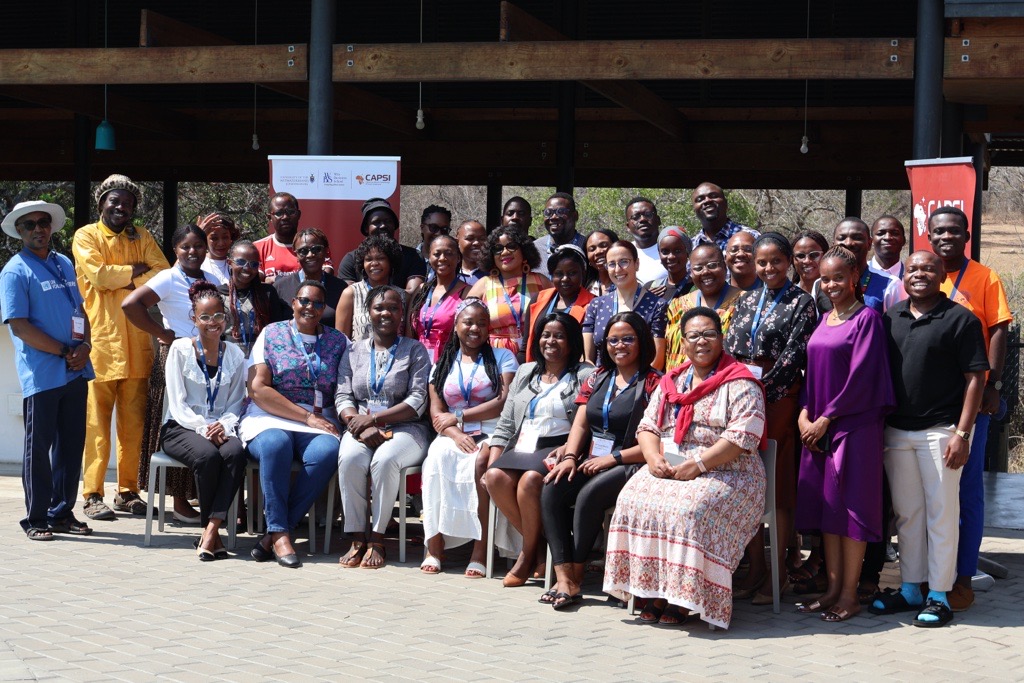
PhD students from across Africa gathered at the Wits Rural Facility in Mpumalanga for the annual CAPSI–Wits PhD Writing and Methodology Workshop. The week-long retreat created space for doctoral candidates to strengthen their academic writing, refine research methods, and connect with leading scholars in the field of African philanthropy.

Hosted by the Centre on African Philanthropy and Social Investment (CAPSI) in partnership with Wits Business School, the retreat was facilitated by renowned academics and focused on practical training. Sessions included writing skills, developing research questions, refining methodologies, data analysis, and supervision.

The workshop forms part of CAPSI’s broader vision to nurture the next generation of African scholars. By supporting students both in and affiliated with philanthropy, CAPSI aims to strengthen networks of experts who will advance knowledge for the benefit of philanthropy and development across the continent.

Programme highlights

Over five days, participants engaged in:

  • Structured writing sessions and one-on-one mentorship
  • Check-in presentations of work-in-progress with faculty feedback
  • A three-minute research communication competition
  • Final student presentations, judged by academics, with recognition for outstanding work

Academic input included sessions from Dr Eleanor Chipeta (theory and practice of research), Dr Wycliffe Ouma (competition guidance), and closing reflections by Prof Jacob Mati.

Addressing urgent challenges

Delegates highlighted that the retreat not only strengthened their writing skills but also spoke to Africa’s pressing development needs.

Samuel Nkansa Appiah, a doctoral student at Wits Business School from Ghana, reflected on the urgency of philanthropic research in tackling unemployment and promoting stability.


“The relevance of philanthropic research in Africa is not only important but also very timely,” he said, noting that rising youth unemployment has economic implications and threatens national peace. He emphasised that governments alone cannot resolve these challenges and called for research into how the non-profit sector can complement public efforts.

Through its teaching and research, CAPSI is building this knowledge base. The Centre offers executive programmes such as a PhD in African Philanthropy and a Master of Management in African Philanthropy, creating pathways for scholars to investigate how philanthropy can drive solutions to pressing issues.

Reflecting on the retreat, Appiah added that it had sharpened his methodological skills in areas including research paradigms, research design, and data analysis.

Mentorship and collaboration

Dr Dennis Osei, Regional Lead Researcher at CAPSI Africa, highlighted the workshop’s role in providing intensive academic mentorship.

“The goal of attending the CAPSI PhD Writing and Methodology Workshop was successfully achieved,” he said. “The workshop provided intensive mentorship from Wits University and external academics.”


He explained that fellows received guidance on both the theory and practice of research, with particular emphasis on sharpening methodological skills, improving academic writing, and building confidence in producing publishable research outputs.

Osei added that the immersive setting enabled interaction with peers at different stages of their doctoral journey, “fostering collaboration, peer learning, and collective growth.”

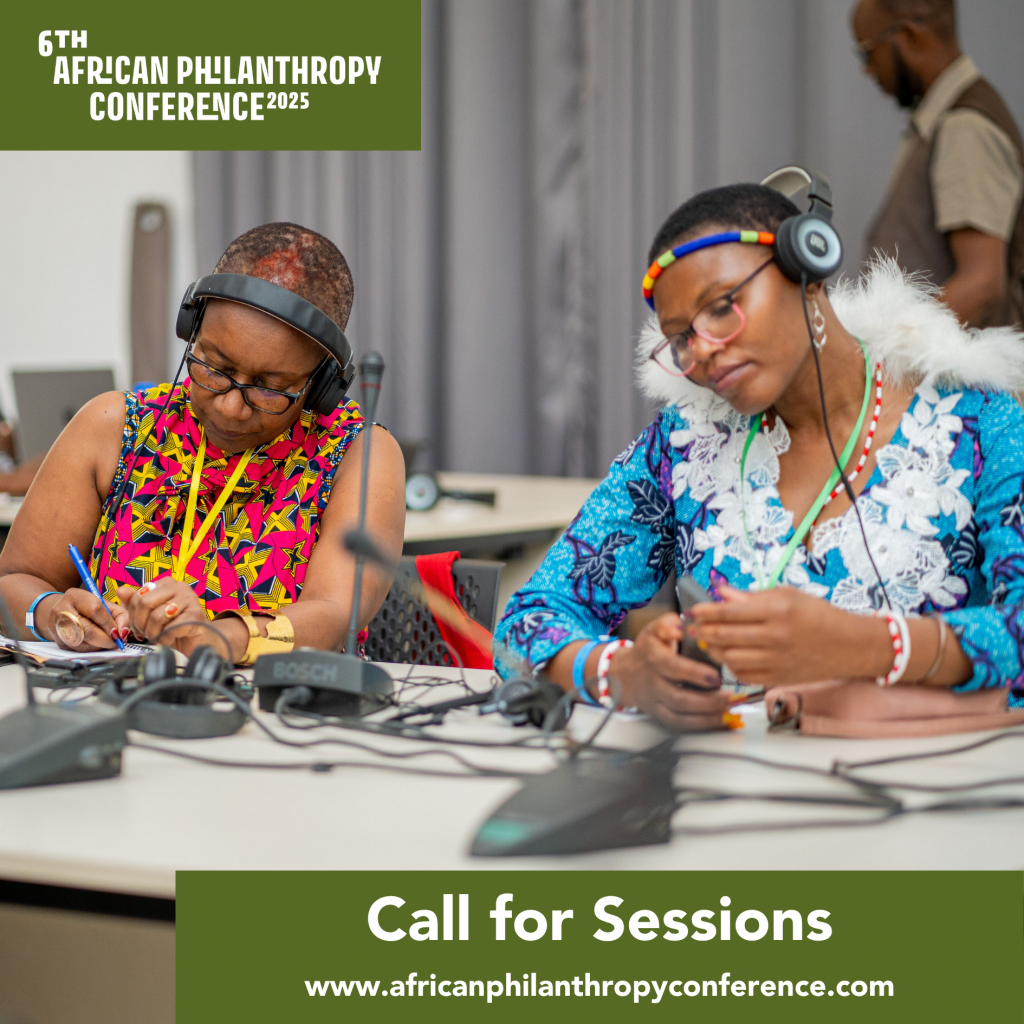
Call for Sessions: 6th African Philanthropy Conference

The co-convenors of the 6th African Philanthropy Conference (6APC) invite organisations, researchers and practitioners to submit session proposals for the conference. Under the theme “Sustainable Financing for Development in the Majority World”, 6APC will explore financing practices and models that enable African economic sovereignty, local agency and long-term sustainability.

Set to be hosted at The American University in Cairo in collaboration with the John D. Gerhart Center for Philanthropy, Civic Engagement and Responsible Business, the 6APC will welcome delegates from across Africa in what has grown into the continent’s largest gathering on philanthropy and development.


Conference Details

Theme: Sustainable Financing for Development in the Majority World

Dates: Tuesday, 29th July to Thursday, 31st July 2025

Venue: The American University in Cairo (AUC)


Call for Sessions

The African Philanthropy Conference practioner dimension is dedicated to real world applications by offering a platform for practitioners, policymakers, grassroots movements and researchers to curate or host sessions that profile innovations, insights and progressive solutions advancing philanthropy in Africa.

Proposals must align with one or more of the conference subthemes, and critically engage with experiences and ideas relevant to philanthropy, social development, or social entrepreneurship across the continent. Collaborative and cross-country submissions are strongly encouraged.


Subthemes

  1. Decolonised funding structures
  2. Local ownership and asset-based community development
  3. Ethical and transparent financing practices
  4. Gender-responsive financing for development
  5. Technology-driven financial inclusion and digital economies
  6. Diaspora and remittance-based financing
  7. Financing models for education and knowledge capital
  8. Land and resource-based financing in rural economies
  9. Philanthropy-driven impact investment for the public good
  10. Public health emergency funding and pandemic preparedness
  11. Decentralised finance (DeFi) and community trust funds
  12. Environmental, social and governance (ESG) metrics for impact accountability
  13. Cultural preservation and Indigenous knowledge in sustainable resourcing


To support the preparation, contexts of the subthemes can be found at the end of this call.


Submission Guidelines

  • Submissions should be between 300 and 500 words in length.
  • Accepted languages: English, French, Arabic and Portuguese.
  • Include the submitters name(s), organisation and contact details.
  • Submissions should clearly indicate the alignment to a conference theme/s and how the session will contribute to the field of philanthropy.
  • Submissions must indicate the following.
    • Proposed session speakers (name and organisation)
    • Format that the session will follow (roundtable, fishbowl, panel, skills sharing labs, etc)

Submission link

All proposals are to be submitted on the following link: https://africanphilanthropyconference.com/call-for-sessions/


Key Dates

  • Submission deadline: Tuesday, 10 June 2025
  • Notification of acceptance: Monday, 16 June 2025


Support for organisers and panellists

Participation in the conference is primarily self-funded. A limited pool of support may be available on a case-by-case basis for the following groups:

  • Youth-led movements/organisations
  • Grassroots movements/organisations

Support, where granted, may only cover the following costs:

  • Flights
  • Local transfers (airport shuttles and transport between hotels and the venue)
  • Conference meals and materials

Participants receiving partial support are expected to cover their own accommodation and registration fees unless otherwise waived.

For enquiries, please contact:  Ogo Chukwudi (chukwudi@trustafrica.org) or Rouguiétou Khady Sow (sow@trustafrica.org)

Contexts of the conference subthemes

  1. Decolonised funding structures explore strategies to dismantle legacy funding models that perpetuate dependency and external control. It calls for the creation of financing mechanisms rooted in African agency, values, and priorities. By challenging paternalistic donor practices, decolonised funding structures empower local actors to set agendas, direct resources, and define success. The aim is to foster financial sovereignty, reduce vulnerability to the shifting interests of foreign donors, and ensure that philanthropic capital truly advances African-led development.
  1. Local ownership and asset-based community development focuses on financing models that prioritise community control and leverage existing local assets-social, economic, and cultural. It seeks to shift development from externally imposed solutions to those that harness community strengths and knowledge. Asset-based approaches empower communities to identify, mobilise, and manage resources for their own development, fostering resilience and sustainable impact.
  1. Ethical and transparent financing practices examines standards, tools, and innovations that ensure integrity in resource mobilisation, allocation, and reporting. It addresses issues such as anti-corruption, participatory grantmaking, and open data practices. Submissions may consider frameworks that enhance transparency, safeguard against misuse, and promote ethical stewardship of funds, especially in contexts where regulatory environments may be weak.
  1. Gender-responsive financing for development interrogates how financing models can be designed to address gender disparities and promote women’s empowerment. It highlights the need for funding mechanisms that recognise and respond to the unique challenges faced by women and gender-diverse groups. Sessions may present approaches that mainstream gender in financial decision-making, support women-led initiatives, and dismantle structural barriers to access.
  1. Technology-driven financial inclusion and digital economies explores how technology-mobile money, fintech, blockchain, and digital platforms-can drive financial inclusion, unlock new economic opportunities, and democratise access to capital. Sessions could examine the impact of digital economies on marginalised groups, regulatory challenges, and the role of philanthropy in supporting responsible tech adoption.
  1. Diaspora and remittance-based financing investigates how remittances and diaspora-led investments can be harnessed for development impact. It seeks to move beyond informal transfers, exploring structured mechanisms for pooling resources, supporting enterprises, and funding social initiatives. Sessions may highlight innovative models or partnerships that amplify the developmental potential of diaspora engagement and address challenges such as high transfer costs, regulatory barriers, and impact measurement.
  1. Financing models for education and knowledge capital examines innovative financing approaches that expand access to quality education, support research, and build knowledge capital. It invites analysis of scholarship funds, education bonds, public-private partnerships, and philanthropic investments in skills development. Sessions may unpack models that are contextually relevant, scalable and capable of addressing systemic inequities in African education systems.
  1. Land and resource-based financing in rural economies explores models that leverage land, agriculture, and local resources to generate capital for community development. It aims to address challenges such as land tenure, resource governance, and equitable benefit-sharing. Sessions may present practical examples, frameworks or research on how resource-based financing can enable rural transformation and ensure environmental sustainability, while respecting community rights and Indigenous practices.
  1. Philanthropy-driven impact investment for the public good investigates the role of philanthropy in catalysing impact investment across Africa, particularly in sectors underserved by traditional finance. It seeks submissions on blended finance, social enterprises, and public-private partnerships that prioritise the public good.
  1. Public health emergency funding and pandemic preparedness addresses the need for agile, sustainable funding mechanisms to respond to public health emergencies. Sessions may reflect or unpack models for pooled funds, insurance schemes and rapid-response grants that strengthen preparedness and resilience.
  1. Decentralised finance (DeFi) and community trust funds explores the potential of blockchain-based platforms, community trust funds, and peer-to-peer networks to democratise access to capital and enhance local control. Sessions may assess opportunities and risks, regulatory considerations and real-world applications of DeFi in African contexts.
  1. Environmental, social and governance (ESG) metrics for impact accountability investigates frameworks and tools for integrating environmental, social, and governance considerations into funding decisions. Submissions should discuss best practices for ESG reporting, challenges in data collection, and the role of accountability in driving sustainable outcomes.
  1. Cultural preservation and Indigenous knowledge in sustainable resourcing explores how philanthropic and financing models can support cultural preservation, promote Indigenous knowledge, and ensure that resource mobilisation aligns with community values. Sessions may demonstrate how centring culture and Indigenous wisdom can enhance the effectiveness and legitimacy of development intervention


Submit Session

6th African Philanthropy Conference Call For Academic Abstracts

The convenors of the 6th African Philanthropy Conference (6APC) invite scholars, researchers, and practitioners to submit abstracts for the academic dimension of the conference. The 6th APC, under the theme “Sustainable Financing for Development in the Majority World, will explore financing models that ensure African economic sovereignty, local agency, and long-term sustainability.

Set to be hosted at The American University in Cairo by the John D. Gerhart Center for Philanthropy, Civic Engagement and Responsible Business as the country host, the 6APC will welcome delegates from across Africa in what has grown into the continent’s largest gathering in the interest of philanthropy.


Conference Details

  • Theme: Sustainable Financing for Development in the Majority World
  • Dates: 27th July to 31st July 2025
  • Venue: The American University in Cairo (AUC)
  • Host Partner: John D. Gerhart Center for Philanthropy, Civic Engagement and Responsible Business


Call for Academic Abstracts

The academic dimension will provide a platform for scholars, researchers and practitioners to present work that advances the field of philanthropy in Africa. Abstracts submitted should align with the conference subthemes while critically engaging with the themes of decolonised financing, ethical philanthropy, climate resilience, digital finance and community-led development.

Subthemes

  1. Decolonised funding structures
  2. Local ownership and asset-based community development
  3. Ethical and transparent financing practices
  4. Gender-responsive financing for development
  5. Technology-driven financial inclusion and digital economies
  6. Diaspora and remittance-based financing
  7. Financing models for education and knowledge capital
  8. Land and resource-based financing in rural economies
  9. Philanthropy-driven impact investment for the public good
  10. Public health emergency funding and pandemic preparedness
  11. Decentralised finance (DeFi) and community trust funds
  12. Environmental, social, and governance (ESG) metrics for impact accountability
  13. Cultural preservation and Indigenous knowledge in sustainable resourcing

Submission Guidelines

  • Abstracts should be between 300 and 500 words in length.
  • Submissions should highlight key arguments, methodology (if applicable), and expected contributions to the field of philanthropy.
  • Abstracts must be submitted in English, French, Arabic and Portuguese, with the author’s name(s), affiliation, and contact details included.
  • Abstracts that are accepted must progress to full paper submissions, which must be submitted for review for scholarship consideration. The submission date is no later than one month before the conference.

Submission link

All abstracts are to be submitted on the following link: https://bit.ly/3QRTH1p

Key Dates

  • Abstract submission deadline: Wednesday, 30 April 2025
  • Notification of acceptance: Thursday, 15 May 2025
  • Full Paper submission deadline (for scholarship consideration): 30 June 2025


Support for Delegates

  • Convenors will cover the following costs:
    • Conference meals
    • Local transfers (airport shuttles and transport between hotels and the venue)
    • Conference materials
  • Presenters must cover their own flights to Cairo and hotel accommodation

Limited scholarships will be available for participants who submit full papers within the specified deadline.

Consideration may be given to waiving registration fees for presenters upon written request, subject to approval.

For enquiries, please contact the coordinator for the academic dimension, Wycliffe Ouma on wycliffe.ouma@wits.ac.za


Submit Abstract

Call For Applications: Ph.D Writing and Methodology Workshop 

We are inviting applications for our annual Ph.D Writing and Research Methodology Workshop.

Open to PhD students registered at African universities at any research stage, this workshop will offer delegates hands-on coaching from specialists, enabling them to sharpen their academic writing and research capabilities.

Delegates will gain practical knowledge on aspects such as writing skills training, developing research questions, developing research methodology, writing time and supervision.

Closing date for applications: 30 May 2025, 17h00 SAST

Date: 14 September 2025 – 20 September 2025 

Location: Wits Rural Facility, Acornhoek, Mpumalanga

What is covered: Transport, Meals, Accommodation, Wi-Fi

Enquiries: joseph.sobuthongo@wits.ac.za

Submissions: Submission Link

Note: Proof of registration is required on application.


This workshop is ideal for students who require coaching with framing and submitting successful proposals, as well as candidates who are seeking guidance from seasoned academic supervisors in developing their thesis.

Priority will be given to registered students in any of the following disciplines: Humanities (history, languages, literature, and philosophy); Social Sciences (anthropology, education, geography, law, political science, psychology, sociology, development and international relations); and Business (accounting, economics, finance, management, and marketing), especially those working on:

  • Non-profits
  • Philanthropy and social investments
  • Civil society
  • Social enterprises
  • Non-profit sectors contribution to African economies
  • Technology and philanthropy
  • Any other cognate areas

The retreat’s objectives are aimed at improving academic writing and specifically at:

  • Developing research problem statement, objectives, and questions
  • Conducting literature reviews
  • Developing conceptual framework
  • Developing the research methodology – quantitative, qualitative, and mixed methods
  • Research ethics issues
  • Data collection, analysis, and presentation (quantitative, qualitative, and mixed method)
  • Writing for academic publishing
  • Academic Project management

Successful applicants will be expected to make presentations on their research projects during the workshop.

To apply, please submit the following documents to Joseph Sobuthongo:

  1. A motivation letter indicating how this workshop will be beneficial to you.
  2. Proof of registration
  3. Letter of support from your supervisor
  4. Your current research proposal/draft thesis

Successful applicants should prepare to be away in Mpumalanga for the whole week beginning 14 September 2025. They must be available and able to participate throughout the workshop.

CAPSI will cover expenses including accommodation, food, and transport from WBS Campus in Parktown, Johannesburg, to Wits Rural Campus.


Notes and T&C:

  • Delegates must arrange their own transport to the Wits Business School in Johannesburg to access transportation that will take them to the Wits Rural Facility.
  • First time applicants will be prioritised.
  • Only accept 30 PhD applications on a first-come, first-served basis in addition to the quality of the application.  

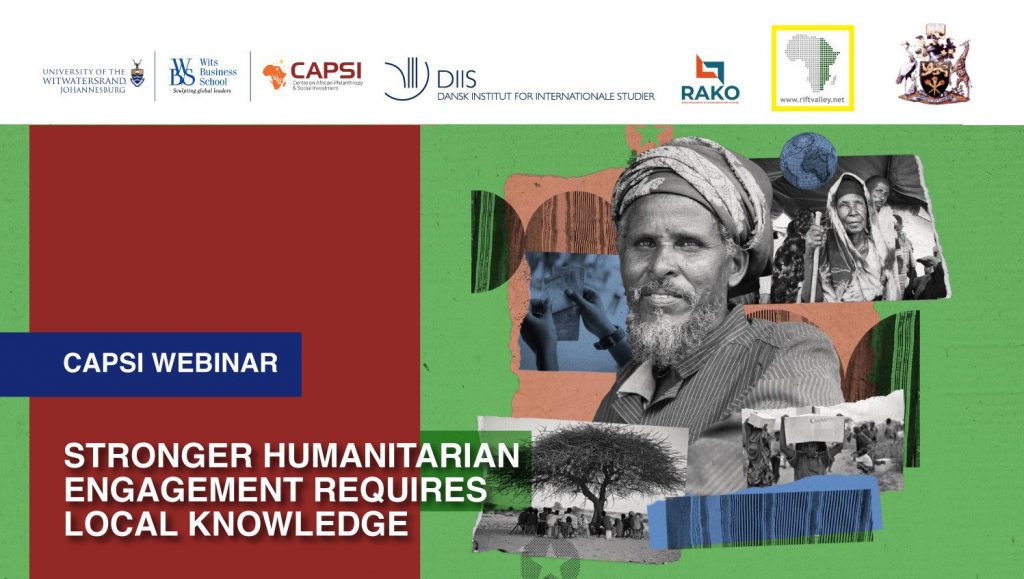
Stronger Humanitarian Engagement Requires Local Knowledge

Stronger Humanitarian Engagement Requires Local Knowledge

We are pleased to announce an upcoming webinar that will delve into the critical role of local knowledge in enhancing humanitarian engagement. This session is informed by a recent policy brief authored by Mohamed Aden Hassan and Nauja Kleist.


Webinar Details:

  • Title: Stronger Humanitarian Engagement Requires Local Knowledge

  • Date: 23 January 2025

  • Time: 14:00 SAT

  • Platform: Zoom

  • Registration Link: Register here

This webinar delves into the importance of localisation in international humanitarianism, emphasising the value of local partnerships. Diaspora humanitarianism, with its deep connectivity and understanding of local contexts, plays a pivotal role in such efforts.

Hassan and Kleist highlight how collaboration between local actors and the international humanitarian system can enhance efficiency and impact, though it often involves navigating dilemmas and compromises. Their key recommendations include:

  1. Adoption of Context-Specific Approaches
    Aligning aid strategies with local customs, leveraging community knowledge, and fostering strong local partnerships can make humanitarian interventions more sustainable and efficient.

  2. The Humanitarian Principle of ‘Do No Harm’
    A solid understanding of local dynamics, especially in resource-scarce and (post)conflict contexts, is essential to avoid creating or aggravating harm.

  3. Development of Hybrid Accountability Frameworks
    Establishing frameworks that bridge the formal aid system and the diaspora through dialogue and mutual dedication can enhance accountability. However, achieving this requires compromises from both sides.

For more information about the speakers, click here

Don’t miss this opportunity to explore innovative approaches to creating more sustainable and impactful humanitarian interventions. Join us for an engaging conversation. Click the button below to secure your spot today!


Register Now

Reflections from 2024 CAPSI graduates

Zanele Makombe, Masters of Management in African Philanthropy, 2024

My journey began with a restlessness to pursue studies in a field outside my initial focus. During my search for opportunities, I came across the African Philanthropy Masters Programme, which piqued my interest in philanthropy. This new direction felt aligned with my experiences working with nonprofits, where I saw the transformative impact of strategic giving on communities. Through my research, “Expressions of Solidarity and Decolonisation of Philanthropy in Southern Africa,” I explore how philanthropy can move from reinforcing power dynamics to fostering equitable, locally-led development.

Balancing my role as Programme Advisor with my Master’s studies required careful time management, prioritisation, and support from colleagues and mentors. Structured calendars helped manage my commitments, including time with my children’s schedules. Unfortunately, sleep often suffered as I balanced personal, professional, and academic priorities. I carved out dedicated time for studies, often relying on late-night hours, and made every “free” moment count for focused reading. Clear communication of my availability helped manage tasks and my own and others’ expectations. Parkruns became a treat and an opportunity to put in the steps!

My research highlights the need to address historical power imbalances and colonial legacies, offering new insights on how solidarity can drive systemic change and foster equitable development. These findings could inform philanthropic practices, benefiting organisations focused on transforming power dynamics and promoting locally-led development. I collaborated with community-based organisations, funding partners, and sector experts to ensure the relevance of my research. These collaborations enriched my findings and contributed to improving practices and advancing understanding of civil society and philanthropy. The research has enabled me to present in platforms on decolonisation, shifting power, and alternative approaches to philanthropy, further influencing discussions on these critical issues.

Through academic discussions and mentorship, I aim to guide future development leaders in applying research to real-world challenges and promoting sustainable, equitable change. My advice is to gain practical experience, build networks, stay informed, and commit to finishing — remember, the sun always sets!

Daphney Nemakhavhani, Master of Management in African Philanthropy, 2024

As a development practitioner, I constantly engage with a full range of stakeholders, such as alumni and donors, to address societal needs. This entails building and maintaining strategic, mutually beneficial relations and securing resources to drive institutional advancement initiatives. Having witnessed the transformative power of education and the challenges faced by universities in resource mobilisation inspired me to further my studies to deepen my understanding of the underlying principles and strategies that drive successful philanthropic efforts and seek innovative, research-backed solutions.

Through my research, I hope to contribute actionable insights that can influence African philanthropic practices and policies, provide a framework that universities can adopt to foster sustainable giving cultures, potentially transform resource mobilisation strategies and ensure diversified sources in education funding.

Balancing my director role with academic pursuits demanded discipline, sacrifices and planning. These required meticulous prioritisations of tasks, leveraging early mornings and weekends for study while ensuring I remained present for my professional responsibilities. This honed my time management skills and deepened my appreciation for integrating theory with practice.

The findings of this study have significant implications for policies and practical implementations, providing valuable insights into important facets pertaining to the motivations for gifting. These insights are useful to development practitioners, higher education administrators, and decision-makers for making informed decisions within the universities. Collaborative engagements during my study were instrumental in enriching my perspective and bridging the gap between academia and practice, ensuring the relevance and impact of scholarly work.

I am committed to mentoring aspiring development leaders, blending academic insights with practical strategies to address Africa’s unique challenges by sharing lessons from real challenges, such as building donor trust and creating effective strategies, while encouraging critical thinking and innovation. For those considering studies in philanthropy, I emphasise the importance of curiosity, resilience, and a genuine commitment to societal transformation. The journey is demanding but profoundly rewarding for those committed to making an impact.

Adɔyɛ: Profiling the impact of women in African Philanthropy

Thandi Makhubele

The Adɔyɛ, Women in African Philanthropy Programme, embedded within CAPSI, continues to make remarkable progress in amplifying the voices and contributions of African women in philanthropy. Rooted in principles of inclusion, collaboration, and transformative leadership, Adɔyɛ is redefining the philanthropic landscape through a distinctly pan-African lens.

Over recent months, the programme has achieved significant milestones. The completed dialogue framework now serves as a cornerstone for convenings that foster meaningful discussions and collaborations among women in philanthropy. Additionally, an organisational mapping study has deepened Adɔyɛ’s understanding of the ecosystem, identifying key organisations and illuminating gaps in engagement, particularly with grassroots and informal initiatives that often operate beyond traditional networks.

In advancing its commitment to knowledge creation, Adɔyɛ has begun onboarding fellows to explore storytelling and conduct research on women’s philanthropy. An ongoing literature review is identifying critical gaps in the field, setting the stage for research projects that will drive impactful contributions to the sector.

Adɔyɛ also recently participated in the AWID 2024 Forum in Bangkok, co-leading a transformative strategy session titled “Building Alternative Narratives and Practices: Centering Pan-African and Feminist Philanthropies.” In collaboration with Harambee-Ubuntu PAFP, AWDF, and JASS, this session critiqued traditional philanthropic models, elevating feminist and indigenous approaches to collective resourcing. Through shared experiences and strategic dialogue, the session underscored the power of pan-African and feminist philanthropies in driving liberation across the global majority.

Looking to the future, Adɔyɛ is preparing for the African Women Writers’ Circle in January 2025, a retreat designed to provide a reflective space for participants to document their journeys and contribute to a body of narratives grounded in African histories, feminist thought, and decolonial perspectives.

As the programme evolves, it remains committed to fostering partnerships, advocacy, and research that celebrate the resilience and innovation of African women in philanthropy. Adɔyɛ continues to champion gender equity and inclusivity, reshaping the philanthropic ecosystem for a more just and equitable future.

Publications: Growing the footprint of resources

Xolani Dlamini

The current year of 2024, leading to 2025 proves potential for CAPSI to continue contributing to the body of knowledge in various research areas of philanthropy and social investment across Africa and abroad, with new endeavours and different interpretations of the field.

In response to perceived challenges faced by early career academics when looking to submit and publish their work, CAPSI in collaboration with various organisations and publishers, will be hosting a continuation of a series of in-person events and webinars that focus on academic publishing for emerging researchers. Each webinar looks at a different topic, covering all one needs to know about academic publishing. The series aims to provide expert advice on a broad range of publishing themes. This includes but is not limited to: learning how to prepare an academic paper; understanding editorial processes and decisions; peer review processes and preparing manuscripts for publication once accepted.

The Centre launched the Research Reports Spotlight Series, which covers reports that tackle various expressions of philanthropy across the continent. The series aims to facilitate a deeper learning and analysis of each of the research reports, thus generating knowledge, content and raising awareness. The main objectives for these events/webinars are to create conversations and engagements to expand on the report’s methodology and findings so that the research and its recommendations can be further disseminated in video, audio, written and infographic formats. We owe a deep gratitude to all the authors who published their reports and accepted our invitation to participate and present their findings with the wider community.

As part of the Research Reports Series, we will publish several reports resulting from research studies conducted by Emerging Scholars. These reports document various topics such as philanthropy, climate change and sustainability.

There are numerous research undertakings commissioned by the Centre in partnership with different partners. One of them is a collaboration between CAPSI and Johannesburg City Parks and Zoo that produced a report focusing on good practices and lessons from nonprofit organisations and cooperative partnership programmes.Another partnership with the Wits School of Governance produced a book titled “African Philanthropy: Philanthropic Responses to COVID-19 and Development Goals in Africa” that was published last year by Edward Elgar Publishing. We have another book project on barriers to civil society that we hope to publish in 2025.

The contributions of the nonprofit sector to African economies project conducted research studies in 17 countries in Africa focusing on the contribution of the nonprofit sector to the creation of dignified and fulfilling work for young people in Africa. This has produced various reports, including the methodology toolkit, synthesis report and country reports in more than ten African countries. The Centre is in the process of finalising and publishing the reports in various formats, including a collated volume or special issue.

The International Review of Philanthropy and Social Investment (IRPSI) is an open-access interdisciplinary, international journal for cutting- and leading-edge primary research on philanthropy and social investment. It is aimed at academic and research communities, exploring the emergent and developing fields of philanthropy and social investment in Africa and beyond.

Another set of publications will be from the Resilient Urban Communities Project (RUC), a partnership with the University of Münster, Strathmore University and our Centre. Authors explore different themes that include African civil society, social entrepreneurship, and philanthropy through the lens of economics, social sciences, nonprofit, or development studies. The submitted papers are currently under review, and we anticipate publishing this special issue during the first quarter of 2025.

Emerging from the African Philanthropy Conference that took place in Victoria Falls in July 2024, the IRPSI journal will publish a special issue from the academic conference proceedings.

Over the past few years, one of our biggest challenges has been to build a strong and credible pool of reviewers to be used across our many publications to ensure quality control and high standards. We have started contracting about a dozen reviewers, entering into a two-year agreement with many, hoping to increase our turnaround times during the review process.

We have strengthened our efforts to increase accessibility and enhance discoverability of the Centre’s content across all platforms to support findability in external platforms and databases, and allow for machine-generated connections of content. This is in line with our long-term strategic advancements to produce credible publications and work our way to full accreditation.

Academic excellence in African Philanthropy: Running while others walk

Jacob Mati

Over a decade ago, the late eminent African political economist, Thandika Mkandawire, invoked the ghost of Mwalimu Julius Nyerere in framing his inaugural lecture as the first ever Professor and Chair of African Development at the London School of Economics and Political Science, when he argued that in response to the many challenges  that Africa  has  faced  over  the  years  and  still  faces  today, she will have  to  ‘Run while others  walk.’  This  ‘Running’,  Mkandawire noted, requires “radical  rethinking  of  institutions  of  collective  response  to  the  many  challenges  about  the  generation  and  mastery  of  the  knowledge  up  to  the  task,  once  again  placing the  universities  at  the  centre  of  the  continent’s  development  efforts.”

CAPSI’s establishment a few years ago was, in a sense, one of the many efforts at centring the university at the heart of Africa’s development. Nothing demonstrates this better than the positioning of our academic offerings. These aim to build the skills of a new generation of African experts, researchers, academics and leaders in philanthropy, social investment, and related disciplines, especially as they relate to critical resources required for Africa’s development. Our academic offerings therefore concentrate on equipping our graduates with the necessary skills to enable them to contribute and steer Africa’s philanthropy and development sector more broadly by seeking answers to critical development resourcing questions.

To this end, the year 2024 ends on a positive note on a number of fronts. First, we have had two PhD students qualify this year. Congratulations to these new PhDs graduates: Dr Nana Asantewa Afadzinu and Dr Ngoni Chipato. In addition, the first five students of our inaugural cohort of the Master of Management in African Philanthropy qualified. In this regard, congratulations to Lelentle Motaung, Lindelwe Mapurisa, Zanale Makombe, Dephney Nemakhavhani, Lindelwe Mapurisa, and Rapiya Lithakazi. We look forward to the remaining four students in this inaugural class completing their research reports and qualifying soon. 2024 also saw 13 students from the third cohort of the Postgraduate Diploma in Philanthropy and Resource Mobilisation (PDM PRM) successfully complete their programme, while two more from previous cohorts returned to complete their studies. Congratulations to all.

The Centre, in addition to offering courses, has also risen to the occasion and sponsored students who would otherwise not have completed their studies due to resource distress. In this regard, we funded two master’s level students (one a staff member pursuing Master of Arts in Applied Linguistics and pursuing research on “Language, Power, and Philanthropy” and another Master of Management in African Philanthropy (MM AP) student – both are on course to complete their studies). The other student we supported is a PDM PRM student who has successfully completed his studies. This support for the three students is in addition to the more traditional PhD student support offered under our different donors. These fellowships have offered opportunities for these students and the Centre to contribute to knowledge, networking, partnerships, and are motivations for innovations and community engagement across the continent. We hope to build on these in our continued endeavour at creating a community of African researchers and academics in the sector.

The urgency of CAPSI as an African institution having to ‘run while others walk’ is demonstrated not only by the number of the different types of academic offerings the Centre offers but also by the need to disseminate knowledge generated through our programmes, especially by our Post graduate Diploma, Masters, and PhD students, as well as the postdoctoral scholars. To this effect, we have had several of our students present their research at various forums. For example, 15 students in the various programmes (PhD, MM AP and PDM PRM) presented their research at the African Philanthropy Conference in Victoria Falls, Zimbabwe, as well as one at the Resilience Urban Communities conference at Strathmore University in Nairobi, Kenya. These papers are currently under review for possible publication through various platforms and outlets. We congratulate all these students for their efforts and contributions to building knowledge in the sector.

A critical question emerges though: besides producing knowledge and graduates, how is the Centre impacting the African (and wider) philanthropy and higher education sector? Our answer to this question emerges from looking at where our graduates have been going to practice their skills. To this end, we have seen some of our graduates move jobs to become senior executives in the philanthropy sector both globally and locally, while others have joined from other sectors, both vertically and horizontally. We have also witnessed organisational entrepreneurship in practice as some members of the second cohort of the PDM PRM programme have formed a youth-focused philanthropy organisation. Perhaps, as an indicator of retention of some of our PhD graduates in the academy to pursue research on philanthropy sector-specific matters, two of our researchers in the nonprofit sector’s contribution to dignified and fulfilling jobs for African youth project are former CAPSI-supported PhD fellows who have since graduated.  Additionally, the two postdoctoral fellows who have been working on the RUC project were both supported by CAPSI in their student days. This is in addition to three other former CAPSI PhD students or CAPSI sponsored students who now teach various courses in our programmes while many more are engaged as research associates in our various ongoing research programmes.

In addition to formal academic programmes, the Centre offered our signature annual doctoral writing workshop at the Mpumalanga Wits Rural Facility in September. This hosted 38 PhD students drawn from various universities across the continent.

In the coming year, we hope to build on these successes and continue ‘running’ as we grow the Centre’s offerings as well as deepen and broaden students’ engagement in disseminating knowledge generated from research and practice. More importantly, we hope to build on these successes in revamping our Masterclass offerings which were not as active during the year due to staffing constraints.