Author: Charles

From the Desk of the Director

by Bhekinkosi Moyo

CAPSI continues to witness considerable growth since its establishment, first as a Chair in African Philanthropy between 2014 and 2017, and then as a Centre since 2018. The growth has been witnessed in various dimensions.

The first dimension is our staffing capacity. There are now 25 members on staff, comprising of ten full-time employees, four visiting researchers and professors, two post-doctoral fellows, and nine fixed-term employees. A very positive reflection on the calibre of our staff and work is that four of our staff are former CAPSI students. Another is that one of the first staff members of the Centre assumed a teaching position focused on philanthropy at a private university in the USA in August 2023. We’ve also worked with associate researchers and currently have more than thirty associates spread across countries and projects. Given that our Centre offers academic programmes, we have recruited sessional academics to teach specialised modules in the postgraduate and executive education programmes. This is in addition to academic staff who are part of the team.

The second dimension of growth is in our academic offerings, which is made up of a Postgraduate Diploma in African Philanthropy and Resource Mobilisation (PgDip); a Master of Management in African Philanthropy (MM); and a Doctoral Programme (PhD). This year the PgDip programme had 13 registered students, while the MM in African Philanthropy had 12 students – all studying full time. On the PhD Programme, we had 14 students registered during the period. Overall, CAPSI has graduated 12 doctoral students since its establishment. This is one of CAPSI’s achievements that we hope to build on, creating a community of African researchers and academics.

In addition to teaching, we offer support initiatives such as the annual doctoral writing retreats, information sessions, mock panels, as well as mobility support, which enables students to attend international conferences where they present their work and meet others in the field.

Our Centre has continued to focus on new research areas, such as the ‘contributions of the nonprofit sector to African economies’ project, which is a five-year study spanning across 17 countries. Related to research and knowledge generation is the development of a knowledge hub that we have worked on over the past year. This will be a resource to access information from our published research as well as consolidated reports and publications on philanthropy and social investment.


In addition to research, publications, and teaching, we have also implemented several convenings and programmes. These include:

  1. The Annual African Philanthropy Conference: The conference is a collaboration among the following institutions: CAPSI, TrustAfrica, Africa Philanthropy Forum, Africa Philanthropy Network, East Africa Philanthropy Network, and the Southern Africa Trust. Hosted in Dakar, Senegal in 2023 and Victoria Falls, Zimbabwe in 2024. The 2025 edition of the conference will be held in Cairo, Egypt.
  • Adɔyɛ – Women in African Philanthropy: This is one of our new projects, created because of the many gaps that exist in capturing the role that women play in philanthropy, be it in research, teaching, or advocacy. To bridge this gap, CAPSI developed this project with a special focus on teaching, research, and advocacy initiatives. At the moment, the project is led by a steering committee that is made up of experienced women from across African philanthropic organisations.
  • Conversations on African Philanthropy Podcast: This platform hosts a variety of speakers: young people, leaders in the sector, academics, and activists, among others. These are drawn from different sectors and countries. We have received positive feedback about how people are using the podcast for teaching, research, and self-improvement. In 2024, we pivoted the podcast to document a donor collaborative called the Zimbabwe Alliance. We recorded twenty episodes of this collaboration and published the series in December 2024.
  • Kisima Giving Platform: While progress on this project has lagged due to a lack of funding, we have integrated the vision into the podcast so as to continue telling stories. In the next year, we plan to revamp this project by engaging several writers from across the continent.

The success and achievements are thanks to the commitment by staff and our valuable partners. Among these are CAPSI’s dedicated set of funders who have provided both general support and project funding. I want to thank the Ford Foundation, Charles Stewart Mott Foundation, Mastercard Foundation, Carnegie Corporation of New York, Wallace Global Fund, MacArthur Foundation and the Open Society Foundation for the continued support. It is because of this support, the commitment of our staff, the contributions of our various partners, and the dedication of our students that the Centre has grown significantly over the last few years.

The growth is always a stretch on the resource base and capacity, which requires more expertise and skills, but it has also positively impacted the reputation of the Centre internally and externally. We see this positive growth as a challenge to sustain in the coming years. There are other universities in Africa that are now setting up programmes and centres on philanthropy. This is a good development, but it also means our uniqueness is now short-lived. We will have to dig deeper into our skills and experiences to remain relevant.

I take this opportunity to wish everyone happy festive holidays and a prosperous 2025. I hope the reflections below and the footprint of the Centre presented in infographics will give you a sense of what we do every day and what we seek to achieve. We hope to talk to you in the new year and collaborate to promote the role of African philanthropy and social investment. South Africa will host the G20 meeting in 2025 – let us all collaborate and drive the elimination of Africa’s development challenges.

For us, philanthropy is one of the vehicles for our development, and we are proud to play our part to promote it.

Regards,

Bheki

Re-centering philanthropic narratives: the importance of securing independent and autonomous resourcing


Perspectives from Adɔyɛ Women in African Philanthropy and

Harambee~Ubuntu pan-African and Feminist Philanthropies


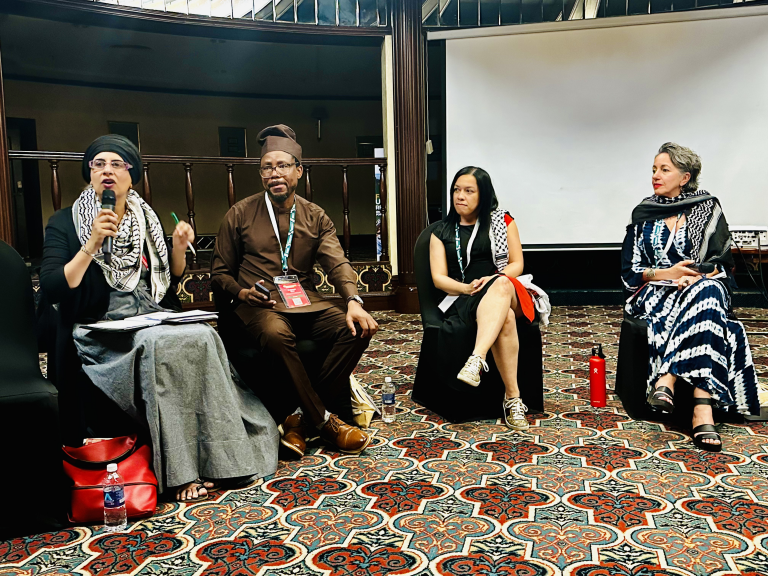
Deep shifts are happening across the African continent and the African diaspora. These shifts are taking place across our collective understanding of the many ways that philanthropy is defined, in who is considered to be a philanthropist, and in our understanding of the richness and variety of historical and contemporary practices of love, mutual aid, individual and collective giving, and solidarity and support.  The recent African Philanthropy Conference held in Victoria Falls, Zimbabwe, was an opportune moment to reflect on the importance of philanthropy and the ways that women are responding to multiple crises and creating new approaches to defining, redistributing, and investing money.


It cannot be underscored enough how important it is to centre women and pan-African and Feminist framings in our understanding of philanthropies. Women are investing their time as community organisers and through embedded giving practices, their talent as strategists, connectors and advisors, and their resources as every day and high-net-worth philanthropists. Understanding their various roles and contributions requires an ecosystem approach: narrative building, knowledge development, support, and advocacy efforts together with sustainable, equitable, locally owned, and driven resource infrastructure. In Victoria Falls, we had an opportunity to discuss these aspects and explore synergies as feminists, women’s rights activists and philanthropists.

The current world order and the rapidly changing political dynamics were discussed in detail, reflecting that we need to be clear and consistent with our ideological framing and understanding of philanthropy’s role in advancing justice and equity and addressing key challenges globally and across the continent. 

Key questions raised include how we show allyship, solidarity and support in the context of the active silencing of voices mobilising against the genocide in Palestine?  How do we uphold the fact that Palestine is a lens for what is happening in other places like  Sudan and the DRC?  What are our feminist duties to truth-telling, collective care and unwavering solidarity in these contexts? Interestingly these are questions that resonate with feminist movement leaders and thinkers not only here in Africa but globally.

It was opportune for us to connect, emerging collaborations – the Harambee~Ubuntu pan-African and Feminist Philanthropies and the Adɔyɛ Women in African Philanthropy initiative – reflect this. Harambee~Ubuntu is a partnership between Urgent Action Fund-Africa and TrustAfrica that seeks to re-imagine and define African philanthropic narratives and build a locally owned and driven resource infrastructure for pan-African and feminist movements and philanthropies.  Its vision is ‘an ecosystem of philanthropies grounded in pan-African and feminist values and principles, with shared infrastructure and mechanisms that connect and strengthen social movements, activists and communities by moving money and other resources in service of their efforts to advance justice and equity’. 

The definition of philanthropy – the love of humanity – is at the core of local ways of giving, however, institutional practices are often top-down, hierarchical and not grounded in priorities coming from social movements and feminist actors across the continent.

The Adɔyɛ Women in African Philanthropy (WIAP) program, a part of the Centre on African Philanthropy and Social Investment (CAPSI), aims to recognise, understand, celebrate, support, and amplify the significant role and impact of women in all spheres of philanthropy in Africa.  This includes women engaged in everyday and organic giving, those supporting community and civic formations, high net-worth givers, and women professionals and academics engaged with African philanthropy.  The concept of ‘resources’ encompasses time, skills, expertise, social capital, assets, money, and other forms of giving. its scope is pan-African and inclusive of gender-diverse populations.

Using these initiatives as leverage points, the participatory session encouraged participants to reflect and engage from multiple perspectives –  personal, political, institutional and field – on important elements needed to advance the ecosystem and resourcing beyond conversation into action.  Key questions were discussed such as what are the core values and practices of our pan-African and feminist agenda in today’s world?  What does accountability look like for us individually as well as for global institutions?  How do we truly centre the needs and realities of those who most experience intersecting discrimination?

We discussed what is needed to envision new kinds of partnerships; what we must challenge ourselves on and what implications this has for inclusive decision-making from within the constituencies we aim to serve. The session also included a deep dive into a new scoping study related to establishing a pan-African and feminist fund.

Reflections ranged from the importance of recognising philanthropic practices rooted in ubuntu – ways of being in relationship and community together. The definition of philanthropy – the love of humanity -is at the core of local ways of giving, however, institutional practices are often top-down, hierarchical and not grounded in priorities coming from social movements and feminist actors across the continent. How our language and politics shape our understanding and engagement with the world and the importance of building power to shape our own feminist and pan-African narratives grounded in lived experiences and practices that reflect our commitments to justice and equity for all was emphasised, as was recognising the multiple roles played by women’s diverse ways of giving.

Recognizing and mobilizing autonomous, pan-African resourcing as critical to our liberation was highlighted to counter the over-reliance on Northern financial resources. This requires enabling environments and conditions to seed funds and endowments, investing in ethically just ways, and funding following  pan-African and feminist narratives and principles. We also need to shift the idea that small funds are all that are needed on the continent and that substantive resources cannot be “absorbed” or managed locally. The centering of money as the only resource that matters was discussed as well as the need to define resources more broadly to include connection, solidarity and giving. 

We also recognised that change cannot happen overnight or be held by one organisation; it requires long-term commitments and the creation of various partnerships. Thus, this session, these initiatives, and related conversations are essential to building our women-centered, feminist, and pan-African philanthropic ecosystem.


Halima Mahomed is a Senior Fellow for African Philanthropy, Trust Africa.

Leila Hessini is an Algerian-American and pan-African feminist Strategist and Advisor who works with a range of feminist organizations, funds and movements advancing rights, equity, and justice.

Tsitsi Marylin Midzi is the Head of Transformative Partnerships and Philanthropy at Urgent Action Fund-Africa (UAF-Africa). She is a Zimbabwean pan-African feminist who advances African-led efforts to ground inclusive and intersectional political and feminist agendas for justice and liberation of all people of African descent.

Tagged in: #APC2024


Source: Alliance Magazine

Lead Regional Researcher for North Africa

To read the advert in Arabic click here.

To read the advert in French click here.

African Philanthropy and Social Investment

Applications should be submitted in English only


Wits Business School ( www.wbs.ac.za ) – University of the Witwatersrand

The Wits Business School (WBS) is internationally recognised and accredited. It has spearheaded innovation, teaching and research excellence in South African and African business for over 50 years. The school is based in the economic hub of South Africa and is in easy proximity of the country’s most vibrant cities. Our faculty come from over ten different countries, are predominantly African, but are also from the US, UK, Holland and Germany. Over 95% of our full time faculty are PhD qualified, and the majority of our full professors are NRF rated researchers.

The Centre on African Philanthropy and Social Investment (CAPSI) is based at WBS, offers training in philanthropic studies, conducts research on philanthropy and social investment; and often hosts conversations and dialogues with relevant stakeholders in Africa and beyond. For more information, please visit www.capsi.co.za

Brief posting description

Generally, WBS academics work exclusively with postgraduate students and senior executives. They deliver highly-rated learning, higher degree supervision, accredited research, and opinion leadership on business critical issues.  This WBS/CAPSI researcher would work exclusively for the Centre on African Philanthropy and Social Investment particularly on a donor funded project that will run for five (5) years. The project is funded by the Mastercard Foundation and focuses on 17 countries in Africa. It seeks to examine the extent to which the non-profit sector contributes to dignified employment for young Africans.

CAPSI has already appointed three regional lead researchers (two males and one female) for East, Southern and West Africa. CAPSI is now looking for a female regional lead researcher for North Africa to be based in Johannesburg but there is a possibility also to be based in North Africa.  Working with other project implementation team, each regional lead researcher is responsible for the development of the research design, landscaping, selection and training of country partners. In addition, each researcher works closely with CAPSI team and management and contribute towards the overall design, coordination, management and oversight of the project including research functions in countries for which they are responsible.


Minimum academic requirements

  • A relevant PhD in any of the following disciplines: Economics, Development Studies, International Development, Non-Profit  Management and/or Philanthropic Studies, Behavioural Sciences, Statistics, Social Sciences, Data Science and Public Policy Studies.
  • A demonstrable track record of peer reviewed research outputs is essential. A demonstrable track record of research fund raising would be a distinct advantage.
  • Demonstrable expertise in both advanced qualitative and quantitative research methods, including statistical analysis.
  • Excellent written and verbal communication skills in English, fluency in French, Arabic, Swahili, or Portuguese will be an added advantage.
  • Experience in gender and intersectionality research will be an advantage.
  • Must be able to lead multi-stakeholder partnerships.
  • Must speak English and preferably Arabic or French.

How to apply


Applications should be submitted in English only

Closing date for applications is 30 September 2024

Internal and external applicants are invited to apply by registering their profile on the Wits i-Recruitment platform located at https://irec.wits.ac.za and submitting their application. This application is to have a covering letter with a CV that includes the name, address and contact details, (including email addresses) of three referees, copies of qualifications, professional memberships and the copy of identity.

The University is committed to employment equity. In accordance with our Employment Equity goals and plan, preference will be given to suitable applicants from designated groups, as defined in the Employment Equity Act, 55 of 1998 and subsequent amendments thereto.

Email applications will not be accepted. Only those through the i-Recruitment platform will be considered.

Enquiries only: Prof. Bhekinkosi Moyo: Wits Business School, /CAPSI

Email: bhekinkosi.moyo@wits.ac.za

PhD Fellowship on ‘The Non-Profit Sector’s Contribution To African Economies’ A Mastercard Foundation funded project

The Centre on African Philanthropy and Social Investment (CAPSI) at the Wits Business School (University of the Witwatersrand), with the support of the Mastercard Foundation invites applications for Doctoral Fellowship on the Non-Profit Sector and its Contribution to African Economies project. The aim of the PhD fellowship is to provide opportunities for young African doctoral students registered in African universities to participate in research on non-profit organisations and their contributions to African economies. The specific focus of the research project is ‘The creation of dignified and fulfilling work for young Africans by the non-profit sector’.

ABOUT THE PROGRAMME

This doctoral fellowship programme offers a maximum of five years of support to twenty (20) selected full time Ph.D students. Each fellow will receive a fully funded fellowship, providing a full scholarship of up to $30,000 per year. The programme invites doctoral students exclusively from African universities in the 17 countries targeted by the project. These are Burkina Faso, the Democratic Republic of the Congo (DRC), Côte d’Ivoire, Egypt, Ethiopia, Ghana, Kenya, Morocco, Mozambique, Nigeria, Rwanda, Senegal, South Africa, Tanzania, Uganda, Zambia, and Zimbabwe.

Doctoral students will be working on topics related to non-profit organisations and their contributions to African economies, particularly those focusing on dignified and fulfilling employment for young Africans. Successful applicants will work closely with Regional Research Leads paired with senior researchers in undertaking their research. Fellows will be selected in line with categories of youth marginality that the project is paying special attention to -namely gender, disability, geography, class, age and various forms of marginality such as  refugees, ex-prisoners, and internally displaced persons, just to mention a few.

Applications are now invited from female doctoral students  with an interest in the non-profit sector and its role in African economies. In the current call, only female applicants from and focusing on the following countries are to apply:

  • Burkina Faso
  • The Democratic Republic of Congo
  • Egypt
  • Mozambique
  • Rwanda
  • Senegal
  • South Africa
  • Zambia


ELIGIBILITY CRITERIA

To be eligible for the Fellowship Programme, applicants must:

  1. Be a female aged 35 years or below
  2. Be currently enrolled as a full time student in a relevant doctoral programme at an African university, focusing on themes and research aligned to the project.
  3. Have research interest in the non-profit sector’s contributions to dignified and fulfilling work for African youth. 
  4. Demonstrate commitment to the programme and the ability to work effectively in a team.
  5. Be available to participate in the programme for its entire duration.
  6. In the first or second year of their PhD programme.
  7. Be nationals of any of the countries listed above and conduct research on any of them or some of them.

SUBJECT FIELDS

Social and behavioural sciences, including Economics, Development Studies, International Development, Non-profit or Philanthropic studies, Statistics and Actuarial Sciences, Management, Public Policy, History, Human Geography, or any development-related field.

The research should strictly focus on the project’s main objective; The Contributions of Non-profit Sectors to African Economies with specific focus on Dignified and Fulfilling Work for the Youth.  


APPLICATION INSTRUCTIONS

Eligible candidates should prepare and submit the following as part of the application package:

  1. Current curriculum vitae (CV).
  2. A personal statement (maximum 500 words) outlining their research interest, motivation, and alignment with the advertised CAPSI Research programme.
  3. An outline of their proposed research project (Maximum 2500 words) covering the following.

             I. Background of study

            II. Problem Statement

           III. Research questions

          IV. Research objectives

          V.  Literature review and theoretical framework

          VI. Proposed methodology (covering research design, sampling and, data collection and ethical considerations)

4. A letter of recommendation from supervisor/proposed supervisor.

5. A copy of academic transcripts.

6. Proof of age ( e.g., passport, birth certificate, etc.)

7. Proof of admission or registration in an African University


The application must be sent by email to: dennis.osei@wits.ac.za (applicants from West and North Africa), wycliffe.ouma@wits.ac.za (applicants from East Africa), and eleanor.chipeta @wits.ac.za (applicants from Southern Africa)  clearly marked “PHD FELLOWSHIP IN THE NON-PROFIT SECTOR’S CONTRIBUTION TO AFRICAN ECONOMIES,  and copied to Joseph.Sobuthongo@wits.ac.za.  

DEADLINE FOR APPLICATIONS

The deadline for applications is  Monday, September 16th, 2024.

Successful applicants will be notified by Friday, September 27th, 2024.


For more information and to apply, please visit the CAPSI website (https://capsi.co.za).

Inquiries should be directed to Joseph.Sobuthongo@wits.ac.za or any of the emails above.

5th African Philanthropy Conference Call For Sessions

The New Frontiers in African Philanthropy – 3rd African Philanthropy Academic Conference

Important Dates & Information:


  • Abstract Submission – Friday, 24 May 2024

  • Conference Registration Deadline – Friday, 28 June 2024

  • Notification of Acceptance – Friday, 31 May 2024

  • Venue: Elephant Hills, Victoria Falls, Zimbabwe
  • Dates: Monday, 29 July to Friday, 2 August 2024

Introduction

The 5th African Philanthropy Conference (5APC or 5th APC) is set to take place under the timely and forward-looking theme “The New Frontiers for (and in) African Philanthropy” in Victoria Falls, Zimbabwe. This edition of the conference marks a critical point in the exploration of the evolving philanthropic landscape in Africa. It represents a collective response to the dynamic and significant changes reshaping African philanthropy, focusing on in-depth examinations of emerging trends, innovative strategies, and their potential impacts on traditional philanthropic models. Encompassing a wide array of topics, from the role of digital technologies and community-centric approaches to climate science and innovative financing models, the conference aims to map out the new terrains of African philanthropy.


As is with the previous annual conferences, the 5th APC will start with an academic dimension running from Monday 29th July to Tuesday 30th July 2024. This call is therefore targeting academics, researchers, policy makers and practitioners who want to share their research with a wider network of scholars and researchers. The academic sessions will feed into the practitioner dimension of the conference which will take place from Wednesday 31st July to Friday 2nd August 2024.

Background

The African Philanthropy Conference series is a pivotal platform for discourse and the development of philanthropy ecosystems in the continent. It all commenced in 2019 with the inaugural conference in Johannesburg, South Africa under the theme “The State of Philanthropy in Africa.” This first edition set a foundational tone, established a space for diverse stakeholders to converge and discuss the nuances of African philanthropy. The second conference, that responded to the challenges posed by the COVID-19 pandemic, was hosted virtually in 2021. Themed “The Role of African Philanthropy in Surviving COVID-19” the conference underscored the resilience and adaptability readiness of the sector in the face of global crises. This conference brought to light the critical role philanthropy played in addressing the immediate and long-term impacts of the pandemic on the continent.

In its third iteration, the conference focused on the systemic changes required in the new normal, especially concerning the institutions, policies, and practices in philanthropy in the continent. The conference emphasised how African philanthropy was navigating post-pandemic challenges, with a keen focus on climate change, youth engagement, and the integration of technology in philanthropic practices. The fourth edition took place in 2023 under the theme “African Philanthropy at an Inflection Point,’ in Dakar, Senegal and explored the dimensions of People, Power, Policy and Practices. The conference provided a forum for exchanging knowledge about various models and approaches to African philanthropy, defining the sector’s narratives and roles across different domains, and developing strategies for the collective and sustainable development of the philanthropic and social investment sector on the continent.

About the conference

Coming from this rich background, the academic component of the 5th APC will focus on presenting the latest research and academic perspectives that shed light on these new frontiers and offer a platform for scholars to share their findings on how African philanthropy is adapting to and influencing these changes. Concurrently, the practitioner dimension of conference will translate the insights into practical strategies, with practitioners discussing how these theories are being applied on the ground. Therefore, the 5th APC’s theme reflects a forward-looking perspective, acknowledging the dynamic changes reshaping the African philanthropic landscape.

It is undeniable that these changes represent a seismic shift in how philanthropy is perceived, practiced, and leveraged for social impact on the continent. The conference, therefore, stands as a pivotal forum for exploring these emergent trends, where the traditional meets the innovative, and old models are re-evaluated in the light of new strategies and approaches.


Thematic Areas

Below are the themes that the academic dimension of the conference is seeking submissions for; details of each theme can be found further in this call:

  1. Technology and innovations in African philanthropy
  2. Three-sector partnerships (PPP)
  3. Climate change, adaptation, mitigation, climate justice and green resourcing
  4. Impact investment and de-risking social investment
  5. Gender equality, youth and diaspora in philanthropy
  6. Environmental stewardship, advocacy and economic empowerment of philanthropy in Africa
  7. Feminist philanthropies / Women in African philanthropy
  8. Philanthropy and reparations
  9. Philanthropy and global shifts
  10. Philanthropy and just peacebuilding

Submission information

Abstracts are to be submitted on the official conference website. Submission

Important dates

Abstract submission: Friday, 26 April 2024

Notification of acceptance: Friday, 10 May 2024

Conference registration deadline: Friday, 28 June 2024


Submission requirements

  • Abstracts should be 200 – 300 words in a Word document format
  • We welcome abstracts in English and other African languages
  • Submitted abstracts must contain the following
    • Session title and associated conference thematic area
    • Names and organisations / affiliations of proposed panelists
    • Acknowledgements or disclosure notices (if any)
  • A maximum of two submissions will be considered per author

The conference will consider supporting at least ten researchers whose full papers will be well written and ready for publication before the conference. Conference participants are expected to cover their attendance to the conference.

Conference contacts

Enquiries should be directed to the following individuals

Sfiso Lubisi – Sfiso.Lubisi@wits.ac.za

Michar Mushiko – Mushiko@trustafrica.org

Contexts Of The Conference Themes


a) Technology and innovations in African philanthropy

Technology and innovation in philanthropy, especially when considering digital technologies, signify a transformative shift in the African philanthropic landscape. The digital revolution in Africa transcends the mere adoption of new technologies; it encapsulates a fundamental change in the way philanthropic organisations engage with beneficiaries, donors, and the wider ecosystem. It is now clear to many stakeholders that technologies such as Artificial Intelligence (AI) and big data go beyond being trendy terms as they are increasingly becoming essential tools capable of boosting the efficiency and effectiveness of philanthropic endeavours in the continent and beyond.

b) Three-sector partnerships (PPP)

Another critical component under consideration is the focus on three-sector partnerships, which bring together government, private sector, and civil society, including local voices and agencies.  The three-sector partnership approach, involving philanthropy, the public sector, and the private sector, is particularly relevant when considering the evolving landscape of African philanthropy, as highlighted by the themes of the upcoming overall thematic focus of the conference. The theme focuses on “The New Frontiers for (and in) African Philanthropy and Social Investment”, emphasizing the dynamic nature of philanthropy on the continent.

c) Climate change, adaptation, mitigation, climate justice and green resourcing

Climate change has been a subject of protracted discourse in various circles, and African philanthropy, taking a cue from the recent COP28 in Dubai, forms an integral part of this theme. The focus on environmental resilience and sustainability extends beyond addressing immediate effects to fostering a long-term vision for environmental and economic stability on the continent. Insights from COP28 are instrumental, in setting the agenda for the conference to explore strategies that resonate with Africa’s unique context. This conference is poised not as an echo of global dialogues but as a forum for advancing a distinct, Africa-centric vision of environmental resilience and sustainability.

d) Impact investment and de-risking social investment

While this theme is closely connected to the foregoing thematic focus, there is a need to isolate it as a stand-alone theme and afford reasonable time and programmatic focus during the conference. The role of philanthropy in de-risking investments in key sectors like healthcare, education, and infrastructure continues to gain traction and research attention.

e) Gender equality, youth and diaspora in philanthropy

The role of gender equality and women empowerment in effective philanthropy in Africa is increasingly gaining the attention of stakeholders in the ecosystem. Research shows that empowering women and girls has a multiplier effect on community development and economic growth.

f) Environmental stewardship, advocacy and economic empowerment of philanthropy in Africa

As has been highlighted in the foregoing, environmental stewardship and climate action are emerging as critical themes in African philanthropy. Initiatives focusing on environmental sustainability and resilience are vital for addressing the impacts of climate change and ensuring long-term sustainability on the continent. Philanthropic efforts in this area range from supporting conservation projects to investing in renewable energy solutions, all aimed at preserving the environment while promoting sustainable development.

g) Feminist philanthropies / Women in African philanthropy

The ongoing discussions underscore the significance of gender equality, youth engagement, and diaspora participation in African philanthropy. Gender equality and women empowerment require sustained emphasis in deliberations. The emphasis on empowering women stems from the widely recognised benefits that communities, especially in Africa, gain from the development and economic progress facilitated by women.

h) Philanthropy and reparations

Reparations are actions aimed at compensating individuals or communities who have experienced historical injustices, human rights abuses, or systematic oppression. Philanthropic organisations, dedicated to advancing human welfare, should focus on facilitating reparations in Africa. This approach involves leveraging a human rights framework to ensure justice for affected populations. It encompasses a range of measures, including those of a legal nature, to align with the principles of international law and address the consequences of past wrongs.

i) Philanthropy and global shifts

In the modern era, a plethora of challenges arise daily, necessitating prompt responses. These challenges encompass health and human welfare, economic stability, and environmental sustainability. Governments, tasked primarily with safeguarding citizens and ensuring peace, service delivery, and health standards, cannot single-handedly address these issues without external support. The COVID-19 pandemic underscored the critical role of philanthropy in tackling social challenges when government capacities are exceeded.

j) Philanthropy and just peacebuilding

The role of philanthropic organisations in peacebuilding is not well studied, largely due to the secretive and private nature of their activities. Effective peacebuilding involves understanding the historical underpinnings, being aware of power dynamics within societies, and recognising the triggers and contexts of conflicts. It necessitates a thorough analysis of the situation, the adoption of comprehensive strategies, and the use of conflict resolution methods.


Submit Session

5th African Philanthropy Conference Call For Academic Abstracts

The New Frontiers in African Philanthropy – 3rd African Philanthropy Academic Conference

Important Dates & Information:


  • Abstract Submission – Friday, 24 May 2024

  • Conference Registration Deadline – Friday, 28 June 2024

  • Notification of Acceptance – Friday, 31 May 2024

  • Venue: Elephant Hills, Victoria Falls, Zimbabwe
  • Dates: Monday, 29 July to Friday, 2 August 2024
Introduction

The 5th African Philanthropy Conference (5APC or 5th APC) is set to take place under the timely and forward-looking theme “The New Frontiers for (and in) African Philanthropy” in Victoria Falls, Zimbabwe. This edition of the conference marks a critical point in the exploration of the evolving philanthropic landscape in Africa. It represents a collective response to the dynamic and significant changes reshaping African philanthropy, focusing on in-depth examinations of emerging trends, innovative strategies, and their potential impacts on traditional philanthropic models. Encompassing a wide array of topics, from the role of digital technologies and community-centric approaches to climate science and innovative financing models, the conference aims to map out the new terrains of African philanthropy.

As is with the previous annual conferences, the 5th APC will start with an academic dimension running from Monday 29th July to Tuesday 30th July 2024. This call is therefore targeting academics, researchers, policy makers and practitioners who want to share their research with a wider network of scholars and researchers. The academic sessions will feed into the practitioner dimension of the conference which will take place from Wednesday 31st July to Friday 2nd August 2024.

Background

The African Philanthropy Conference series is a pivotal platform for discourse and the development of philanthropy ecosystems in the continent. It all commenced in 2019 with the inaugural conference in Johannesburg, South Africa under the theme “The State of Philanthropy in Africa.” This first edition set a foundational tone, established a space for diverse stakeholders to converge and discuss the nuances of African philanthropy. The second conference, that responded to the challenges posed by the COVID-19 pandemic, was hosted virtually in 2021. Themed “The Role of African Philanthropy in Surviving COVID-19” the conference underscored the resilience and adaptability readiness of the sector in the face of global crises. This conference brought to light the critical role philanthropy played in addressing the immediate and long-term impacts of the pandemic on the continent.

In its third iteration, the conference focused on the systemic changes required in the new normal, especially concerning the institutions, policies, and practices in philanthropy in the continent. The conference emphasised how African philanthropy was navigating post-pandemic challenges, with a keen focus on climate change, youth engagement, and the integration of technology in philanthropic practices. The fourth edition took place in 2023 under the theme “African Philanthropy at an Inflection Point,’ in Dakar, Senegal and explored the dimensions of People, Power, Policy and Practices. The conference provided a forum for exchanging knowledge about various models and approaches to African philanthropy, defining the sector’s narratives and roles across different domains, and developing strategies for the collective and sustainable development of the philanthropic and social investment sector on the continent.


About the academic conference

Coming from this rich background, the academic component of the 5th APC will focus on presenting the latest research and academic perspectives that shed light on these new frontiers and offer a platform for scholars to share their findings on how African philanthropy is adapting to and influencing these changes. Concurrently, the practitioner dimension of conference will translate the insights into practical strategies, with practitioners discussing how these theories are being applied on the ground. Therefore, the theme reflects a forward-looking perspective, acknowledging the dynamic changes reshaping the African philanthropic landscape.

It is undeniable that these changes represent a seismic shift in how philanthropy is perceived, practiced, and leveraged for social impact on the continent. The conference, therefore, stands as a pivotal forum for exploring these emergent trends, where the traditional meets the innovative, and old models are re-evaluated in the light of new strategies and approaches.


Thematic Areas

Below are the themes that the academic dimension of the conference is seeking submissions for; details of each theme can be found further in this call:

  1. Technology and innovations in African philanthropy
  2. Three-sector partnerships (PPP)
  3. Climate change, adaptation, mitigation, climate justice and green resourcing
  4. Impact investment and de-risking social investment
  5. Gender equality, youth and diaspora in philanthropy
  6. Environmental stewardship, advocacy and economic empowerment of philanthropy in Africa
  7. Feminist philanthropies / Women in African philanthropy
  8. Philanthropy and reparations
  9. Philanthropy and global shifts
  10. Philanthropy and just peacebuilding

Submission information

Abstracts are to be submitted on the official conference website.

Important dates

  • Abstract submission: Friday, 26 April 2024
  • Notification of acceptance: Friday, 10 May 2024
  • Conference registration deadline: Friday, 28 June 2024


Submission requirements

  • Applicants should submit an abstract of 250 words in a Word document format
  • We welcome abstracts in English and other African languages
  • Submitted abstracts must contain the following
    • Full title
    • Names of all the authors
    • Affiliations of each author
    • Research problem, literature review, theoretical framing, methodology, summary of findings and conclusions
    • 3 – 6 keywords of the paper
    • Acknowledgements or disclosure notices (if any)
  • A maximum of two submissions will be considered per author
  • Only the abstracts will be published in the conference proceedings

The conference will consider supporting at least ten researchers whose full papers will be well written and ready for publication before the conference. Conference participants are expected to cover their attendance to the conference.

Enquiries contact

Enquiries should be directed to Conference Coordinator

Wycliffe Nduga Ouma – wycliffe.ouma@wits.ac.za


Contexts Of The Conference Themes


a) Technology and innovations in African philanthropy

Technology and innovation in philanthropy, especially when considering digital technologies, signify a transformative shift in the African philanthropic landscape. The digital revolution in Africa transcends the mere adoption of new technologies; it encapsulates a fundamental change in the way philanthropic organisations engage with beneficiaries, donors, and the wider ecosystem. It is now clear to many stakeholders that technologies such as Artificial Intelligence (AI) and big data go beyond being trendy terms as they are increasingly becoming essential tools capable of boosting the efficiency and effectiveness of philanthropic endeavours in the continent and beyond.

b) Three-sector partnerships (PPP)

Another critical component under consideration is the focus on three-sector partnerships, which bring together government, private sector, and civil society, including local voices and agencies.  The three-sector partnership approach, involving philanthropy, the public sector, and the private sector, is particularly relevant when considering the evolving landscape of African philanthropy, as highlighted by the themes of the upcoming overall thematic focus of the conference. The theme focuses on “The New Frontiers for (and in) African Philanthropy and Social Investment”, emphasizing the dynamic nature of philanthropy on the continent.

c) Climate change, adaptation, mitigation, climate justice and green resourcing

Climate change has been a subject of protracted discourse in various circles, and African philanthropy, taking a cue from the recent COP28 in Dubai, forms an integral part of this theme. The focus on environmental resilience and sustainability extends beyond addressing immediate effects to fostering a long-term vision for environmental and economic stability on the continent. Insights from COP28 are instrumental, in setting the agenda for the conference to explore strategies that resonate with Africa’s unique context. This conference is poised not as an echo of global dialogues but as a forum for advancing a distinct, Africa-centric vision of environmental resilience and sustainability.

d) Impact investment and de-risking social investment

While this theme is closely connected to the foregoing thematic focus, there is a need to isolate it as a stand-alone theme and afford reasonable time and programmatic focus during the conference. The role of philanthropy in de-risking investments in key sectors like healthcare, education, and infrastructure continues to gain traction and research attention.

e) Gender equality, youth and diaspora in philanthropy

The role of gender equality and women empowerment in effective philanthropy in Africa is increasingly gaining the attention of stakeholders in the ecosystem. Research shows that empowering women and girls has a multiplier effect on community development and economic growth.

f) Environmental stewardship, advocacy and economic empowerment of philanthropy in Africa

As has been highlighted in the foregoing, environmental stewardship and climate action are emerging as critical themes in African philanthropy. Initiatives focusing on environmental sustainability and resilience are vital for addressing the impacts of climate change and ensuring long-term sustainability on the continent. Philanthropic efforts in this area range from supporting conservation projects to investing in renewable energy solutions, all aimed at preserving the environment while promoting sustainable development.

g) Feminist philanthropies / Women in African philanthropy

The ongoing discussions underscore the significance of gender equality, youth engagement, and diaspora participation in African philanthropy. Gender equality and women empowerment require sustained emphasis in deliberations. The emphasis on empowering women stems from the widely recognised benefits that communities, especially in Africa, gain from the development and economic progress facilitated by women.

h) Philanthropy and reparations

Reparations are actions aimed at compensating individuals or communities who have experienced historical injustices, human rights abuses, or systematic oppression. Philanthropic organisations, dedicated to advancing human welfare, should focus on facilitating reparations in Africa. This approach involves leveraging a human rights framework to ensure justice for affected populations. It encompasses a range of measures, including those of a legal nature, to align with the principles of international law and address the consequences of past wrongs.

i) Philanthropy and global shifts

In the modern era, a plethora of challenges arise daily, necessitating prompt responses. These challenges encompass health and human welfare, economic stability, and environmental sustainability. Governments, tasked primarily with safeguarding citizens and ensuring peace, service delivery, and health standards, cannot single-handedly address these issues without external support. The COVID-19 pandemic underscored the critical role of philanthropy in tackling social challenges when government capacities are exceeded.

j) Philanthropy and just peacebuilding

The role of philanthropic organisations in peacebuilding is not well studied, largely due to the secretive and private nature of their activities. Effective peacebuilding involves understanding the historical underpinnings, being aware of power dynamics within societies, and recognising the triggers and contexts of conflicts. It necessitates a thorough analysis of the situation, the adoption of comprehensive strategies, and the use of conflict resolution methods.


Submit Abstract

Call for Papers: Resilient Urban Communities PhD Seminar

Resilient Urban Communities (RUC) Social Enterprises and Nonprofits as Service Providers and Vehicles for Participation in African Megacities

Venue and location:


University of the Witwatersrand, Wits Business School, 2 St David’s Place, Parktown, Johannesburg, South Africa, 2193

Dates:


Tuesday 5th to Wednesday 6th March 2024, 2 days

Enquiries and submissions:


admin@capsi.co.za

Deadlines

  • Submission of Abstracts Deadline: January 14th
  • Acceptance of the Abstracts Deadline: January 29th

Introduction:

The RUC seminar at the University of the Witwatersrand is part of a series of PhD/ECR seminars, workshops, and conferences within the African-German project “Resilient Urban Communities” funded by the German Federal Ministry of Education. It addresses PhD candidates and early career researchers (ECR). RUC is a collaborative African-German project that speaks to the United Nations Sustainable Development Goals “sustainable cities and communities” and “quality education” through research and dissemination of knowledge related to the subject areas “good governance” and “local government”. Encompassing a research, networking and education component, RUC aims to improve urban supply systems and infrastructure for vulnerable groups in deprived local communities and enhance the governance of African megacities. The research program of RUC focuses on social enterprises (SEs) and nonprofit organizations (NPOs) as social service providers and vehicles for participation and integration that contribute to the resilience of urban communities. The RUC meetings and adjunct PhD/ECR seminars are stepping-stones for the development of a network of current and future experts (scholars and practitioners) on social economy, good governance, and philanthropy in Africa.

The Call:

The PhD/ECR seminar aims to improve the research and careers of current PhD candidates and early career researchers (post-docs) by giving them the opportunity to discuss their work in a supportive environment. Participants receive feedback from peers and leading senior researchers, advice on career strategies and the opportunity to network with the international RUC community. The Call 2024 is open to all enrolled doctoral candidates and ECRs doing research in social entrepreneurship, non-profit studies, urban studies, development economics, philanthropy, or related fields.

The seminar includes workshops on research approaches, methodology, and on publishing high-quality articles. There will be small group sessions: each student is allotted time to discuss her/his work and obtain feedback from peers and faculty.  The seminar also includes opening   and   closing   plenary   sessions, at  least one professional development session with presentations by leading scholars in the field , and for the PhD-candidates a 3-minute Thesis Competition.

RUC provides limited financial support to attend the seminar.


Applications:

Each application for the PhD/ECR seminar must include:

  • A research paper not exceeding one 750 words that refers to the stage of your thesis.
  • A personal motivation statement of about 400 words explaining what you hope to get from the seminar.
  • An official document confirming your status as a doctoral candidate or a post-doc researcher at your university or similar institution.

Eligibility for Applicants:


  • Applicants must be researchers (PhD candidates or postdoc scholars) with at most five years PhD qualification.
  • Applicants are expected to conduct research connected to the fields of non-profit studies, social entrepreneurship, urban studies, development economics, or civil society studies as well as to the local context of Africa.
  • Applicants should be able to participate in the entire seminar to be held in Johannesburg, South Africa.
  • Applicants should be prepared to present and discuss their work with peers and faculty, and to actively participate in group discussions.
Researchers

Call for Research Abstracts: African Philanthropy Academic Conference

Researchers

Call for Abstracts

We invite researchers and academics to submit abstracts and research papers to be considered for the inaugural African Philanthropy Academic Conference. Outstanding papers will be considered for publication in the International Review of Philanthropy and Social Investment Journal.

Context

Since our inception in 2018, we at the Centre on African Philanthropy and Social Investment (CAPSI) have witnessed significant successes in convening discussions and supporting research on philanthropy infrastructure and social investment in Africa. 

In this time we have hosted two international conferences on Philanthropy in Africa, commissioned research on community philanthropy, foundations, and high net worth individuals across Africa, just to mention a few. In addition, CAPSI has successfully conducted graduate-level courses which have resulted in graduating a few Ph.D. students who in turn have furthered and expanded the knowledge frontier on philanthropy in the continent. Given these achievements and endeavours, there is a renewed realisation that more rigorous and academically embedded discussions around the discovered knowledge need to happen in structured and strategic ways.

The African Philanthropy Academic Conference will focus on emerging trends in philanthropy, how stakeholders can navigate the new terrain, while informing policy for better practice in Africa. The conference will take place as a pre-cursor to the 3rd Annual Philanthropy Conference.

About the Academic Conference

  • The conference will be held on Tuesday 2 August 2022 in Johannesburg, South Africa
  • The conference is a hybrid event offering both onsite and virtual participation

Thematic areas

Abstracts covering any of the following thematic areas will be considered:

  1. Contributions of CSOs/NGOs and Social Enterprises to African Economies
  2. Corporate Social Investment and the future of the continent
  3. Community Gifting/Philanthropy – forms, shapes, and trends in community giving and their contribution to development in Africa
  4. The role of philanthropy in climate change mitigation and adaptability
  5. Sustainable Finance and Investment
  6. Emerging trends in giving and philanthropy
  7. Social media and philanthropy in Africa
  8. SDGs, philanthropy, and Social Investment
  9. Technology, cryptocurrencies, NFTs, and philanthropy
  10. Role of philanthropy in disaster management
  11. Philanthropy and Systems Change
  12. Women, youth, and philanthropy
  13. Decolonizing philanthropy
  14. Religion and philanthropy
  15. Public policy and philanthropy

Important dates

Abstract Submission – Friday, 15 July 2022

Notification of Acceptance – Friday, 15 July 2022

Conference Registration Deadline – Friday, 22 July 2022

Submission information

  • Applicants should submit an abstract of 250 words in a Word document format
  • We welcome abstracts in English and other African languages
  • Submitted Abstracts must contain the following
    • Full title
    • Names of all the authors
    • affiliations of each author
    • abstract of the paper
    • 3 – 6 keywords of the paper
    • Acknowledgements or disclosure notices (if any)
  • A maximum of two submissions will be considered per author
  • Only the abstracts will be published in the conference proceedings
  • The registration fees are $300 for academics and $150 for graduate students. Proof of student registration is required
  • Registration will be complimentary on all submissions for the inaugural Conference in 2022 

Conference Coordinator

Wycliffe Nduga Ouma 

Email: wycliffe.ouma@wits.ac.za

Staff member - Roselyne Cheruiyot

Q&A with Roselyne Cheruiyot

Quote: “Philanthropy can revitalise our communities and our democracy through its transformative potential to address the root causes of problems and have a lasting impact.”

How does your research help develop African philanthropy?

My research focuses on how social enterprises (SEs) and Non-profit organisations (NPOs) can contribute to resilient urban communities through their service delivery. It is undeniable that globally and particularly in the global South, local communities and neighbourhoods are faced with severe problems caused by climate change, migration, and increasing poverty. These challenges have proven to be stubborn and difficult, defying government or business solutions. Most of these SEs and NPOs operate in marginalized segments of society that do not have the means to transform their own social or economic prospects without help. Therefore, it is worthwhile to understand how ecosystem actors like philanthropists are collaborating and supporting these organisations through funding, mentoring, and brokering contacts and networks. More importantly, to seek solutions to the challenges they face as a way of enhancing their growth and sustainability.

What is your vision for African philanthropy in Africa?

African philanthropy has a huge role to play in Africa’s development. To realise its full potential and bring change, my vision for African philanthropy is for it to increase transparency and accountability in dealing with issues of development and sustainability, and more importantly, for African philanthropy to play an active role in informing policy processes at a national level.

What led you to add a philanthropic lens to your research?

Philanthropy can revitalise our communities and our democracy through its transformative potential to address the root causes of problems and have a lasting impact. Currently, the African continent is experiencing an increase in economic growth because of technology and a vibrant growing middle class. Consequently, there has also been a sharp rise in philanthropic giving. Therefore, linking the research on SEs and NPOs’ potential to contribute to resilient urban communities to philanthropy is called for. This is because philanthropists have an incredible opportunity to collaborate with SEs and NPOs and can play a significant role in harnessing their potential to address the core social or environmental challenges facing communities. It can be in terms of funding, non-financial resources, and networking.

Staff member - Melody Mandevere

Q&A with Melody Mandevere

Quote: “Yes, the West has done a lot in Africa, but we need to write our Africa stories, heralding our challenges, opportunities and achievements.”

How does your research help develop African philanthropy?

Many people in Africa have a natural motivation to give, however, there are many factors that affect their giving. They are likely to be demotivated in their efforts if there is mistrust between the giver and the beneficiaries.  Also, people get more motivated to give by external influences when they see how others doing it are impacting the world around them.  Lastly, some people want to give but are not sure of how to reach their intended beneficiaries.  My research will help to communicate information on what is happening around African philanthropy with the hopes of reducing the mistrust surrounding philanthropy and encouraging others to get involved. 

What led you to add a philanthropic lens to your research?

Growing up I was surrounded by “philanthropists”. A community could contribute for the welfare of a family or individual etc. Literature mainly talks about western or external philanthropy.  Yes, the West has done a lot in Africa, but we need to write our Africa stories, heralding our challenges, opportunities, and achievements.

What is your vision for African philanthropy in Africa?

As the African economy is growing, we need to develop a system that will be able to run thriving foundations to help our fellow Africans. A future where states implement policies that support and encourage philanthropy.  Over and above this, we will need to have more grant-making organisations that support smaller organisations that are directly focused on the socio-economic needs of communities.

Staff member - Jacob Mati

Q&A with Jacob Mati, Deputy Director of CAPSI

Tell us about yourself and your career background.

I consider myself a pracademic, having worked both in academia and development practice. I had 15 years of practice work with civil society organisations in various developing countries, before I transitioned into academia 12 years ago at the time of completing my PhD studies. I am also a multi-disciplinary individual with formal training in Public Administration, Economics, Political Science, Sociology and Tertiary Teaching. I have also consulted with the United Nations and other global organisations. My primary research focus has been on the intersections between civil society, volunteerism, social movements and philanthropy and their impact on development and governance.

What is your role at CAPSI?

My arrival at CAPSI has been a long time coming, I have been crossing paths with most of the founding minds of the Centre for the past 15 years. When the Centre was then established in 2018, I was initially appointed as a Research Fellow with one of my research articles published in the Centre’s Journal, The International Review for Philanthropy and Social Investment. In my current role as Deputy Director, I lead the academic portfolio of the Centre and also support the Director with some of the Centre’s work, including fundraising and administration.

What are some of your goals in this current role?

My first priority is to ensure that the roll-out of the Masters programme is done efficiently so that the Centre gains greater recognition within the academic community. I also want to ensure that we have adequate resources to support the delivery of these programmes.

What have you learned or enjoyed in this role so far?

This is probably the only other place where I have felt that myself and my intellectual prowess is prioritised. The work we are doing is aligned to what I have been working on in my research career.

Where do you imagine CAPSI in the future?

I wish to see all our academic offerings excelling and ensuring that our publications are of high quality while delivering the desired impact in the ecosystem within which the Centre operates. We also want to continue to produce graduates who can help the continent and hopefully join us in the field and practice of philanthropy.

Advisory board member - Ebrima Sall

Interview with Ebrima Sall, Advisory Board Member

As much as we understand the world to be our oyster, our roots remain stemmed in Africa where many return to fulfil their life’s purpose. One such individual is Executive Director of TrustAfrica and CAPSI Advisory Board member, Ebrima Sall.

Advisory board member - Ebrima Sall Ebrima’s career journey started when he completed his higher education in France, where he was exposed to different branches of economics and sociology. He counts this experience as being the catalyst for his involvement in youth-led movements, which stirred his curiosity in the potential for Africa’s development. When the time to return to his home country of The Gambia arrived, Ebrima took the opportunity to apply the lessons from his academic learning to community-level programmes in agriculture and microfinance.

This provided him with a means to impart basic education and knowledge management to community leaders whom he interacted with.

Being able to work at an implementation level while still in his younger years, cemented Ebrima’s conviction that young people are key role players in any process of change. He believes that today’s youth have more resources and platforms with which to initiate advocacy in creative ways. He remarks, “I believe the youth is where the energy is and where hope should be; the better we can communicate with the youth and provide them with the support that they need, the better the chances for all of Africa.”

In furthering his career, Ebrima transitioned into research and policymaking spaces and sharpened his expertise as a researcher. His experience as a development practitioner – and influenced by the change that he could enable through this – led him to channel his efforts through organisations and research institutions such as The Council for the Development of Social Science Research in Africa (CODESRIA) – where he is the immediate outgoing Executive Secretary – The Nordic Africa Institute and Gaston Berger University. In reflection, Ebrima says, “Having good local grounding is absolutely necessary for any researcher. Personally, it has allowed me to become connected with community members and appropriately present their voices and solutions when undertaking research and policy work. Ultimately, development is not something you do for people, but it is a self-emancipatory process. People ought to be given platforms to shape the future they want for themselves, and for Africa.”

When speaking about his hopes for CAPSI, Ebrima is excited for what the future holds for researchers; this being the opportunity to engage with an African lens and approach to issues that will present a dimension of work that could transform the landscape and understanding of philanthropy, whose role in the transformation and development of our continent is crucial. “The name of the centre should spark the purpose and philosophy that we must follow while keeping the evolution and diversity in context.” TrustAfrica has become a key partner to CAPSI in research, developing an African Philanthropy Index, launching the Kisima African Giving Platform and co-organising the African Philanthropy Conference.

He continues, “My message to emerging and aspiring researchers is this: be audacious in your thinking; do not be afraid to question the status quo as this will allow you to gain a deep understanding of and preserve the best of what we have as Africans researching philanthropy; and dream big, for that is the only way to help unlock the full potential of African philanthropy. CAPSI has proven that it is ready to facilitate relations with supporters who are interested in furthering your efforts, therefore engage your work in a way that allows us to connect Africans on the continent and in the diaspora to expand the body of knowledge of African Philanthropy.”