The year 2020 surprised all of us. We expected to implement our programmes as had been done previously. A few weeks into the year with COVID-19 infections rapidly increasing in China, it became very clear that our lives would look different this year. By the 6th of March, when the first COVID-19 case was reported in South Africa, reality struck and we all started thinking about the implications all this would have on our organisations and our personal lives. Very soon, life somewhat halted, as restrictive measures were put in place. This forced most institutions (our Centre included) into adopting different ways of working.
At the Centre, we did not stop our work but quickly pivoted to online and virtual ways of working. We began holding meetings virtually and made sure that our core business continued. In hindsight, we should all have anticipated a moment like this, given the many advances in technology and the increased natural and man-made disasters that have confronted us in the recent past. We were bound to confront this moment at some point. COVID-19 is just a placeholder for anything that could have triggered us to rethink the world and our relationship with each other and with nature.
For the most part, many of us were caught napping. COVID-19 has forced us to adjust our lives and work modes. At the Centre, we took this crisis as an opportunity to reconfigure ourselves and ‘build back better’, in ways that will make our systems and processes more robust. The pandemic has demonstrated the centrality of communities in resolving societal challenges. It has further revealed the several inequities that exist among us. The pandemic has also given rise to several social innovations. For this reason, we have forged ahead with our research projects to collect as much data as possible across Africa. One key project in this respect is the impact of COVID-19 on corporates, philanthropies, and the non-profit sector. We are also beginning in September to roll out our short courses, most of which deal with how to lead in times of crises and uncertainty; the role of communities in development; resource mobilisation and philanthropy during crisis moments.
This newsletter captures most of what we have been able to do under lockdown measures. As we begin building back, we want to invite as many people and institutions as possible to walk with us as we look to conduct more research, offer academic programmes and bridge the gap between practice and theory. You can join us by becoming a research associate, a sessional lecturer for our short courses, a guest speaker or by taking part in some of our ongoing webinars, among others. I invite you to reach out and engage with us, should you wish to participate.
We look forward to the journey of “the new normal”.
We want to change the future for young Africans. Our vision is that 100% of Girls & Young Women in sub-Saharan Africa will have access to engaging sexual health education by 2025.
The youth population (15-24) of the region will more than double reaching nearly 380 million by 2050
We know that Africa suffers with 69 million cases of STIs each year
We know that HIV prevalence >15% (WHO) is dominated by sub-Saharan Africa
We know that 75% of abortions in the region are deemed unsafe
How can the region’s youth be expected to deliver their full potential and achieve economic prosperity against such a backdrop of unprecedented sexual health challenges?
There is a pressing need for a new generation of innovation and ideation to deliver a combination of HIV prevention and sexual and reproductive health services for people of higher risk to HIV, STIs and unintended pregnancies. It’s why we have partnered with the University of the Witwatersrand Business School (Wits) for our Aspire, Higher project – judging for which takes place on 16 July 2020.
About
We’ve already commenced our Aspire, Higher programme in South Africa with Wits and are identifying partners in Nigeria for a 2021 roll out there. The Wits MBA students’ entries will be judged on 16 July and this document provides more details on the virtual event.
The Challenge for students at Wits Business School: to develop innovative, game-changing ideas to improve women and girls’ sexual health education and enhance female economic empowerment.
All entries will be shortlisted by RB/Wits between now and the end of June. The top 5 entries will present their ideas virtually on 16 July and tell the judges how their concepts meet our challenge. The winners will win a share of the available investment provided.
The top 3 projects selected will then go into Johannesburg field trials – commencing August 2020 onwards. These trials are the opportunity to further develop and scale the winning ideas, and ultimately change lives.
Online Showcase
The 16 July is not just the point at which the pilot projects are chosen, but it’s also an opportunity to showcase our collective ‘Purpose’ credentials and commitment to tackling this critical sexual health challenge.
The judging panel will hear presentations from each of the 5 shortlisted candidates and have an opportunity to ask any further questions to better understand their solutions to change the future for young Africans. This will take place through an online call and will be moderated virtually.
The panel will then select the 3 most innovative entries, which will be announced at the end of the virtual showcase.
Judging Panel
Tlaleng Mofokeng
Nalane
Dr Tlaleng Mofokeng is a Medical Doctor and Sexual and Reproductive Health and Rights consultant. She is currently Lead Consultant at Nalane. Her expertise includes advocacy training, clinical care, public health policy and content production for public health communication.
She is published by The Guardian, Sunday Times, Daily Maverick, Mail and Guardian and presents on Al Jazeera’s “The Cure” medical series and is currently host and associate producer of “Sex Talk with Dr T” a sexual health tv show aired on DSTV. She was a recipient of the 120 under 40 award that recognizes a new generation leaders in Family Planning by Bill and Melinda Gates Foundation in 2016.
Clifford Samuel
Gilead
Clifford Samuel is Gilead’s Senior Vice President of Access Operations and Emerging Markets, with responsibility for more than 130 countries around the world. He joined Gilead Sciences in 1996 as a member of the company’s commercial organization, newly established at the time, to support the introduction of Gilead’s first commercial product.
Clifford now oversees the ongoing development and implementation of innovative manufacturing, distribution and business models to make the company’s HIV, viral hepatitis and fungal medicines available at affordable prices in resource-limited and evolving economies.
Aeneas Chuma
UNAIDS
Aeneas Chuma is the Regional Director for East and Southern Africa for UNAIDS. Chuma is a very senior leader having served as Resident coordinator and UN SG spécial representative as well as Africa head for ILO and brings huge understanding of the global development response and of the continent.
Judy Dlamini
University of the Witwatersrand
Dr Judy Dlamini is Chancellor of the University of the Witwatersrand and the founding chairman of Mbekani Group. She is a medical doctor by training is a leading business woman, entrepreneur, author, and philanthropist. She holds an MBChB from the University of Natal, a Doctorate in Business Leadership from UNISA, an MBA from Wits University and an Innovation and Entrepreneurship Certificate from Stanford University.
Saidy Brown
Psychology Student, North-West University
Saidy Brown works with various NGOs, such as Y+ South Africa, Network for Young People Living with HIV in South Africa. She’s a psychology student at the North-West University (NWU) and part of the NWU students advocating leadership and transformation.
Saidy was born with HIV and found out her status aged 14.
From the age of 18 she started publicly disclosing her story. Saidy has used her status to educate other people about HIV and has a YouTube channel to enlighten people about HIV.
Ben Wilson
RB
Ben Wilson began his role as Global Category Director for Sexual Wellbeing in March 2018, after having held the position of Marketing Director at RB China. During his previous role, starting in 2010, he led the innovative marketing campaigns of Durex China, as well as Veet and Dettol. Ben is particularly focused on social media and digital outreach, and leading the way in building brand advocacy.
Previously, Ben Wilson was Marketing Manager at RB in the UK. Prior to RB, Ben has 10 years of experience working in J&J in various marketing roles on skincare brands including Clean & Clear, Neutrogena, and RoC as well as healthcare brands including Carefree and KY.
Bheki Moyo
University of the Witwatersrand
Professor Bheki is a writer, author, researcher and thought-leader on African resources, democracy and governance, Bheki is leading our Aspire, Higher project to improve the sexual health and economic empowerment of South Africa’s women and young girls. Bheki is the Director African Centre for Philanthropy and Social Investment at the University of the Witwatersrand Business School.
Quick Links
Wits Business School (WBS): Competition exclusively open to WBS students and Wits University Postgraduates.
Reckitt Benckiser Group (RB), a consumer health company and the makers of Durex condoms: Project partner and competition funder.
Centre on African Philanthropy and Social Investment (CAPSI), a Centre for excellence at WBS: Project facilitator.
The Joint United Nations Programme on HIV/AIDS (UNAIDS), an advocate for global action on HIV/AIDS: Key project advice/advocacy partner.
This century belongs to the African philanthropists, whose capital, influence, local knowledge, and moral authority have the power to address pressing challenges in the continent. Philanthropy, in all of its various forms, engages stakeholders from the private, public, non-profit, and religious sectors. It nimbly cuts across geographies, social classes, and demographic groups in a way that governments and businesses often cannot. The impetus for giving is clear: donors identify rampant need in their communities and, for various religious, social, moral, and cultural reasons, choose to give freely of their resources.
But what is the impact of their giving? How can they give effectively and in innovative ways? What role does academia play in facilitating effective giving? Finally, what are the strategies that need to be crafted to build an infrastructure for transformative change in Africa through philanthropy? All of this was discussed during the first ever philanthropy conference in Africa.
The Centre on African Philanthropy and Social Investment (CAPSI) was launched in June 2018 when Dr Bheki Moyo took over the directorship of the Chair in African Philanthropy at WBS. The Chair was the result of a collaboration between the Southern Africa Trust and Wits University, as well as with a number of other organisations and foundations on the continent, including the African Philanthropy Network (APN) and TrustAfrica.
CAPSI has had a busy and exciting time since its launch nearly two years ago, impacting communities as well as individuals involved in philanthropy in Africa, be it as policy makers, academics, practitioners or students.
We invite you to dip into our newsletter and share in our ground-breaking journey thus far.
The International Review of Philanthropy and Social Investment is an interdisciplinary international journal publication that aims to be a platform for cutting and leading edge primary research on philanthropy and social investment.. It is a project of the Centre on African Philanthropy and Social Investment at the Wits Business School in South Africa with wider perspectives.
We want to change the future for young Africans. Our vision is that 100% of Girls & Young Women in sub-Saharan Africa will have access to engaging sexual health education by 2025.
The youth population (15-24) of the region will more than double reaching nearly 380 million by 2050
We know that Africa suffers with 69 million cases of STIs each year
We know that HIV prevalence >15% (WHO) is dominated by sub-Saharan Africa
We know that 75% of abortions in the region are deemed unsafe
How can the region’s youth be expected to deliver their full potential and achieve economic prosperity against such a backdrop of unprecedented sexual health challenges?
There is a pressing need for a new generation of innovation and ideation to deliver a combination of HIV prevention and sexual and reproductive health services for people of higher risk to HIV, STIs and unintended pregnancies. It’s why we have partnered with the University of the Witwatersrand Business School (Wits) for our Aspire, Higher project – judging for which takes place on 16 July 2020.
About
We’ve already commenced our Aspire, Higher programme in South Africa with Wits and are identifying partners in Nigeria for a 2021 roll out there. The Wits MBA students’ entries will be judged on 16 July and this document provides more details on the virtual event.
The Challenge for students at Wits Business School: to develop innovative, game-changing ideas to improve women and girls’ sexual health education and enhance female economic empowerment.
All entries will be shortlisted by RB/Wits between now and the end of June. The top 5 entries will present their ideas virtually on 16 July and tell the judges how their concepts meet our challenge. The winners will win a share of the available investment provided.
The top 3 projects selected will then go into Johannesburg field trials – commencing August 2020 onwards. These trials are the opportunity to further develop and scale the winning ideas, and ultimately change lives.
Online Showcase
The 16 July is not just the point at which the pilot projects are chosen, but it’s also an opportunity to showcase our collective ‘Purpose’ credentials and commitment to tackling this critical sexual health challenge.
The judging panel will hear presentations from each of the 5 shortlisted candidates and have an opportunity to ask any further questions to better understand their solutions to change the future for young Africans. This will take place through an online call and will be moderated virtually.
The panel will then select the 3 most innovative entries, which will be announced at the end of the virtual showcase.
Judging Panel
Tlaleng Mofokeng
Nalane
Dr Tlaleng Mofokeng is a Medical Doctor and Sexual and Reproductive Health and Rights consultant. She is currently Lead Consultant at Nalane. Her expertise includes advocacy training, clinical care, public health policy and content production for public health communication.
She is published by The Guardian, Sunday Times, Daily Maverick, Mail and Guardian and presents on Al Jazeera’s “The Cure” medical series and is currently host and associate producer of “Sex Talk with Dr T” a sexual health tv show aired on DSTV. She was a recipient of the 120 under 40 award that recognizes a new generation leaders in Family Planning by Bill and Melinda Gates Foundation in 2016.
Clifford Samuel
Gilead
Clifford Samuel is Gilead’s Senior Vice President of Access Operations and Emerging Markets, with responsibility for more than 130 countries around the world. He joined Gilead Sciences in 1996 as a member of the company’s commercial organization, newly established at the time, to support the introduction of Gilead’s first commercial product.
Clifford now oversees the ongoing development and implementation of innovative manufacturing, distribution and business models to make the company’s HIV, viral hepatitis and fungal medicines available at affordable prices in resource-limited and evolving economies.
Aeneas Chuma
UNAIDS
Aeneas Chuma is the Regional Director for East and Southern Africa for UNAIDS. Chuma is a very senior leader having served as Resident coordinator and UN SG spécial representative as well as Africa head for ILO and brings huge understanding of the global development response and of the continent.
Judy Dlamini
University of the Witwatersrand
Dr Judy Dlamini is Chancellor of the University of the Witwatersrand and the founding chairman of Mbekani Group. She is a medical doctor by training is a leading business woman, entrepreneur, author, and philanthropist. She holds an MBChB from the University of Natal, a Doctorate in Business Leadership from UNISA, an MBA from Wits University and an Innovation and Entrepreneurship Certificate from Stanford University.
Saidy Brown
Psychology Student, North-West University
Saidy Brown works with various NGOs, such as Y+ South Africa, Network for Young People Living with HIV in South Africa. She’s a psychology student at the North-West University (NWU) and part of the NWU students advocating leadership and transformation.
Saidy was born with HIV and found out her status aged 14.
From the age of 18 she started publicly disclosing her story. Saidy has used her status to educate other people about HIV and has a YouTube channel to enlighten people about HIV.
Ben Wilson
RB
Ben Wilson began his role as Global Category Director for Sexual Wellbeing in March 2018, after having held the position of Marketing Director at RB China. During his previous role, starting in 2010, he led the innovative marketing campaigns of Durex China, as well as Veet and Dettol. Ben is particularly focused on social media and digital outreach, and leading the way in building brand advocacy.
Previously, Ben Wilson was Marketing Manager at RB in the UK. Prior to RB, Ben has 10 years of experience working in J&J in various marketing roles on skincare brands including Clean & Clear, Neutrogena, and RoC as well as healthcare brands including Carefree and KY.
Bheki Moyo
University of the Witwatersrand
Professor Bheki is a writer, author, researcher and thought-leader on African resources, democracy and governance, Bheki is leading our Aspire, Higher project to improve the sexual health and economic empowerment of South Africa’s women and young girls. Bheki is the Director African Centre for Philanthropy and Social Investment at the University of the Witwatersrand Business School.
Quick Links
Wits Business School (WBS): Competition exclusively open to WBS students and Wits University Postgraduates.
Reckitt Benckiser Group (RB), a consumer health company and the makers of Durex condoms: Project partner and competition funder.
Centre on African Philanthropy and Social Investment (CAPSI), a Centre for excellence at WBS: Project facilitator.
The Joint United Nations Programme on HIV/AIDS (UNAIDS), an advocate for global action on HIV/AIDS: Key project advice/advocacy partner.
The Centre on African Philanthropy and Social Investment (CAPSI) together with the Association for Research on Civil Society in Africa (AROCSA) are pleased to be hosting the fifth annual AROCSA Conference in 2020. The conference will take place from 29 to 31 July at Wits Business School. The theme for this year’s conference is ‘CIVIL SOCIETY SUSTAINABILITY IN AFRICA’S CHANGING LANDSCAPE’. Please save these dates! If you would like to submit a proposal see more information here: https://www.arnova.org/page/arnova_africa. More details about the conference will follow soon.
We want to express our deepest condolences to the family and colleagues of Ali Mufuruki who passed away this weekend. Ali was a board member of MINDS, a frequent speaker at our events and a close friend to many. Such a strong man will never truly be gone, for he has left such a loving presence in our hearts. We are deeply honored to have known and worked with him. Africa has lost a giant.
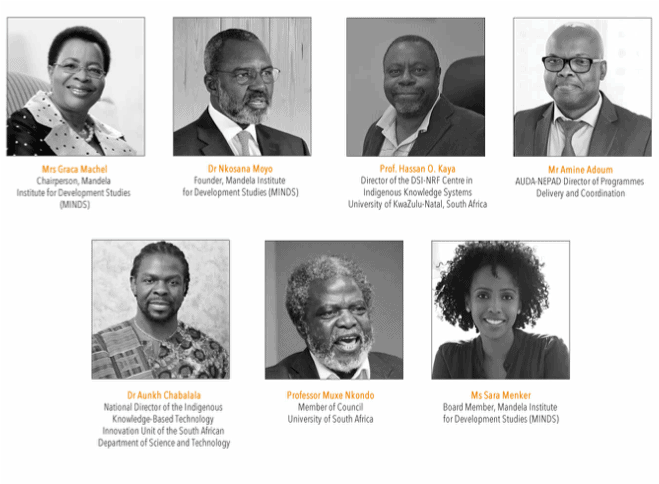
The Centre on African Philanthropy and Social Investment (CAPSI) together with its partners, The Mandela Institute for Development Studies (MINDS) and The New Partnership for Africa’s Development (AUDA-NEPAD) hosted a Pan-African evening of celebration on 7th November 2019 at the Origins Centre, Wits University, Johannesburg, South Africa.
Speakers and guests at the event included: The NEPAD Goodwilll Ambassador for TB and Nutrition Yvonne Chaka Chaka, Humanitarian and Activist Graça Machel, Trustee of The Mandela Institute for Development Studies Ali Mufuruki, Professor of Law in the Centre for Human Rights and Development Studies at the University of Pretoria Prof Charles Ngwenya, Director of Programme Innovation and Planning at the African Union Development Agency- NEPAD Estherine Fotabong, Author, Public speaker and Professor of Sociology Prof Kwesi Prah and the Deputy Vice Chancellor of the Wits University Professor Andrew Crouch.