Author: Ntando Hoza

Call For Applications: PhD Fellowship In The Non-Profit Sector’s Contribution To African Economies

The Centre on African Philanthropy and Social Investment (CAPSI) at the Wits Business School (University of the Witwatersrand), with the support of the Mastercard Foundation, invites applications for Doctoral Fellowship on the Non-Profit Sector and its Contribution to African Economies project. The aim of the PhD fellowship is to provide opportunities for young African doctoral students registered in African universities to participate in research on non-profit organizations and their contributions to African economies. The specific focus of the research project is ‘the creation of dignified and fulfilling work for young Africans by the non-profit sector’.

ABOUT THE PROGRAM

This doctoral fellowship program offers a maximum of five years of support to twenty (20) selected full time Ph.D. students. Each fellow will receive a fully funded fellowship, providing a full scholarship of up to $30,000 per year. The program invites doctoral students exclusively from African universities in the 17 countries targeted by the project. These are Burkina Faso, the Democratic Republic of the Congo (DRC), Côte d’Ivoire, Egypt, Ethiopia, Ghana, Kenya, Morocco, Mozambique, Nigeria, Rwanda, Senegal, South Africa, Tanzania, Uganda, Zambia, and Zimbabwe.

Doctoral students will be working on topics related to non-profit organizations and their contributions to African economies, particularly those focusing on dignified and fulfilling employment for young Africans. Successful applicants will work closely with Regional Research Leads paired with senior researchers in undertaking their research. Fellows will be selected in line with categories of youth marginality that the project is paying special attention to -gender, disability, geography, refugees and internally displaced persons, etc.

Applications are invited from doctoral students with an interest in the non-profit sector and its role in African economies. In the current call, we will priorities three students from or focusing on Egypt and Morocco.

ELIGIBILITY CRITERIA

To be eligible for the Fellowship Program, applicants must:

a) Be currently enrolled as full time students in a relevant doctoral program at an African university focusing on themes and research aligned to the project.

b) Have research interest in the non-profit sector’s contributions to dignified and fulfilling work for African youth.  

c) Demonstrate commitment to the program and the ability to work effectively in a team.

d) Be available to participate in the program for its entire duration.

e) Less than 35 years of age

f) In the first or second year of their PhD programme.

g) Be nationals of any of an African Union and conducting research on Egypt or Morocco.

h) Two more very strong applications from any of the other 17 countries will be considered.

SUBJECT FIELDS

Social and behavioural sciences, including Economics, Development Studies, International Development, Non-profit or Philanthropic studies, Statistics and Actuarial Sciences, Management, Public Policy, History, Human Geography, Entrepreneurship, Youth Unemployment. Artificial Intelligence in Philanthropy, Feminism and gender philanthropy or any development-related field.

The research should strictly focus on the project’s main objective; The Contributions of Non-profit Sectors to African Economies with specific focus on Dignified and Fulfilling Work for the Youth.

APPLICATION INSTRUCTIONS

Eligible candidates should prepare and submit the following as part of the application package:

a) Current curriculum vitae (CV).

b) A personal statement (maximum 500 words) outlining their research interest, motivation, and alignment with the advertised CAPSI Research program.

c) An outline of their proposed research project (Maximum 2500 words) covering the following.

I. Background of study

II. Problem Statement

III. Research questions

IV. Research objectives

V. Literature review and theoretical framework

VI. Proposed methodology (covering research design, sampling and, data collection and ethical considerations)

d) A letter of recommendation from supervisor/proposed supervisor.

e) A copy of academic transcripts.

f) Proof of age ( e.g., passport, birth certificate, etc.)

g) Proof of admission or registration in an African University

The application must be sent by email to: dennis.osei@wits.ac.za clearly marked “PHD FELLOWSHIP IN THE NON-PROFIT SECTOR’S CONTRIBUTION TO AFRICAN ECONOMIES, and copied to Joseph.Sobuthongo@wits.ac.za.

DEADLINE FOR APPLICATIONS

The deadline for applications is Monday December 15, 2025.

Successful applicants will be notified by Monday, January 12, 2026.

For more information and to apply, please visit the CAPSI website (https://capsi.co.za).

Inquiries should be directed to Joseph.Sobuthongo@wits.ac.za or any of the emails above.

Call for Expressions of Interest: Mid-Term Evaluation – Nonprofit Organisations and Youth Employment in Africa

Background

The Centre on African Philanthropy and Social Investment (CAPSI) at Wits Business School invites qualified monitoring, evaluation and learning experts (organisations or individuals) to express interest in conducting a Mid-Term Evaluation (MTE) of a research project, designed in 2022 and now in its third year of a five-year implementation.

The research investment focuses on generating knowledge that can enhance the ‘Contribution of the Nonprofit Sector to creating Dignified and Fulfilling Work for Youth in Africa’. It is being undertaken in seventeen African countries: Burkina Faso, Democratic Republic of Congo, Côte d’Ivoire, Egypt, Ethiopia, Ghana, Kenya, Morocco, Mozambique, Nigeria, Rwanda, Senegal, South Africa, Tanzania, Uganda, Zambia, and Zimbabwe.

The project integrates Monitoring, Evaluation and Learning (MEL) from inception as a strategic mechanism to ensure accountability, methodological rigour, and adaptive learning. The Mid-Term Evaluation marks a pivotal stage in assessing how research, capacity building, project coordination and dissemination processes have progressed in relation to the original learning objectives. The envisaged evaluation is not conceived as a retrospective audit, but as a formative exercise aimed at generating timely lessons that enhance ongoing implementation and inform adaptive management.

Purpose and focus

The MTE aims to assess progress and generate actionable lessons across five core interventions:

1. Conducting research in 17 Countries and publishing outcomes

2. Education and training

3. Strengthening the project delivery capacity of CAPSI

4. Communication and dissemination

5. Monitoring and evaluation


The evaluation will focus on timeliness, effectiveness, and learning value of these interventions rather than retrospective accountability. The evaluator should adopt a developmental and utilisation-focused approach consistent with the CAPSI MEL framework.

The emphasis on lessons for action relates to the stage and momentum of ongoing activities. These create a tight time window to ensure that lessons have practical value.

Proposed structure and timeline

The consultancy is expected to run for approximately six to eight weeks (early November 2025 to mid-January 2026). The following stages are envisaged.


·      Week 1: In-house orientation and familiarisation with CAPSI systems and data sources.

·      Week 2: Submission of MTE approach and methodology

·      Weeks 3 – 6: Data collection, synthesis and lesson generation.

·      Mid-December: Presentation of draft lessons and actionable recommendations

·      Mid-January: Submission of final report

  Expected deliverables

·      Inception note outlining approach, methodology, and work plan

·      Field and desk review outputs aligned with the five interventions

·      Presentation of preliminary lessons learned (for internal review)

·      Final MTE report with actionable recommendations and implementation roadmap

  Qualifications required

·      Demonstrated experience in developmental or utilisation-focused evaluation of multi-country or complex research programmes.

·      Strong understanding of MEL systems, qualitative and quantitative analysis, and adaptive learning.

·      Experience working with higher education institutions, non-profit or philanthropic organisations, and donor-funded projects.

·      Excellent analytical and report-writing skills


Submission requirements

Please provide CV(s) together with 2-to-3-page selection note explaining motivation and suitability for undertaking this task, including an indicative budget.

Clarifications can, in the first instance, be obtained from Dr. Wycliffe Ouma wycliffe.ouma@wits.ac.za or Professor Alan Fowler, alan@alanfowler.org

Submission deadline: 27th October 2025

Email submissions to: wycliffe.ouma@wits.ac.za and alan@alanfowler.org with subject line “EOI – Mid-Term Evaluation Consultancy”

Only shortlisted candidates will be contacted. CAPSI reserves the right not to make an appointment. 

Call for Applications for Partial Postgraduate Scholarships

CAPSI-Funded Partial Scholarships for the Master of Management in African Philanthropy (MMAP) and Postgraduate Diploma in Management in Philanthropy and Resource Mobilisation (PDMRM)

The Centre on African Philanthropy and Social Investment (CAPSI) at the Wits Business School (University of the Witwatersrand) invites applications for partial scholarships from qualified applicants who wish to pursue postgraduate studies in philanthropy and social investment at the Wits Business School.

CAPSI is committed to advancing research and leadership in African philanthropy and social investment. To support this mission, a limited number of partial scholarships are available for:

  • Postgraduate Diploma in Management in Philanthropy and Resource Mobilisation (PDMRM)
    • Value of each partial scholarship: US$4,000
  • Master of Management in African Philanthropy (MMAP)
    • Value of each partial scholarship: US$5,000

The awards are competitive and aim to attract candidates who demonstrate academic excellence, leadership potential, and a strong commitment to advancing philanthropy and social change across the continent. The scholarship is for one year of full-time study at Wits Business School.


Eligibility Criteria

General requirements (applicable to both programmes):

  • Applicants must meet the academic admission requirements of the respective programme.
  • A minimum average of 70% in the most recent academic qualification is required.
  • Candidates must demonstrate a strong interest in the fields of philanthropy, social investment, and development.
  • Commitment to African philanthropy and social change.
  • Leadership potential and community engagement.
  • Gender balance and diversity considerations (with preference for women in both PDMRM and MMAP).
  • Applicants must submit a motivational statement outlining how they plan to contribute to the field of African philanthropy and how the scholarship will support their professional and academic growth.
  • Applicants must be citizens of any African Union member country.

Programme-Specific Requirements

1. Postgraduate Diploma in Management in Philanthropy and Resource Mobilisation (PDMRM):

  • 50% of the available funding will be prioritised for women candidates.
  • Applicants should demonstrate an interest in building practical skills in fundraising, social impact, and resource mobilisation.

2. Master of Management in African Philanthropy (MMAP):

  • Priority will be given to applicants whose research focus relates to gender and philanthropy within the broader field of African giving, social investment, or development.
  • Candidates must submit a short research concept note (maximum two pages) reflecting this focus.

Scholarship Coverage

  • The CAPSI partial scholarships will cover a portion of tuition fees, based on merit and available funds.
  • The scholarship does not cover accommodation, transport, or living expenses.

Application Requirements

Applicants must submit the following documents in a single PDF file:

  1. Proof of WBS application or offer letter.
  2. Certified academic transcripts showing a minimum average of 70%.
  3. A curriculum vitae (CV) detailing academic, professional, and leadership experience.
  4. A motivational letter (maximum 500 words) addressing:
    • Your interest in philanthropy, social investment, or African giving.
    • How the programme aligns with your career and community goals.
    • How the scholarship will enable your studies.
  5. For MMAP applicants only: A two-page concept note on a proposed research topic focusing on gender and philanthropy.

Application Process

  1. Applicants for the Postgraduate Diploma in Management in Philanthropy and Resource Mobilisation (PDMRM) must meet the admission criteria and submit their applications through the University’s online application portal:
    🔗 https://www.wbs.ac.za/academic-programmes/postgraduate-diploma/postgraduate-diploma-philanthropy-and-resource
  2. Applicants for the Master of Management in African Philanthropy (MMAP) must meet the admission criteria and submit their applications through the University’s online application portal:
    🔗 https://www.wbs.ac.za/academic-programmes/master-management/master-management-african-philanthropy

In addition, each applicant must submit their request for partial funding to thandeka.mfeka@wits.ac.za and copy jacob.mati@wits.ac.za 

subject line:

“CAPSI Partial Scholarship Application – [PDMRM or MMAP] 2026”

Deadline Extended: 30 November 2025

Shortlisted candidates will be invited for an interview.


Enquiries

For more information, please contact:
The CAPSI Office
thandeka.mfeka@wits.ac.za

Adɔyɛ: Women in Philanthropy Public Lecture by Dr Barbara Masekela

By Thandi Makhubele and Sandile Tshabalala

Earlier this year, the Centre on African Philanthropy and Social Investment (CAPSI) hosted a thought-provoking public lecture exploring the vital role of women in shaping the philanthropic landscape. The lecture, titled ‘Women in Philanthropy: Liberation, Activism and Leadership’ was delivered by Dr Barbara Masekela, South Africa’s former Ambassador to France and the United States, and former Chief of Staff to President Nelson Mandela. The lecture brought together community leaders, practitioners and scholars to reflect on the power of women’s leadership in advancing liberation, social justice and collective care across Africa.

The lecture formed part of the Adɔyɛ Dialogue Series, a CAPSI initiative that spotlights African women as architects of solidarity and custodians of intergenerational care. By anchoring this conversation within the Adɔyɛ mission, the dialogue underscored how women’s leadership in philanthropy extends far beyond material giving, encompassing culture, history and the spirit of  Ubuntu.

Philanthropy is the impulse for active care

In her address, Dr Masekela reflected on the role of history and memory in shaping present-day action. Drawing from her own personal journey, she described philanthropy not as a luxury, but as a deeply human instinct: “Philanthropy is the impulse for active care and the betterment of fellow human beings,” she reminded the audience.

She emphasised that African philanthropy has always been embedded in cultural values, reminding participants that, “Ubuntu is the DNA of African culture… and we must remember that it was the Ubuntu of the international community which declared apartheid a crime against humanity.”

This view aligns with Adɔyɛ’s affirmation that philanthropy in the African context is not merely transactional but an expression of love in action – an enduring practice of care and responsibility towards others. Throughout her lecture, Masekela celebrated the central role women have always played in sustaining communities and called for greater unity and stronger advocacy, reflecting on the influence of her grandmother in shaping her own career.

“We should have a Forum for Women of all persuasions where we develop strategies to make a difference in our society,” she urged. “The present moment demands that we go beyond the catalogue of failures with which we are all too familiar with. We must devise a practical plan which is non-partisan, inclusive and sustainable to achieve genuine equality for all women. We know that before our elections in 1994, Dr Frene Ginwala worked tirelessly to establish a Women’s Coalition. We should uncover why it did not work and resolve the problem of our disunity as women. In particular, the urban-rural divide causes a skewed view of our collective experience as women. In the same vein, there is a need to tackle spatial apartheid, which separates us from each other, because we know now that Gender Based Violence affects all females, even babies and grandmothers. Every place in this country should be a safe place for women as well”.

A Dialogue on Leadership and Justice

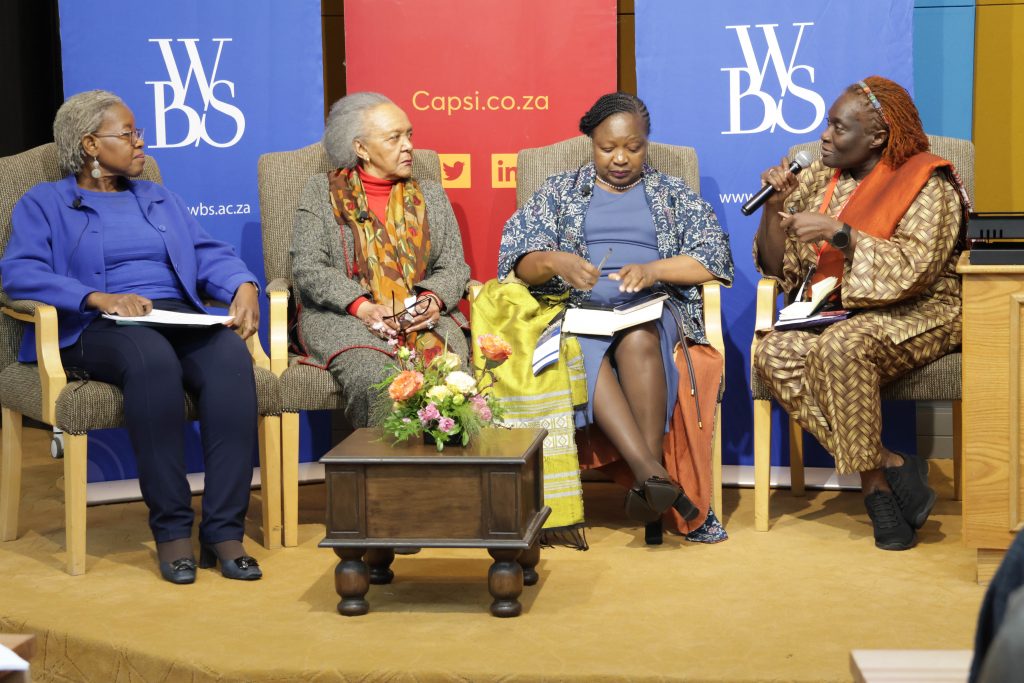
Following the lecture, a fireside conversation featured distinguished panellists Ms Sibongile Mkhabela, Executive Director of the Barloworld Empowerment Foundation, and Ms Gugu Xaba, CEO of Save the Children South Africa. The discussion was moderated by Theo Sowa, Independent Advisor and Co-Chair of the Equality Fund.

Together, the panellists shared personal insights on leading philanthropic institutions and advancing gender justice. The panel also highlighted the urgent need for systemic change, echoing Masekela’s message  that “African women are philanthropists because they are teaching, learning, and giving at all times.” Their reflection underscored that African women’s philanthropy has always been institution-building and justice-driven, echoing Adɔyɛ’s call to sustain these traditions while reimagining what the future of African philanthropy can be.

Honouring Legacies, Inspiring Futures

Dr Masekela concluded with a call to action: to safeguard the legacies of women who came before while ensuring the role of women in philanthropy remains a force for justice and healing. . Material contributions alone, she reminded the audience, cannot mend societies fractured  by inequality and oppression, but love, care and solidarity can.

In summary, the conversation highlighted a truth long understood by women leaders in philanthropy: that when giving is aligned with justice, it not only alleviates need but shapes the future. In the spirit of Adɔyɛ, this dialogue celebrated iconic leaders while inspiring a new generation to carry forward these practices of solidarity, care and justice-orientated giving, ensuring that love in action remains central to African Philanthropy.

This high-level convening paid tribute to Dr Barbara Masekela and Ms Sibongile Mkhabela for their contributions to activism, leadership and philanthropy. As Africa continues to recognise and honour the contributions of women, while celebrating leadership and heritage, the message of  Adɔyɛ  endures: women-led philanthropy, when rooted in love and justice, is a powerful act of liberation.